The Business of Selling 'Energy': Why a Marketing Promise Became a Regulatory Problem
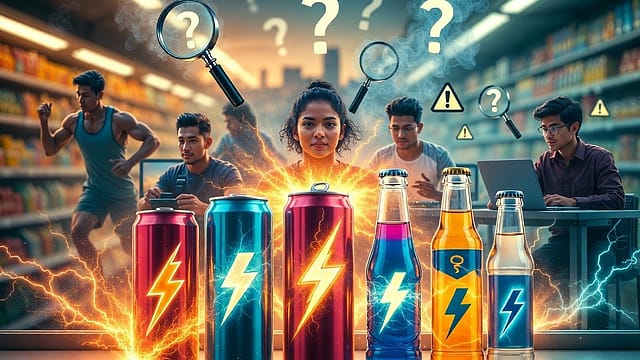
For years, India's beverage industry sold refreshment.
Then came wellness. During the pandemic, supermarket shelves filled up with products promising immunity, herbal benefits and natural ingredients. As consumers emerged from Covid, another promise quietly took centre stage: energy.
Not energy in the nutritional sense, but as a lifestyle proposition. Energy to work longer. Energy to game through the night. Energy to perform at the gym. Energy to stay focused.
That shift has turned one of the fastest-growing beverage categories into one of the most closely watched by regulators.

Greening the Future
23 Jul 2026 - Vol 05 | Issue 30
Securing a sustainable India
The Food Safety and Standards Authority of India (FSSAI) has issued notices to six major brands, including Red Bull, PepsiCo's Adrenaline Rush, Reliance Consumer Products' Campa Energy Gold Boost, Sting, Hell Energy and Coca-Cola-backed Monster Energy, questioning aspects of how these products are classified and marketed. While the regulatory process is still at an early stage, the action has sparked a larger debate about where marketing ends and substantiated product claims begin.
The timing is significant. Energy drinks have moved well beyond their niche origins. Once confined largely to premium urban consumers, the category has expanded rapidly over the past decade as brands introduced smaller packs, lower price points and wider retail distribution. According to market researchers, India remains one of the fastest-growing energy drink markets globally, driven by rising disposable incomes, urban lifestyles and increasing demand for functional beverages.
Brand consultant Ambi M. G. Parameswaran says the influx of new launches is characteristic of a young category that is still finding its shape. "In principle, energy drinks are not good for you. But it is a fast-growing category and more brands are being launched across price points. Not all of them will survive in the long run," he says.
But what companies are increasingly selling is not simply a drink. They are selling an outcome.
Words such as "energy", "focus", "performance" and "alertness" have become central to advertising campaigns across the category. Unlike traditional soft drinks, whose appeal rested largely on taste and refreshment, energy drinks derive much of their value from functional positioning. That makes the claims far more consequential.
Yet much of the caution surrounding these products is contained in fine-print advisory statements that are easy to miss. Most energy drink labels carry warnings that they are not recommended for children, pregnant or lactating women, or individuals sensitive to caffeine, and advise consumers to limit intake or avoid mixing the drinks with alcohol. While these disclosures are mandated under food labelling regulations, they are often overshadowed by prominent marketing messages centred on energy, focus and performance.
This is precisely where regulators and advertising watchdogs believe greater caution is needed.
"If a category such as 'energy drink' does not have recognition under the applicable regulatory framework, advertisers and marketers should avoid presenting it as such," says Manisha Kapoor, CEO and Secretary General of the Advertising Standards Council of India (ASCI). Instead, products should be described according to recognised food categories so that consumers are accurately informed about what they are buying.
More importantly, Kapoor argues that claims around enhanced energy, performance or focus require careful substantiation because they directly influence consumer purchasing decisions. "Claims that imply enhanced energy, performance, focus or other functional benefits can significantly influence consumer perceptions and purchase decisions, making it essential that such claims are appropriately substantiated and communicated responsibly," she says. She notes that the current FSSAI scrutiny remains at the initial stage of investigation.
The debate extends beyond one category. Across FMCG, companies are increasingly marketing benefits rather than products. Breakfast cereals promise protein. Dairy products emphasise immunity. Packaged beverages highlight vitamins, electrolytes or gut health. Energy drinks represent the latest—and perhaps the most commercially successful—expression of that trend.
For marketers, the attraction is obvious. Functional positioning allows brands to differentiate products in an otherwise crowded beverage market while commanding higher prices than conventional carbonated soft drinks. It also aligns with younger consumers seeking beverages that fit into gym routines, gaming sessions, long workdays and late-night study schedules.
Yet the more ambitious the promise, the greater the burden of proof.
Kapoor says advertising should always be truthful, evidence-based and capable of substantiation. ASCI's Annual Complaints Report 2025-26 underscores why that matters. The food and beverage sector was among the top five categories requiring intervention, with 376 cases processed during the year and 88 per cent of advertisements requiring modification for non-compliance.
The current scrutiny of energy drinks therefore reflects a broader shift in regulatory thinking. Authorities are looking beyond ingredients and labels to examine how products are positioned and what consumers are led to believe they will achieve.
That does not mean the category's growth story is over. Demand for functional beverages is expected to remain strong, supported by changing lifestyles and premiumisation within India's beverage market. More brands will almost certainly enter the segment.
But the next phase of competition may be determined less by who can make the boldest promise and more by who can substantiate it.
As India's beverage industry moves from selling refreshment to selling performance, the battle is no longer only for shelf space. It is increasingly for credibility.