Karan Aujla’s Zyro: How ‘Unnecessary’ Is Another Energy Drink in India?
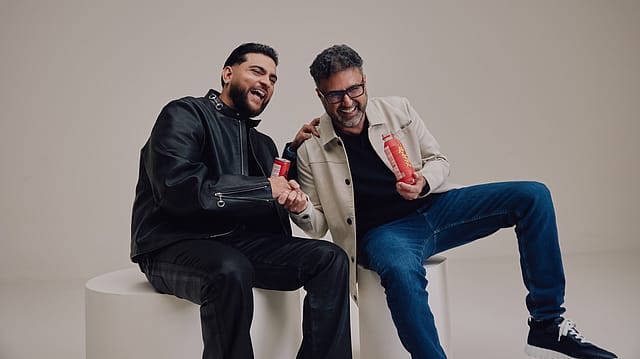
India has a new energy drink. The country, notably, was not running out of energy.
Punjabi singer Karan Aujla has entered the beverage business with Zyro India, developed alongside Shark Tank judge and Veeba founder Viraj Bahl. Backed by a campaign titled Nothing Unnecessary, the brand promises clean energy, zero sugar and fewer calories — positioned as a drink for focus, performance and disciplined modern living.
It is a confident entry.
It also raises a harder question: how necessary is Zyro in India’s beverage market, and does India need another energy drink at all?
Brand consultant Ambi M G Parameswaran sees the wave of launches as typical of a fast-growing but unsettled category. “In principle, energy drinks are not good for you. But it is a fast-growing category and more brands are being launched across price points. Not all of them will survive in the long run,” he said, adding that influencer-led brands may drive strong trials, though repeat purchase ultimately depends on product strength.
Losing Memory
16 Oct 2026 - Vol 05 | Issue 42
The making of a medical and social emergency
Open any quick-commerce app and the picture becomes clearer. Energy drinks already occupy every corner of India’s beverage shelf.
At one end sit mass-market stimulants like PepsiCo’s Sting and Coca-Cola’s Thums Up Charged, priced around ₹20 and sold through kirana stores and roadside outlets. They dominate because they solved the only problem most consumers wanted solved — affordable fatigue relief.
Traditional energy drinks held over 32 percent market share in 2025, driven by familiarity and price. In India, energy is still bought impulsively, not aspirationally.
At the other end stand global incumbents such as Red Bull and Monster, comfortably priced at ₹125 and above. Their premium endures not because Indians suddenly turned health-conscious, but because decades of branding tied them to youth culture, sport and nightlife.
Cheap energy works. Trusted premium energy works.
The real difficulty lies somewhere in between. That is exactly where Zyro positions itself, starting at ₹60.
The broader market offers little urgency. India’s energy drinks segment is valued at about $0.82 billion in 2026 and projected to reach $0.94 billion by 2031, a modest 2.25 percent CAGR, according to Mordor Intelligence.
For a category associated with youth culture and performance, this is steady growth, not explosive demand.
Yet celebrity and creator-led energy drinks are arriving with remarkable enthusiasm.
Globally, the playbook looks attractive. PRIME Energy, launched by YouTubers Logan Paul and KSI, demonstrated how online fandom could convert into retail sales. The brand’s visibility expanded further through collaborations involving creators like MrBeast.
India has begun following suit. Creator-led beverages such as FOKUS entered the market targeting Gen Z gaming audiences. Zyro now represents the next phase, where mainstream entertainers attempt to build scalable FMCG businesses rather than merely endorse products.
Attention, it seems, is being bottled.
Reflecting on the brand’s philosophy, Karan Aujla, Co-founder, Zyro India, said the drink mirrors his personal approach to life. “Keep it real. Keep it simple. No sugar, no calories, nothing unnecessary. That is not just a tagline, it is a mindset,” he said, describing Zyro as an attempt to encourage conscious choices without compromising on taste or identity.
There is logic behind the timing. Natural and functional energy drinks are expected to grow faster, at over 4 percent CAGR, as consumers increasingly shift toward sugar-free and low-calorie alternatives. Hybrid formats combining hydration, recovery and cognitive focus are emerging as micro-segments.
Viraj Bahl, Founder and Managing Director, VRB Consumer Products, said the company was entering beverages with a clear point of view, noting that consumers are increasingly choosing zero-sugar options and cleaner labels as part of a more mindful lifestyle. Zyro, he added, was designed to deliver flavour and functionality “without excess,” aligning with evolving consumption preferences.
Urban India is clearly moving toward performance-led consumption.
But behaviour changes slower than branding.
Most Indian consumers still buy energy drinks for immediacy, not optimisation. The wellness-oriented buyer exists, but remains limited compared with the mass consumer driven by affordability or the premium buyer already loyal to global brands.
This creates a peculiar congestion in the middle of the market, where multiple new entrants chase the same aspirational consumer at once.
Zyro, then, signals something larger than a celebrity launch.
India’s creator economy has entered its ownership phase. Musicians, influencers and athletes now seek equity instead of endorsement fees. Beverage brands offer visibility, margin and global precedent.
What they do not guarantee is habit.
Energy drinks succeed when consumption becomes routine. Red Bull built culture before scale. Sting built affordability before aspiration. New celebrity brands are attempting scale while culture is still forming.
Supply is arriving faster than behavioural demand. None of this makes Zyro irrational. Some brands succeed precisely because they arrive early and shape markets rather than follow them.
But the irony remains difficult to ignore.
A brand launched under the promise of Nothing Unnecessary enters one of India’s most crowded beverage categories at a time when consumers already have cheap energy, premium energy and functional alternatives within ten-minute delivery distance.
India may well drink more energy beverages in the future.
For now, however, the market’s quiet question persists. Not whether Zyro can launch successfully. But whether India was waiting for another energy drink at all.