When 'Wrong English' Becomes Cultural Capital: Air India Express Finds Its Voice in ‘Inglish’
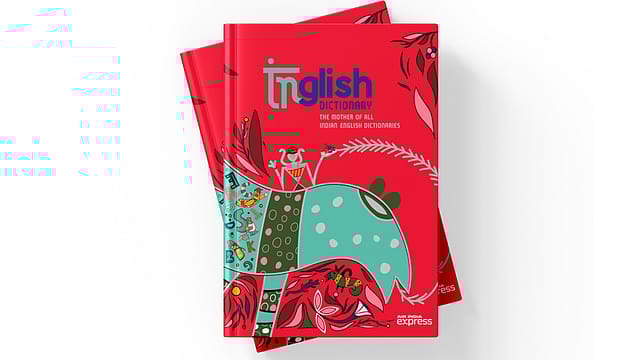
“Biscoot”, “time pass”, “one-by-two”. Words most Indians use without thinking twice, but rarely see acknowledged outside casual conversation.
They are now at the centre of a campaign that is quietly gaining momentum.
Air India Express’ ‘Inglish Dictionary’, created with Juice, an Omnicom Group company under TBWA, has been circulating widely online, turning everyday Indian English into a shared cultural moment. Framed as a dictionary of commonly used phrases, the work documents how English is actually spoken across the country. Informal, improvised, and deeply local.
The traction has been hard to miss. According to the company, the campaign has crossed over 25 million digital interactions within months of launch. It has also travelled across global creative platforms, picking up a Grand Prix and two Silvers at Spikes Asia 2026, alongside earlier recognition at Cannes Lions 2025, Kyoorius Design Awards, The Drum Awards, and The One Club for Creativity.
Still, its real currency appears to be relatability. Users are not just viewing it. They are recognising themselves in it.
That response points to a broader shift. For years, English in India functioned as a marker of aspiration, often tied to correctness and fluency. Increasingly, that rigidity is giving way to a more fluid, hybrid usage. One that blends languages, contexts, and cultural references.
The ‘Inglish Dictionary’ leans into that reality. Words like “foreign return” and “time pass” are presented without apology, positioned instead as cultural shorthand. The use of Sohrai-inspired visuals adds another layer, anchoring the campaign in a distinctly Indian aesthetic rather than a globalised one.
The Abandoned Kejriwal
01 May 2026 - Vol 04 | Issue 69
Brain drain from AAP leaves Arvind Kejriwal politically isolated
For Air India Express, this marks a departure from category norms. Airline marketing has typically stayed within the bounds of functionality such as fares, routes, and punctuality. This campaign operates in a cultural space, attempting to build familiarity before preference.
Siddhartha Butalia, Chief Marketing Officer at Air India Express, said the effort was designed to reflect how people speak rather than standardise it. The approach aligns with a wider movement in advertising toward everyday insight and lived experience.
That shift is visible across categories. Brands are increasingly trading polish for proximity, betting that what feels real will travel further than what feels perfected.
Whether that holds in the long run is still an open question. Cultural relevance can spark attention, but sustaining it, especially in a price-sensitive and functional category like aviation, requires more than a moment.
For now, though, the campaign has tapped into something simple and widely understood.
In India, English was never just adopted. It was adapted and continues to evolve in ways that no rulebook quite captures.