The Long Way to Zero Regret: How Deven Parulekar Walked Away from EY’s High-Paying Role to Build SaffronStays
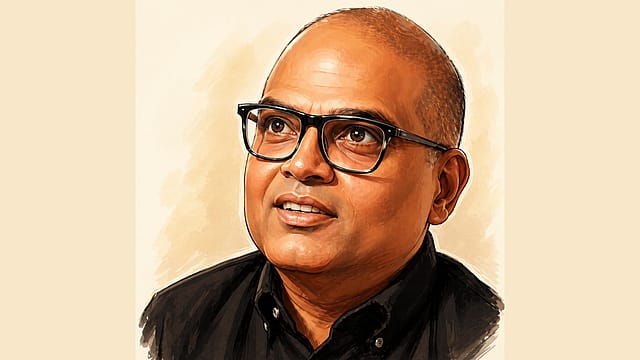
On his 40th birthday, Deven Parulekar made a decision that would quietly redraw the arc of his life. It wasn’t impulsive, nor was it driven by external pressure. If anything, it came from an internal insistence that had been building for decades. “For some weird reason,” he says, “it was crystal clear in my brain that I wanted to be an entrepreneur.” The clarity, however, had always existed in tension with circumstance.
Parulekar grew up in what he describes as a “very conventional Maharashtrian setup,” where ambition was encouraged, but risk was not necessarily modeled. His father was an engineer, his mother a doctor who later went on to head a hospital—both emblematic of stable, professional careers. “You don’t have a reference point,” he explains. “You don’t have that ringside view that you usually get from having entrepreneurs in your family.” Yet, despite the absence of that ecosystem, the instinct persisted, almost stubbornly.
His first attempt at entrepreneurship came early—and failed quickly. In 2000, he quit KPMG to build a dot-com venture with friends, something akin to a combination of Shaadi.com and a jobs portal. “We tried for three months,” he recalls. “We took pictures for two weeks. Then we realized we needed to stop.” The failure, however, left him with unusual clarity. “There were three things that I lacked at that point of time,” he says. “One, I was not a coder. Two, I didn’t have the money. And three, I probably didn’t have the right co-founders.” That triad—capital, capability, and co-founders—would become his internal checklist for the future.

Open Minds 2026
26 Jun 2026 - Vol 05 | Issue 26
The power of ideas and arguments in 50 portraits
What followed might appear, at first glance, as a departure from entrepreneurship. At 24, Parulekar was asked to help build a cybersecurity practice in India from scratch—an opportunity that, in hindsight, mirrored the demands of founding a company, only within the framework of an organisation. “I had no proven capabilities,” he admits candidly. “If I had seen my own resume, I would not have hired myself.” And yet, over the next sixteen years at Ernst & Young, he built the practice into a 250-member team, eventually becoming one of the youngest partners at the firm. “It met my entrepreneurial urge to build something out of nothing,” he says, almost as if justifying why he stayed as long as he did.
But even as the structure of success solidified around him, a quieter dissatisfaction began to surface. “I said, okay, I’m done building this for somebody else,” he recalls. The thought was not immediate; it had been brewing over years. In fact, what seemed like a sudden decision in 2016 had been meticulously prepared for since 2008. Over nearly a decade, Parulekar and his wife—and eventual co-founder—Tejas had consciously curtailed their lifestyle to build a financial safety net. “The last car we bought was in 2010. The last apartment we bought was in 2010,” he says. While peers upgraded to luxury cars, he held on to his Toyota Fortuner. The trade-off was visible even at home. “I remember once I got a golf set and my son whispered into my ear, ‘Aren't we poor?’” he says, laughing. “But we were genuinely setting up our safety net.”
The idea that would eventually become SaffronStays had been quietly taking shape in parallel. It began during their honeymoon in Fort Kochi, in a colonial bungalow that offered a deeply personal hospitality experience—a caretaker offering to cook fresh fish curry, the intimacy of a home rather than a hotel. “We looked at each other and said—why is this not democratized?” he recalls. That question lingered, reinforced later by their travels in Europe, where they stayed in farmhouses and bed-and-breakfasts long before platforms like Airbnb had become mainstream. “There was no website,” he says. “We used to write emails and send money orders. The idea was always there—why can’t this be brought onto a booking platform?”
When he finally returned to entrepreneurship, he did so with discipline shaped by earlier failure. This time, two pieces of his checklist were in place—capital and co-founder. The third, technical capability, was not. So he built it himself. “I picked up books and started from scratch,” he says. Working days as a partner and nights as a developer, he spent nine months coding the platform. “I knew how to hack—breaking systems is easy. But coding is to build.” At the same time, Tejas launched an internship initiative that sent young travellers across the country to onboard and verify homes. Within months, they had a thousand listings.
The response was immediate—but misleading. Traffic surged, visibility increased, and the brand began to gain recognition. But revenue remained stubbornly absent. “Business? Zero,” he says bluntly. The problem, they realised, was behavioural. Users were discovering homes on the platform, then bypassing it entirely to transact directly with homeowners. The model, as it stood, was fundamentally broken.
The solution was radical. In late 2015, Parulekar made the decision to remove 999 homes from the platform and start again with just one—this time with complete control over pricing, availability, and experience. “When you control these three things, no customer can cut you out,” he explains. That one property—a restored colonial bungalow in Matheran—became the turning point. Early guests, including close colleagues, validated the experience. “They called me and said, ‘You’ve stumbled onto something brilliant. Just do this.’”
Around the same time, the external environment offered little comfort. Well-funded competitors like Stayzilla were collapsing, underscoring the fragility of the category. Yet, Parulekar moved forward, driven less by market signals and more by conviction. That conviction was further cemented during a deeply personal moment—his mother’s prolonged illness. Sitting outside an ICU for months, he found himself confronting a different kind of clarity. “I could almost predict whether someone would come out alive or not,” he says. “And I said, I don’t want to be at that stage of my life with regrets.”
That moment crystallised everything. On his fortieth birthday, he put in his papers.
The years that followed were marked not by explosive growth, but by deliberate building. Today, SaffronStays operates over 460 homes across India, with a team of more than 200 people and revenues crossing ₹100 crore, projected to reach ₹140–150 crore in the coming fiscal. Profitability, however, came slowly. “We didn’t take a single salary for seven years,” he says. “Only when we turned profitable did we start.” The company has since built margins from 0.5% to around 3%, with a long-term goal of reaching 10%.
What distinguishes SaffronStays is not just its business model, but its philosophy. “Luxury cannot be about chocolates, caviar, chandeliers,” Parulekar says. “Luxury is about families coming together.” The brand’s tagline—“Where Families Come Home”—is less a marketing line and more a strategic stance, positioning the company in an experience-driven niche rather than a commoditised marketplace.
That thinking extends to how the company grows. Instead of spreading thin across geographies, it builds depth within clusters—regions like Alibaug and Lonavala, where density allows for better operational control. “Once you have more than fifty villas in a cluster, the span of control breaks down,” he explains. The solution has been decentralisation, with each cluster operating almost as an independent unit.
Even in marketing, the company has resisted convention. Rather than relying heavily on performance advertising, it has leaned into storytelling and earned media. “Meta gives you sales,” he says. “But that’s transactional. Earned media builds a brand.” Influencers, editorial coverage, and narrative-led content have become central to its growth strategy.
Looking back, Parulekar does not frame his journey as one of risk, but of alignment. When his former boss asked if he had a Plan B, his answer was unequivocal. “I said, I don’t have a plan B.” The response he received stayed with him: “If you have a plan B, don’t do this—because then you’re not committed.”
At 50, he reflects on that decision without hesitation. “I have no regrets,” he says. “It’s been a ten-year journey as an entrepreneur.” What appears, from the outside, as a leap of faith was, in reality, a slow accumulation of conviction—built over years of restraint, failure, preparation, and finally, resolve.
“Overnight success takes a decade,” he says.
In his case, it took longer.