The Curious Case of IndiGo Lite: Can One Airline Be Everything to Everyone?
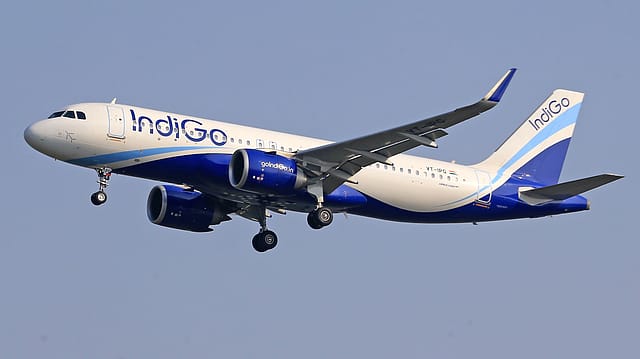
For an airline that built its reputation by taking choices away, IndiGo is suddenly offering plenty of them.
On July 1, the airline introduced IndiGo Lite, an entry-level fare that includes a 7 kg cabin bag, no checked baggage and an auto-assigned seat. Available only through IndiGo's website, app and contact centre, the fare takes effect from July 15. On the face of it, Lite is another pricing option in an already layered fare structure. But look beyond the announcement, and it says something more revealing about where India's biggest airline is headed.
To Ambi Parameswaran, brand strategist and founder of Brand-Building.com, the product feels oddly familiar.
It is an observation that immediately evokes the airline's earliest years. When IndiGo took to the skies in 2006, its promise wasn't merely cheap tickets but simplicity as strategy. One aircraft family. One economy cabin. Paid meals. Paid seat selection. No unnecessary complexity—for the airline or the passenger. The fewer moving parts, the lower the costs. The lower the costs, the cheaper the fares.
Greening the Future
23 Jul 2026 - Vol 05 | Issue 30
Securing a sustainable India
That discipline became the brand.
Parameswaran recalls that IndiGo's original model was uncompromising: one aircraft type, no business class, and even hot beverages were absent in its early years. Over time, he argues, the airline gradually moved away from that clarity, introducing premium products and multiple fare categories that made the proposition more layered than before.
Which is why Lite feels less like an innovation than a reminder.
But reminders are rarely launched out of nostalgia.
The IndiGo of 2026 is not the IndiGo of 2006. It has an international network stretching across continents. It has BluChip, its loyalty programme. It has UpFront seating and IndiGo Stretch, offering extra legroom and a business-class-style experience on select routes. It has multiple fare families designed around flexibility, baggage and convenience.
Lite now joins that growing portfolio.
There is an irony here. The airline that became India's market leader by eliminating choices has reached a stage where creating more choices has become central to its business model. Harish Bijoor, brand strategy expert, believes that isn't unique to IndiGo. "Differentiation in airline seat marketing is largely dead," he says.
In his view, airlines across the world increasingly offer remarkably similar fare structures because the economics leave them with little choice. As carriers expand, they naturally begin serving multiple customer segments instead of one. IndiGo, he argues, is following the same path, evolving from a single-product airline into one with offerings ranging from stripped-down economy to premium seating.
The commercial logic is difficult to fault.
The low-cost airline model itself has evolved. Airlines no longer make money simply by selling seats. The ticket is often just the starting point. Revenue increasingly comes from baggage, meals, preferred seating, flexibility, lounge access, loyalty programmes and a host of ancillary services. Every passenger represents multiple revenue opportunities rather than a single transaction.
Viewed through that lens, Lite is less about offering a cheaper ticket than about creating another entry point into IndiGo's ecosystem. By removing checked baggage and seat selection, the airline can advertise a lower headline fare while allowing customers to add services later if they choose. Selling the fare exclusively through its own digital channels also reduces dependence on online travel agencies while strengthening direct customer relationships.
The timing, too, is telling.
Indian aviation is operating under pressure. Fuel prices remain volatile. Geopolitical tensions have forced airlines to fly longer international routes in some markets, increasing fuel burn. Aircraft availability continues to constrain capacity across the industry, even as competition from carriers such as Air India Express and Akasa Air keeps fares under pressure.
In that environment, protecting the lowest advertised fare while growing ancillary revenue isn't simply smart but maybe is increasingly essential.
Yet as the matter of fact, the business strategy and brand strategy do not always move in perfect harmony.
Bijoor believes the bigger risk lies not in launching Lite but in what the expanding portfolio means for the IndiGo brand itself. As the airline stretches from entry-level fares to premium products like Stretch, he says, it begins speaking to almost every kind of traveller.
That breadth creates scale. It can also blur identity.
His warning is simple: when a brand tries to become everything to everybody, it risks becoming less distinctive to anybody.
Parameswaran sees the same tension from a different perspective. Lite, he suggests, reminds customers of the disciplined, no-frills airline that built one of India's strongest aviation brands. But the company introducing it today is no longer defined solely by that philosophy. It has become a far more ambitious airline serving leisure travellers, corporate flyers, international passengers and premium customers alike.
Perhaps that evolution was inevitable.
A carrier with more than 60% of the domestic market cannot afford to think only like the challenger it once was. Growth demands segmentation. Different passengers expect different experiences, and airlines increasingly have to accommodate them all.
That makes IndiGo Lite something more significant than another fare bucket.
It is a snapshot of an airline balancing two identities at once. One still believes simplicity is its greatest strength. The other knows complexity is where future growth lies.
The blue-and-white aircraft still carries the same name. The business behind that name, however, has quietly become much more than the no-frills airline that first changed how India flew.