Memory vs Relevance: What IPL Ads Reveal About Indian Brands
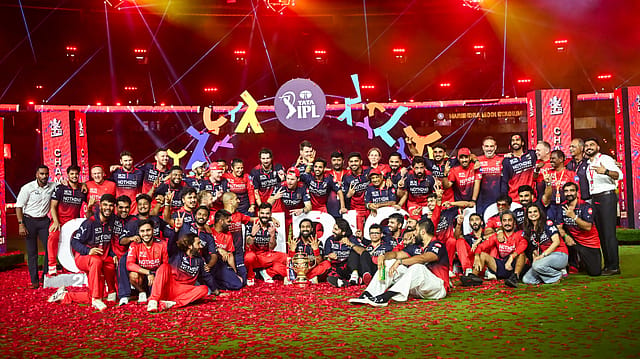
With the IPL season coming to an end, it has left some lessons to ponder on. The cricket started, and the ads arrived. By the time the first over of IPL 2026 was bowled, fans had already been served a familiar mix: high-wattage celebrities, rapid-cut editing, and slogans that felt oddly familiar. That uncanny feeling was not nostalgia playing tricks. Several of India's most established brands have, season after season, returned to old tagline territory, sometimes in almost identical form, sometimes refashioned with a new context but the same six words. The question worth asking is whether this is smart brand stewardship or a quiet admission of creative caution.
Take Hero MotoCorp. The ‘Hum Mein Hai Hero’ tagline, meaning roughly ‘there is a hero in all of us’, was originally launched in 2011, when the brand re-christened itself after splitting from Honda. It was a significant cultural moment: Over a decade later, the same line persists in Hero’s communications, including campaigns targeted at younger buyers. The brand holds approximately 29% of the Indian two-wheeler market by volume; one cannot argue that the strategy has failed commercially. But volume leadership in the commuter segment and relevance to an aspirational Gen Z buyer are different things, and Hero is still openly wrestling with that gap.
Zeroing In on ECI
09 Oct 2026 - Vol 05 | Issue 41
Constitutional legitimacy versus political opportunism
Havells took the subtler route. Its IPL 2026 fan campaign, ‘Hawa Badlegi’ (‘the wind will change’), isn’t a nostalgic rerun. The phrase carries lineage. For years, Havells has used Hawa Badlegi across its fan range—most memorably in a 2013 run of socially progressive ads where fans became metaphors for changing attitudes. Same words. A very different cultural cue.
Why Old Lines Keep Coming Back
There is an obvious commercial logic to retaining an established tagline, and it deserves to be taken seriously before it is dismissed. Building brand recall is expensive and slow. Research in brand memory consistently shows that repeated exposure to a consistent verbal or sonic cue builds ‘mental availability,’ the probability that a brand comes to mind when a consumer is in a buying situation. Research shows that assets like logos, jingles, taglines are commercially valuable precisely because they are hard to build and easy to erode. Throwing one away is not a creative decision; it is a balance-sheet decision.
IPL amplified this logic. According to TAM Sports data from IPL 2026, the number of advertisers during the tournament’s first 70 matches grew by 27% over the previous season, with the number of brands up 28%. In an environment where hundreds of brands compete for attention across a two-month window, a tagline that already lives in memory acts as a shortcut. Consumers do not have to do the cognitive work of learning what you stand for; they already know, even if they cannot quite say where from.
There is also a multi-generational reality specific to India that receives insufficient attention. IPL is watched by households, not individuals. A 25-year-old and their 55-year-old parent are often watching the same match on the same television. A tagline that the older viewer already trusts, and that the younger viewer encounters for the first time, operates differently for each, but it operates for both. This is nothing. It is, in fact, a meaningful commercial advantage that brands with long heritage in mass-market categories can legitimately exploit.
When Familiarity Becomes Invisibility
The case for tagline retention assumes that the line still carries meaning and that the execution around it is doing real work. Neither assumption is automatic.
Hero’s challenge is instructive. ‘Hum Mein Hai Hero’ is internally coherent, emotionally resonant, easy to say. The problem is less the line itself than the brand’s structural difficulty in demonstrating what ‘hero’ means to a 20-year-old considering their first two-wheeler in 2026. That buyer is looking at TVS, Bajaj, Royal Enfield, and increasingly at electric options. They are conducting research on YouTube and Instagram, not waiting for a television ad. Hero has acknowledged this perception gap directly in its communications the brand’s own marketing strategy notes describe it as struggling to establish premium credibility despite its commuter dominance. A tagline built for 2011’s positioning does not automatically solve 2026’s problem.
There is also a generational mismatch risk that brands underestimate. Gen Z consumers in India are sophisticated media readers. They know what a tagline is, and many have a finely tuned antenna for inauthenticity. If the line feels inherited rather than earned and sounds like something their parents’ generation would associate with a reliable but unglamorous commuter bike, it can actively work against aspiration. You cannot feel nostalgic for something you never experienced, and a tagline from 2011 has no emotional charge for someone who was ten years old when it launched. A brand cannot transfer its heritage to a new consumer; it can only offer reasons for a new consumer to feel something. Old taglines, without new executional substance, do not automatically create feeling.
The Havells Distinction: Same Word, New World
This is where the Havells ‘Hawa Badlegi’ campaign of 2026 offers a more interesting case. The campaign was designed to ‘break away from predictable category narratives and create something that feels fresh, relevant, and inherently shareable.’ What Havells has done is not simply recycle a tagline; it has reloaded the phrase with a completely different cultural charge. The 2013 ‘Hawa Badlegi’ executions used progressive social narratives — a husband taking his wife’s surname, a couple adopting an elderly person. The 2026 version uses the vocabulary of online fandom and toxic trolling. The words are similar; the conversation they are entering is entirely different.
This matters because it illustrates the only credible version of tagline retention: treating the line as a vessel that needs to be refilled, not a monument that needs to be preserved. The tagline provides continuity and memory linkage; the execution provides relevance. Without the latter, the former is just repetition. The risk, even in Havells’ case, is whether the ‘Fans vs Trolls’ narrative will land as genuinely insightful or merely topical. Social media commentary is well-worn creative territory.
What This Tells Us About Indian Brand Culture
Zoom out, and there is a broader pattern worth naming. Indian brands, particularly in mass-market categories, have historically been more conservative about rebranding than their Western counterparts. This is partly rational and partly cultural. There is a long-standing instinct in Indian marketing to prioritise trust over aspiration, continuity over novelty. This instinct served brands well in an era when television was the dominant medium and reach was the primary variable. It is less obviously suited to a digital environment where attention is scarce, Gen Z is algorithmically literate, and the distance between a brand and its online critics is a single tweet.
The IPL, ironically, sits at the intersection of both worlds. It is simultaneously the last great mass-media event in India, reaching over 500 million viewers across TV and digital platforms in 2026, and a social media engine that generates viral moments, real-time meme culture, and audience behavior that no traditional brand playbook anticipated. Brands that show up with a 2011 tagline and a 30-second TVC are reaching the mass-media audience efficiently; they are leaving the social-media conversation largely to chance.
Old taglines on IPL screens are neither inherently wise nor inherently lazy. Their value depends almost entirely on what is being done around them. A tagline retained with genuine creative reinvention, such as Havells, is at least attempting to provide the dual benefit of memory continuity and cultural freshness. A tagline preserved out of inertia, attached to executions that make no new argument to a new generation, is expensive nostalgia. Gen Z, in particular, does not owe loyalty to a tagline their parents grew up with. They will make that decision based on whether the brand does something worth paying attention to.
The brands that will navigate this well are those honest enough to ask the uncomfortable question: Are we keeping this tagline because it still works, or because changing it is hard? Those are very different reasons. And consumers, even if they cannot articulate it, tend to feel the difference.