Indian Bank Ads Have an Emotional Overdraft: Why Every Tear Ends in a Loan
An Indian banking commercial is remarkably easy to write.
Begin with a parent. Make the child live in another city or, for better foreign-exchange potential, another country. Give the parent an unfinished dream, an untreated illness, a crumbling home or a loneliness that intensifies every time the camera finds an empty chair. Add soft piano. Let somebody stare at an old photograph. Then, just as the viewer prepares to cry, send in the relationship manager. The home loan is approved. The medical funds arrive. The bakery gets a shop. The daughter goes to college. The NRI proves that kilometres cannot defeat filial duty. The banker smiles. The logo appears. The interest rate starts running in tiny print.
Indian banking advertising does not lack heart. It keeps attaching an account-opening form to it.
Papa Is Lonely. The Banker Is Ready
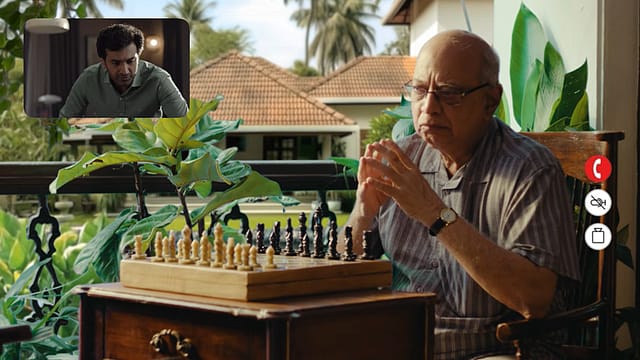
Axis Bank’s new NRI campaign, “Far Away But Never Apart”, provides the latest trigger.
The Modi Years
02 Oct 2026 - Vol 05 | Issue 40
A Nation Rebuilt
One film follows an NRI son who uses Axis Bank’s home-financing support to help his father rediscover companionship and belonging. Another shows a daughter abroad arranging medical care for her mother with assistance from a relationship manager and digital access to funds.
The emotional territory is powerful. Millions of Indians abroad live with the anxiety of ageing parents at home. A video call can carry affection. It cannot accompany a mother to hospital or sit beside a lonely father at dinner.
The films recognise that ache. Then they turn it into a product demonstration. Papa is lonely. Mother is sick. Relationship Manager is ready. The campaign presents itself as an attempt to move beyond product conversations. Yet the plots move directly towards home financing and an overdraft against a fixed deposit. Human vulnerability creates the problem. Banking services complete the screenplay. Axis is hardly alone.
Everyone Has a Dream. Everyone Needs a Product
IndusInd Bank’s “Account Bada Toh Dil Bada” campaign showed a son buying a shop for his baker father. The son’s financial growth allows him to fulfil the father’s dream.
The story is warm. The proposition is less innocent: a bigger account supposedly enables a bigger heart. Generosity has been indexed to account size.
South Indian Bank constructed a Diwali chain of kindness involving children, grandparents, gifts and a security guard. The bank’s app and card appear within the acts of generosity. Kindness travels in a circle. The transaction accompanies it.
ICICI Bank built one of the category’s warmer platforms with “Khayaal Aapka”. Its memorable MySavings Rewards commercial used the relationship between a young girl and an elderly shopkeeper to explain the joy of receiving something extra.
It was beautifully made. It was also selling reward points.
Kotak Mahindra Bank has travelled from “Kona Kona Kotak”, which reassured customers about branch reach, to “Hausla Hai Toh Ho Jayega”, which tries to own courage and ambition.
The newer platform is emotionally larger. Yet the bank remains the enabler positioned between the dreamer and the dream.
HDFC Bank has frequently chosen utility: digital convenience, payments and fraud awareness. Its “Vigil Aunty” character attempted to make secure-banking instructions memorable but reportedly attracted criticism over a stop-sign-like bindi used in the campaign. The message remained instructional. Beware fraud. Protect the account. Bank safely.
SBI carries a different advantage. It does not need to manufacture intimacy as aggressively because generations of Indians already recognise it as an institution embedded in salaries, pensions, education loans, rural banking and government payments. Its most powerful emotional possession is not a fictional family. It is national familiarity.
Yet across the category, one pattern survives: Emotion serves as the waiting room. A financial product is the doctor.
Why Do Banks Keep Doing This?
Banks face a genuine creative difficulty. Their products are important but rarely exciting. A savings account does not dance. A fixed deposit does not flirt. An overdraft is unlikely to become the hero of a dinner-table conversation.
The functional differences between large banks can also be difficult to dramatise. Interest rates change. Apps copy features. Service claims are hard to prove in 30 seconds. Branch networks matter, but nobody wants to watch a film about the location of 5,000 branches.
So, banks borrow emotional milestones. Education gives a loan meaning. A wedding gives savings a purpose. A parent’s illness gives instant access to funds urgency. A business dream gives credit nobility. The strategy makes rational products feel human.
The trouble begins when the emotional story and banking solution have been stapled together rather than born together. You can almost hear the meeting. The creative team arrives with a poignant story about an ageing father. The product team asks: “Home loan kidhar hai?” The father is moved into a new house. Problem solved.
Banks also carry enormous pressure to demonstrate business value. A campaign budget may belong to home loans, credit cards, NRI banking or deposits. The corresponding product must therefore appear. Brand emotion is allowed, provided it reports for cross-selling duty before the final frame.
Performance marketing has intensified this impulse. Every film needs a click, lead, application, download or measurable conversion. A story that merely changes how people feel about the bank can appear financially irresponsible inside a quarterly review. Ironically, this makes bank advertising resemble the worst banker stereotype: every emotional investment must produce an immediate return.
Marketing professor Ashita Aggarwal believes the problem begins with the category’s struggle to distinguish one bank from another. Banking products are largely functional and differences between them are often difficult for consumers to identify. Emotion helps a bank convert an invisible service into a human consequence. "But when the loan, app or relationship manager enters the story too conveniently, viewers can sense that the emotion has been reverse-engineered around the product," reckons Aggarwal, professor of marketing at SP Jain Institute of Management & Research.
The consumer, she argues, does not object to a bank selling something. The discomfort begins when illness, loneliness or family separation appears to have been manufactured solely to create a sales opportunity. An emotional campaign should reveal what the bank believes, how it behaves and why it deserves trust. "If the emotion merely carries the customer towards a product demonstration, the advertising may generate tears without building any distinctive emotional equity for the bank,” she adds.
Is There an Indian Exception?
Federal Bank comes closest.
Its “Rishta Aap Se Hai, Sirf App Se Nahi” platform begins with a tension that belongs specifically to modern banking. Apps have made transactions easier while removing much of the human contact once associated with a branch. In one film, a woman enters a branch and is recognised despite covering part of her face with a scarf. The employee guesses why she has come. Money transfer? Fixed deposit? Cheque book?
None of them. The customer has come to invite the employee to her wedding. No sudden loan rescues the bride. No app finances the invitation. The bank employee matters because a genuine relationship has developed over time. The institution is present in the emotion rather than inserted as its solution. The line also contains a bank-specific belief: technology should improve service without deleting the people who provide it. That is emotional branding. The story reveals what the bank wants to be.
ICICI’s “Khayaal Aapka” also had that potential. So does Kotak’s “Hausla”. Axis Bank’s “Dil Se Open” can accommodate it. The difficulty is maintaining the philosophy without dragging every product into the emotional frame.
India has produced many emotional bank commercials. It has built remarkably few enduring emotional banking brands. Insurance advertising has often done better. “Sar Utha Ke Jiyo” gave HDFC Life a philosophy about dignity. ICICI Prudential’s “Bande Achhe Hain” examined how Indian men express responsibility and affection. Insurance naturally confronts mortality, protection and absence. Banks work with ambition, independence, security and possibility. The emotional material is available. The category keeps converting it into a sales presentation.
The ATM That Said Thank You
TD Canada Trust produced one of the clearest global counterexamples in 2014.
The Canadian bank converted ATMs into “Automated Thanking Machines”. Selected customers approached what appeared to be an ordinary machine and received deeply personal surprises. A mother received a trip to Disneyland with her children. A baseball supporter was given an opportunity connected with his favourite team. Other customers received gifts shaped around their circumstances.
According to TD, the larger #TDThanksYou activation reached more than 30,000 customers. Employees distributed envelopes containing $20 across more than 1,100 branches, while some phone and digital-banking customers received surprise deposits. The campaign worked because TD did not write fictional suffering and assign its product the role of saviour.
It did something kind for actual customers. The emotion emerged from the bank’s behaviour. That distinction should haunt every Indian banking brief: TD operationalised care. Indian banks frequently dramatise it.
Lloyds Bank in Britain offers a second model. Its black horse has travelled through ordinary lives, celebrations, departures and national history under the enduring promise of being “by your side”. The films rarely stop to explain a current account.
However, emotional promises create their own risk. During the controversy surrounding fraud at HBOS Reading, Lloyds’ “By Your Side” claim was reportedly challenged before Britain’s advertising regulator. The complaint was rejected, with the line treated as advertising puffery.
That episode exposes the deeper difficulty. A food brand can exaggerate deliciousness. A bank’s promise of care will be tested against rejected loans, unexplained fees, frozen accounts, branch queues and customer-service calls. The more emotional the advertisement, the harsher the comparison with lived experience.
Let the Emotion Keep Its Account
Axis Bank’s NRI campaign has identified something profoundly real: migration splits families across two worlds, and money often becomes the language through which absent children continue performing responsibility.
That insight deserves a story. It may not need a relationship manager to explain it.
Imagine a banking commercial brave enough to end before the product arrives. A bank that helps an NRI understand his father’s loneliness, then leaves the viewer with the feeling rather than the financing arrangement.
The product can sit on the website. The emotion can remain in the film. Banks already hold our salaries, savings, debts, ambitions, fears and plans for people who may outlive us. Few businesses possess more intimate knowledge of human life. Yet their advertising repeatedly behaves as though none of that matters until somebody applies for a loan. Indian banking advertising does not need another lonely parent. It needs the courage to let the parent finish the story before the banker enters the room.