COP31 Talks Collapse Over Fossil Fuels. India Asks Who Used Up the World’s Carbon Budget
Governments failed to agree on a final climate pact at COP31 in Antalya on Sunday, November 22, after two extra days of negotiations could not resolve a dispute over fossil fuels. At the closing session, India put a question to the delegates debating what the world should do next: “Whose emissions, both past and continuing, have exhausted the carbon budget?”
Amandeep Garg, an additional secretary in India’s Ministry of Environment, Forest and Climate Change, was speaking on behalf of the Like-Minded Developing Countries. His objection went to the heart of the proposed deal. The draft asked governments to take on new global targets. It said far less, he argued, about how much responsibility each country bore for bringing the world so close to 1.5°C of warming, or who would pay for the response.

The Wealth Issue 2026
06 Nov 2026 - Vol 05 | Issue 45
Portraits of Dreamers and Doers under 35
India said it was willing to proceed despite those reservations. Several countries formally objected to the draft, arguing that it weakened earlier commitments and fell short of what the climate crisis demanded. The summit closed without agreement on its overarching decision. CNN described Antalya as the longest climate COP on record and the first major breakdown in the talks since Copenhagen in 2009.
The fossil fuel dispute that two extra days could not settle
The immediate breaking point was the language on fossil fuels, according to CNN. By Sunday, negotiators had spent two weeks and a further two days trying to settle on wording that every government could accept. For some delegations, the final proposal offered less than their governments had already agreed to at previous summits.
COP31 president Murat Kurum, Türkiye’s minister of environment, urbanisation and climate change, expressed frustration at how narrowly the talks had come to turn on wording. “Getting hung up on a single word and stalling the process means dashing the hopes of people expecting good news from us,” he wrote on X. “A system that cannot make decisions benefits no one.”
Kurum said the presidency had worked towards an outcome from the outset and appealed to governments to work together. India’s closing intervention also acknowledged the presidency’s efforts. Garg said developing countries had stayed at the table, even as the effort to settle the overarching text drew negotiators away from items they had come to Antalya with a mandate to deliver.
India asks what a global target means for each country
India’s case rested on a principle known in climate negotiations as “common but differentiated responsibilities and respective capabilities”. In practical terms, countries share an obligation to act, but their contributions should reflect their different capacities and their responsibility for the emissions that have accumulated over time. Garg said that distinction was especially important wherever the draft introduced a new target for everyone.
“We had also expressed our concerns about the dilution of historical responsibility and obligations of the developed country parties in the text,” he told the closing session.
His question about the carbon budget brought that argument down to a finite quantity: the carbon dioxide the world can still emit while retaining a chance of limiting warming to a given temperature. As the prospect of exceeding 1.5°C drew closer, Garg said, governments needed to consider whose past and continuing emissions had used up that allowance.
Earlier agreements had acknowledged differences in responsibility. Garg’s objection was that the Antalya draft repeated their language without explaining what those differences should mean for the decisions governments now faced. “The cover decision does not reflect this and only repeats agreed paragraphs from previous decisions to reflect responsibility and does not connect this with the imminent prospect of exceeding 1.5 degrees centigrade,” he said.
Climate finance was ‘dead in the water’, developing countries were told
Money was a separate source of disagreement. Garg said developed countries had declined to discuss climate finance in several negotiating rooms. Developing countries seeking help to confront a crisis they bore less responsibility for had found it difficult even to get a hearing, he said.
“In fact, we were told that despite the needs of developing countries, due to a problem that we have not caused, we should not expect our developed country partners to even engage on the issue of climate finance since it is dead in the water,” Garg said.
By the time he spoke, the scheduled close was already two days past. Despite its objections on finance, equity and historical emissions, India urged the parties to preserve what they had agreed on and show flexibility on the remaining differences.
“Everyone has worked tirelessly, and despite our discomfort, we are willing to move forward and to continue to engage,” Garg said. “We are committed to multilateralism and the principles of consensus, and we invite our partners to join us as well.”
Climate groups challenge wealthy countries and summit hosts
Climate Action Network, which brings together 2,000 civil society groups in more than 140 countries, placed much of the blame on wealthy governments. It accused developed countries, led by the European Union, of obstructing progress across the negotiations and forcing delegates to spend a summit intended to deliver action defending earlier promises.
“The Implementation COP became a battle to defend commitments governments had already made,” the network said. It argued that governments had missed an opportunity to show that international cooperation could protect people already living with climate damage, war and deepening inequality.
The network also criticised the Turkish and Australian summit leadership. It alleged that the hosts had allowed corporate interests to influence the talks and had devoted too much political attention to a wide-ranging cover decision. Announced before COP31 and introduced during its first week, that draft diverted attention from the main negotiations while making room for carbon capture and carbon dioxide removal, the network said.
Laurence Tubiana, head of the European Climate Foundation, described the collapse as a missed opportunity for governments to show resolve to countries already suffering severe climate damage. She also pointed to the danger of overshooting the warming threshold, a concern India had raised from the floor.
Guterres says the science is clear, even as governments disagree
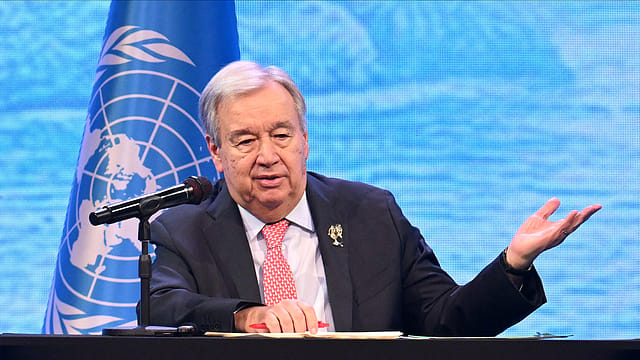
UN Secretary-General António Guterres said he was “deeply disappointed” that COP31 had ended without consensus on an overarching outcome. He shared the frustration, he said, of those who had expected governments to act with the urgency the climate crisis demanded.
“But this setback does not change the facts. There may be no consensus in the negotiating room, but there is no ambiguity in the science,” Guterres wrote on X. “The take-home message from COP31 is clear: The world must do much more to confront the climate crisis. And it must do it now.”