EXPLAINED | What Is COP31, and Who Pays to Protect India From Climate Change?
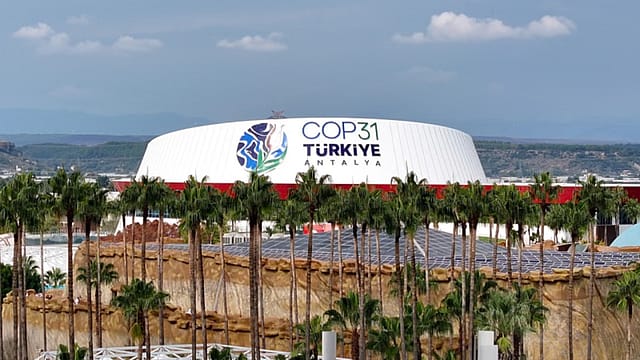
On November 9, governments gather in Antalya for COP31, the United Nations’ annual climate talks. They have two jobs. One is to slow the warming of the planet. The other is to help people live with the warming already here. The second job comes with a bill. India wants to know how much richer countries will pay, when the money will arrive and whether poorer countries will have to borrow it.
Why is COP31 in the news?
COP31 is the 31st meeting of the countries and the European Union that joined the UN climate treaty. COP stands for Conference of the Parties. The first meeting was held in Berlin in 1995. This year Türkiye is hosting, and Australia’s climate minister, Chris Bowen, is leading the negotiations. Ahead of the summit, Bowen called for an outcome people could see was real. For India, one measure of that is whether governments can get the money to protect people before the next disaster.

The Era of Forever Wars
30 Oct 2026 - Vol 05 | Issue 44
Coping with an explosive Middle East
What do countries actually decide at a COP?
They can agree on shared goals and rules. They can decide how to track emissions, how a climate fund should work or how to follow up on an earlier promise. They usually seek consensus, which is why arguments over a few words can hold up a deal. Under the Paris Agreement, each country sets its own climate plan and reports its progress under common rules. The summit can agree on a goal. Governments still have to carry it out.
What did countries promise in Paris?
At COP21 in 2015, they agreed to hold global warming well below 2°C above pre-industrial levels and to pursue efforts to limit it to 1.5°C. The agreement also says developed countries shall provide financial support to developing countries. That money has two uses. It can help cut emissions, for instance by expanding clean electricity. It can also help people prepare for climate impacts, for instance by protecting a coastal village from flooding.
Haven’t we already crossed 1.5°C?
Yes, in individual months and in at least one calendar year. The European climate service Copernicus measured October 2026 at 1.75°C above pre-industrial levels, the hottest October in its records. It expects 2026 to be the second full calendar year above 1.5°C, after 2024. The Paris goal concerns warming over decades. One hot year can cross the line before the long-term average does.
What does El Niño have to do with it?
El Niño occurs when part of the tropical Pacific gets unusually warm. That changes wind and rainfall patterns far beyond the ocean. It can weaken India’s summer monsoon and temporarily raise global temperatures. This one is adding heat to a world already warmed by human activity. Some Pacific readings have broken records. In October, the US climate agency NOAA gave one measure of El Niño strength an 83% chance of setting a record for October through December. That was a forecast for the three-month period.
What would climate money actually buy?
A city could use it to set up heat alerts. A coastal village could use it to restore mangroves that help blunt storm surges. That kind of protection is called adaptation. A separate UN fund deals with loss and damage, the harm that occurs when floods, rising seas or other climate impacts still hit.
How much money have countries promised?
At COP29 in Baku in 2024, countries set a goal of at least $300 billion a year by 2035 for developing countries, with richer countries taking the lead. The goal covers several kinds of climate spending and can draw on public and private money. The UN Environment Programme looked at one part of the bill. It estimated developing countries would need $305 billion a year by 2035 for protection alone. In 2024, they received roughly $28 billion to $32 billion in international public funding for that purpose.
What is India asking for?
India wants reliable funding, mostly from richer governments, on terms that avoid adding to developing countries’ debt. The terms matter. A grant can pay for a flood warning system without leaving the recipient with a loan to repay. India also wants the summit to begin work on how developed countries will meet their funding obligations.
India has filed its own 2035 climate plan. It aims to cut emissions per unit of economic output by 47% from 2005 levels. Put simply, India wants to produce each rupee of economic output with less pollution. Its total emissions can still rise if the economy grows fast enough.
Has this money reached anywhere in India?
Yes. Near Sanghameswaram in Andhra Pradesh, restoration teams reopened narrow channels so tidal water could reach mudflats where mangroves can regrow. Those trees can help slow a storm surge before it reaches homes and fields. The work is part of a programme across Andhra Pradesh, Maharashtra and Odisha backed by a $43.4 million Green Climate Fund grant. The same fund has backed early warnings for floods from glacial lakes in northern Pakistan.
When will we know what Antalya delivered?
World leaders are scheduled to meet on November 11 and 12, and the conference is due to close on November 20. Any finance deal can be read against three plain questions. How much will be available? When will it arrive? Will it come as grants or loans? For the people doing the work, the date that counts is when they can spend it.