Steve Smith and the Long Walk Back From Sandpapergate
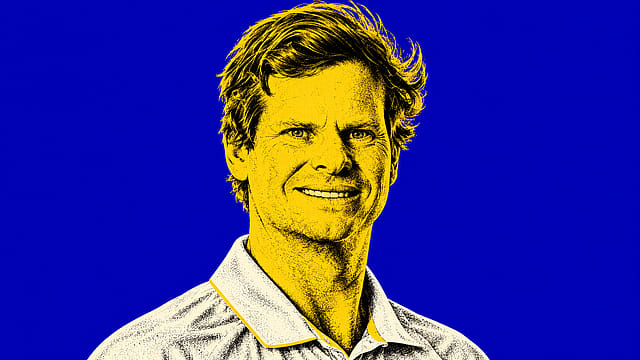
Steve Smith got as far as the words “my old man”. His father, Peter, was standing behind him at Sydney Airport. It was March 29, 2018. Smith had managed to apologise to his teammates, answer a question about David Warner and take responsibility for what had happened in Cape Town. Then a reporter asked what he would say to the children who looked up to him. He began by talking about how much he loved seeing kids play cricket. Then he tried to tell them what it was like to see his own parents hurting. “To see the way my old man’s been...” He broke down. When he could speak again, he added, “and my mum, it hurts.”
Eight years later, on Sunday morning at the Sydney Cricket Ground, Smith came out of the home dressing room to applause. He was playing for New South Wales against Queensland, his first match since former teammate Usman Khawaja claimed in his memoir, Sabr, that everyone in the Australian squad had known about the sandpaper. Pat Cummins and Mitchell Starc disputed that account.

The Wealth Issue 2026
06 Nov 2026 - Vol 05 | Issue 45
Portraits of Dreamers and Doers under 35
Four days before the Sheffield Shield game, Cricket Australia opened an independent forum for players to give theirs. Camera crews waited for Smith, back from the neck injury that had kept him out of the final Test in South Africa. Queensland batted first. For much of the day the 37-year-old stood in the slips.
At one point Smith was given the ball. He bowled two overs of leg-spin, to cheers from the crowd. Anybody old enough to remember how he had got into the Australian team might have enjoyed those twelve deliveries particularly. Once upon a time, bowling leg-breaks was how young Steve Smith got a game.
The boy in Peter Smith’s garage
When Peter Smith was home from his travels for work, he could finish at 4.30 pm and take his son to the park. In Steve’s autobiography, it is Peter who remembers the timetable. At 12 or 13, Steve would get an hour with his dad at Casuarina Oval on Monday. Tuesday was club training. On Wednesday Peter had him again. Even a 50-over match on Saturday could end with another hour together if the boy fancied it. In the garage, a ball hung from a string six inches off the floor. That one Steve could hit for as long as he liked.
At 14, Steven Peter Devereux Smith made his senior debut in the fifths for Sutherland in Sydney’s south. At 16 he was playing first grade. By 19 he was the youngest first-grade captain in the club’s history.
England had a chance at him along the way. His mother, Gillian, was English. Smith told the Follow On podcast that he left school about six months early to play club cricket for Sevenoaks in Kent. At the time, the ambition was simply to find a way to play professionally. At Lord’s in 2010 he made his Test debut for Australia against Pakistan, batting at eight. Shane Warne had worked with him on his bowling. The young leg-spinner also happened to have a first-class batting average above 50.
It took Australian cricket a while to find the right job for him. After the 2010–11 Ashes, he spent a couple of years out of the Test side. The way back opened in India in 2013 when four Australian players were dropped after failing to complete an assignment from the coach. In Mohali, Smith made 92. By December 2014, he was captaining Australia against India in Brisbane and making a hundred in his first Test in charge. The boy who had spent all those hours hitting a suspended ball could now command a net and the services of pretty much any bowler he wanted.
Which makes his choice of practice partner in September 2016 rather sweet. Australia had lost a Test series in Sri Lanka. Home in Sydney before a trip to South Africa, Smith fancied a hit. He asked Peter to feed him some balls, their first session together in about eight years. Later, in Johannesburg, coach Darren Lehmann wanted to know what advice the old man had offered the captain of Australia. “He didn’t say a word actually,” Smith replied. “It was a bit different to when I was growing up.”
Eighteen months later Peter was back at his son’s shoulder. Within days of the airport appearance, a television camera caught him carrying Steve’s cricket kit into the family garage. The man filming wanted to know how his son was doing. Peter put the bag away.
The few seconds in Cape Town
On March 24, 2018, during the third Test against South Africa, television cameras caught Cameron Bancroft working on the ball and then pushing a small yellow object down his trousers. It was sandpaper. At the press conference that followed, Bancroft described tape. Smith, beside him, implicated the team’s leadership group. Cricket Australia’s investigation found that Warner had developed the plan, Bancroft had carried it out and Smith had known of a potential plan and failed to stop it. It also held him responsible for misleading the public. Smith and Warner received 12-month bans. Bancroft got nine months.
What, precisely, had the captain done in the dressing room? Nine months later, Adam Gilchrist pressed him on that point in a Fox Cricket interview. Smith had used the word allowed. Gilchrist wanted to know what allowing somebody to cheat actually looked like. In Smith’s recollection, he had seen enough to recognise the possibility of what Warner and Bancroft were discussing. He remembered saying, “I don’t want to know about it.” Then he walked away.
It is the hardest sentence in his account. He had the authority to end the conversation. Even in December he could supply the words he wished he had used that afternoon. Bancroft would go out on the field and, in the space of a few frames of television, become recognisable around the world as the young man with his hand down his trousers. His captain had been within speaking distance before any of that happened.
When Gilchrist asked about the nine months since Cape Town, Smith took him back to the first week. He had spent much of it “curled up in a ball and in tears”. Gilchrist pressed him. “Really, that dramatic was it?” Smith told him he had struggled to cope. He named the four people he kept ringing. There was Dani, whom he had since married, his father, his manager and his friend Luke. Each would tell him things would be all right. Soon enough he needed to hear it again. Nine months on, when Smith sat down to tell Gilchrist about those calls, Luke had come with him.
Where they knew him at fourteen
In September 2018, the season opened at Glenn McGrath Oval. Sutherland had a familiar name on the team sheet. It had been almost five years since Smith had played on that ground. He remembered a good pitch and a quick outfield. Some of the young men at the club now had an Australian Test captain available to answer questions about their games. That was something he thought he could do for them during the ban.
Smith pulled on the club’s sky-blue cap and made 85. ABC reporter Shaun Giles recorded the other figures of interest to the people who ran the place. The canteen sold nearly 600 sausages and 200 steak sandwiches. The club that had put Steve down to play fifth grade in November 2003 was feeding the people who had come to watch him start again.
The welcome helped. There were still months to go, and in January he needed surgery on his elbow. In all the years Peter had known his son, finding somebody willing to keep bowling to Steve had generally been the difficulty. Now Steve himself could take or leave the game. He later dated the return of his appetite for cricket to the day the brace came off. He could offer no particularly good explanation for it. He wanted to play for Australia again.
Getting through the gate in an Australian shirt took him only so far. At the World Cup in June 2019, he was fielding near spectators at the Oval in London when Indian supporters began to jeer. Virat Kohli, who was batting, turned towards them and gestured for applause. He later said he had apologised to Smith on their behalf. There was something generous in the Indian captain spotting what was happening to an opponent down by the boundary while he had an international innings of his own to attend to. In Birmingham that August, Smith would have to manage the crowd himself.
At Edgbaston, Australia were 122 for eight
Peter Siddle walked out to join him. Two wickets stood between England and the end of Australia’s first innings in the opening Ashes Test. Smith had spent sixteen months away from Test cricket. Now he needed a fast bowler to stay with him long enough to give Australia a score. Siddle obliged. When he went, Nathan Lyon came out at eleven and kept him company all the way to three figures. Up on the Australian balcony, Smith could see what the hundred meant to the men he had come back to play with.
He was last out for 144. Australia had made 284. Some at Edgbaston were still booing him as he left. Afterwards, in the account recorded by The Guardian’s Ali Martin, Smith offered a measure of the distance he had travelled to get there. “There were times throughout the last 15 months where I didn’t know if I was ever going to play cricket again.”
England had to get him out again. He made 142 in the second innings. This time even members of the Barmy Army stood to applaud him. It had taken two hundreds in four days for some people in Birmingham to bring their hands together for Steve Smith. He could hardly have asked more of Siddle and Lyon.
The morning Australia called again
In Adelaide in December 2021, Smith woke around nine to find two missed calls from Cummins and a message from coach Justin Langer. As Smith recalled it, Langer wanted to know, “are you awake?” Down in the meeting room he found out why. Covid protocols had ruled Cummins out of the second Ashes Test. Australia needed their vice-captain to take over that afternoon. There was a small practical difficulty. Smith needed a captain’s blazer for the toss. He borrowed Pat’s. It didn’t fit.
Near the end of play that evening, cricket writer Andrew Ramsey watched Smith put an arm around Marnus Labuschagne as they came off together. At Lord’s two years earlier, Labuschagne had come into an Ashes Test as Smith’s concussion substitute after Jofra Archer struck him. On that tour, the younger batter had offered to clear up Smith’s famously untidy patch of dressing room in exchange for one of his bats. Now here they were walking off in Adelaide, both still to bat the next day, with Smith once more responsible for the young man beside him.
This November, Cummins and Warner found themselves on opposite sides of Khawaja’s account. Warner backed his former teammate. Cummins rejected the suggestion that the whole squad knew. Smith had yet to comment publicly on the memoir when he took the field on Sunday. His own account of the moment he walked away has been on the record since 2018.
On Sunday in Sydney, Queensland finished on 249 for seven. Smith was listed to bat at No. 3 for New South Wales. When play ended, he stayed to sign autographs and pose for selfies.
Eight years ago, strangers at Sydney Airport had pointed their cameras at him while his father stood behind him. This time, strangers wanted to be in the picture with him.