‘It went too far’: Darren Lehmann stands by his sandpaper denial in Australia’s 2018 ball-tampering scandal
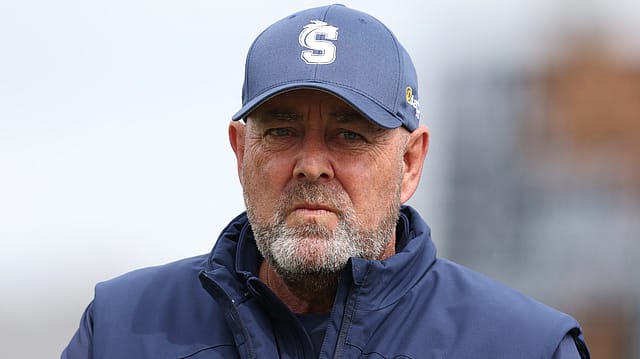
Eight and a half years after television cameras caught Cameron Bancroft using sandpaper on a cricket ball in South Africa, Darren Lehmann says he still remembers how he found out. He saw Bancroft trying to hide it on television. What the former Australia coach says he cannot recall is the tea-break conversation at the centre of Bancroft’s latest account, when David Warner allegedly proposed using sandpaper in front of him.
Speaking to ABC Radio before Australia’s T20 match against England at the Melbourne Cricket Ground on Saturday, Lehmann stood by the account he gave in 2018. He also accepted responsibility for the culture of a team that, in its pursuit of reverse swing, had crossed a line on his watch.

The Wealth Issue 2026
06 Nov 2026 - Vol 05 | Issue 45
Portraits of Dreamers and Doers under 35
“I haven’t changed my views from what happened in 2018. It was a dark time, and we got a lot of things wrong, but my version still stays the same. It was just a bad time. We all made mistakes,” Lehmann said, according to ABC News.
The tea break Bancroft remembers
The dispute over who knew about the sandpaper resurfaced with the publication of Sabr, former Australia batter Usman Khawaja’s autobiography. Khawaja claimed that everyone in the squad knew it was being used. Australia captain Pat Cummins dismissed that claim as “utter nonsense” at a press conference. On Wednesday, Bancroft gave his own account in a 4,000-word column for The West Australian.
Bancroft challenged the Australian bowlers’ position that they had been unaware of the sandpaper. He also identified a particular break in play during the Port Elizabeth Test. At tea on the second day, Bancroft wrote, Warner suggested using sandpaper to roughen one side of the ball. According to Bancroft, both Lehmann and bowling coach David Saker were present.
Asked about that conversation on Saturday, Lehmann said he could not remember being there.
“I can’t remember being present in that conversation. But again, it is eight and a half years ago; you’ll have to ask those people. That’s the issue, I have my version, and that’s where I stand,” he said.
The accounts also differ over a walkie-talkie message to squad member Peter Handscomb. Bancroft said Lehmann asked Handscomb to tell him to get the sandpaper off the field. Lehmann maintained that the first he knew of it was when he watched footage of Bancroft concealing it.
Where the pursuit of reverse swing went wrong
Lehmann rejected the suggestion that he had deliberately avoided asking how his players were getting the ball to reverse swing. He said teams had long tried to roughen one side of the ball to get it moving. What Australia did in South Africa, he acknowledged, went beyond the practices he had seen over his career.
“With reverse swing, you throw it into the dirt, you rough up one side of the ball, you might pick at it; that’s been happening for 100 years,” he said. “For me, I didn’t know, but you’re always ball tampering to try and get the reverse swing happening, but you never go to that extent. In 2018, it went too far, and I’m [responsible] for that as the coach.”
Lehmann acknowledged how much emphasis his team had placed on winning at all costs. Of the tour itself, he said one of his clearest memories was the hostility surrounding the series and the price people paid for what happened.
“You’re always trying to get the ball moving anywhere, in any Test match, whether it’s normal or reverse. It was an ugly series, that’s what I do know. A lot of people suffered and paid the price. I just remember how volatile that series was … and we certainly could’ve handled it better,” he said.
‘I actually lost the best job in the world’
Lehmann also addressed the suggestion that he had emerged from the scandal with little to lose. Coaching Australia had been “the best job in the world”, he said. Losing it was one consequence. Another, less visible to those who followed the case, was how long it took him to feel like himself again.
“People said I didn’t lose anything. I actually lost the best job in the world, and I’m sorry for that, and I’m sorry for what happened. That’s all I can say to the general public,” he said.
“I went to a really dark place. I went to as dark a place as you can think about. It took me probably three to four years to actually get back to some sort of normality.”
Lehmann described the period as traumatic and said he felt for the players and their families as events from the tour came under scrutiny again. Some details remained clear to him, he said. Others he could no longer recall, including whether players had raised concerns about sandpaper at a team meeting.
“There are conversations going on and some people are privy to them and some people are not. I’m not privy to every conversation or meeting,” he said.
That left the question of the four bowlers whose denials Bancroft had challenged: Cummins, Mitchell Starc, Josh Hazlewood and Nathan Lyon. Lehmann said he had no evidence of his own to establish what they knew. Asked where he stood on their account, he answered in personal terms. “I trust the bowlers. Everyone is entitled to their own opinion.”
With inputs from ANI