Why Sandpapergate is Becoming the Worst Scandal in Australian Cricket History
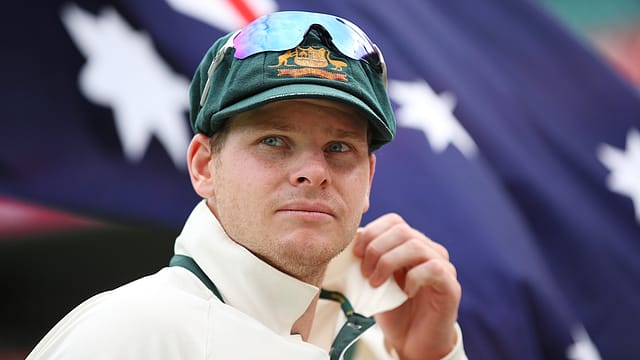
Sandpaper did not make this Australia’s worst cricket scandal. The eight years spent arguing over who knew, who paid and who was protected may yet do it.
Cricket has endured graver offences. Captains have accepted money from bookmakers. Players have arranged deliberate no-balls. Dressing rooms and institutions have sustained racism over years. Ball tampering belongs lower on that scale of wrongdoing.
Yet the scandal that began at Newlands in March 2018 has acquired something more corrosive than the yellow strip Cameron Bancroft tried to hide inside his trousers. It has become a test of whether Cricket Australia established the truth, selected three men to absorb a national humiliation, or accepted a version sufficiently narrow to rescue the rest of the system.

The Wealth Issue 2026
06 Nov 2026 - Vol 05 | Issue 45
Portraits of Dreamers and Doers under 35
Usman Khawaja has now alleged that the entire Australian team knew about the sandpaper, that it was used during the previous Test in Port Elizabeth and that a coaching staff member encouraged Bancroft to do “more” at Cape Town.
David Warner has endorsed Khawaja’s account and accused CA of a “cover-up”. Pat Cummins says the claims are “complete and utter nonsense”. Mitchell Starc’s recollection remains unchanged. Glenn McGrath wants the country to move on. Michael Clarke wants the investigation reopened. CA chief executive Todd Greenberg says nothing would be gained from another inquiry.
Australia has entered a cricketing civil war over its recent past. The governing body’s refusal to revisit the case no longer closes the argument. It makes the argument larger.
Cricket Australia Found Three Culprits and Saved the System
The official story arrived quickly in 2018.
Warner devised the plan. Bancroft carried it out. Captain Steve Smith became aware that something was being contemplated and failed to stop it. CA banned Warner and Smith for 12 months, Bancroft for nine, and permanently barred Warner from leadership.
The sanctions were far more severe than the penalties commonly imposed for ball tampering. Australia demanded moral cleansing, and three televised apologies supplied it. Smith cried at Sydney airport. Bancroft faced the cameras in Perth. Warner held his daughters while apologising for the damage caused to his family and the game.

The country received its culprits. Cricket Australia received closure. The speed and tidiness of that conclusion should have troubled Australian cricket then. It should trouble it more now.
CA’s own independent ethics review later found an organisation that pursued victory “without counting the cost”. The 147-page review described structural failures, concentrated power, negative behaviour encouraged by player management and a culture in which cricketers were reluctant to challenge teammates.
The review explicitly warned against treating Newlands as the aberrant conduct of a few players. CA’s disciplinary process had already done exactly that.
Khawaja Says Sandpaper Was Used Before Cape Town
Khawaja’s autobiography, Sabr, transforms the timeline.
His account begins before the first Test in Durban, where he says a staff member told the team that the ball had to move through the air, whatever it took. During the second Test in Port Elizabeth, Khawaja alleges that sandpaper was tried on the ball inside the dressing room. The result, he writes, was immediate and obvious: one side became dry and severely scuffed.
“Everyone had a look at the ball and was laughing their heads off,” he writes.
According to Khawaja, Bancroft then offered to apply the sandpaper after intervals because television cameras followed Warner too closely. Smith allegedly raised his hands, said he did not want to know and walked away.
Khawaja also describes watching the altered ball reverse dramatically. He says one bowler remarked during a wicket celebration that it was moving so much that nobody should touch it again.
At Cape Town, Khawaja alleges, a member of the coaching staff approached Bancroft and asked for “more” because drizzle had left the ball wet.
These are detailed claims. They include another Test, a supposed experiment in the dressing room, an alleged staff intervention and conversations involving several players. They cannot be answered by repeating that Warner, Smith and Bancroft were the only three people punished at Cape Town.
Khawaja says he urged the team to accept responsibility collectively. The team manager reportedly agreed with him, while two players opposed the idea. Khawaja then waited for CA’s investigators to call.
The call never came.
David Warner Says Three Men Received a Life Sentence
Warner’s intervention has changed the character of the dispute.
He has spent eight years carrying the label of mastermind. He served his playing ban, lost the right to hold leadership positions and watched the episode follow his family long after he returned to cricket.
When Khawaja published his account, Warner called it “100 per cent accurate”. He thanked his childhood friend for telling the story and said the 2018 investigation had been rushed and botched.
Warner later alleged that Josh Hazlewood, Starc and Nathan Lyon were not interviewed by CA. He argued that an inquiry unable to question the principal bowlers could not credibly clear them of knowledge.
“That stinks of a cover-up,” he said.
The narrow factual claim is disputed. Australian reporting, citing sources familiar with the investigation, says the three bowlers were interviewed. Cummins says he was interviewed.
That contradiction does not dispose of Warner’s larger argument. Khawaja apparently was not interviewed, despite sitting beside Bancroft and later urging collective responsibility. The original inquiry has never been published in sufficient detail for the public to know who was asked what, which accounts were tested and how its conclusions were reached.
Warner’s motive is personal. Personal injury can sharpen memory as readily as it can distort it. CA still has to answer his questions.
Pat Cummins Says Khawaja Has Damaged Lives
Cummins responded through an extraordinary press conference lasting more than an hour.
He called Khawaja’s claim “100 per cent wrong” if it meant that everyone knew sandpaper was being taken onto the field. He said suggestions that he and other bowlers had helped devise the scheme were “complete and utter nonsense”. He had received legal advice that some of the claims were probably defamatory, although he ruled out suing his former teammate.
Cummins accused Khawaja of being casual with people’s lives and reputations.
The anger is understandable. Khawaja’s collective language places suspicion upon every player and staff member from the tour, even when he declines to identify individuals. A man who says he knew creates an ethical obligation to be precise about who else knew and what each person knew.
Cummins also represents the celebrated repair of Australian cricket. He became captain of a team presented as calmer, humbler and less hostile than the group disgraced at Newlands. Khawaja himself has praised that cultural transformation.
If Khawaja’s version is accepted in full, the face of Australia’s rehabilitation becomes part of the unresolved history of the old regime. Cummins is defending his integrity and the legitimacy of everything built under his captaincy.
His denial deserves serious weight. It also deserves the support of an investigation stronger than CA’s insistence that everyone had an opportunity to volunteer information.
Starc, Hazlewood and Lyon Have Maintained Their Denial
Starc says his recollection has not changed. He maintains that the bowlers did not know a foreign substance had been taken onto the field and says Khawaja’s book was the first time he had heard that sandpaper was used at Port Elizabeth.
In 2021, Starc, Cummins, Hazlewood and Lyon issued a joint statement after Bancroft suggested that awareness among the bowlers was “self-explanatory”. They said they learnt about the sandpaper only when television images appeared on the big screen at Newlands.
Their defence included an important detail. The umpires inspected the ball after Bancroft was exposed and did not replace it because they found no obvious damage.
That supports the possibility that the bowlers did not detect illegal alteration. It does not address Khawaja’s allegation that sandpaper had been discussed and used during the previous Test, or his description of the ball reversing dramatically after being scuffed.
Hazlewood and Lyon have not made fresh public statements during the latest eruption. Smith and Bancroft have also remained silent. Their silence may reflect exhaustion, legal caution or a desire to protect lives rebuilt after 2018. It leaves the central accounts irreconcilable.
Glenn McGrath Says People With Agendas Are Keeping It Alive
McGrath has offered the argument many Australians want to hear.
“They were bloody idiots for what they did; they should never have done it,” he said. He then urged cricket to learn from the episode and leave it in the past.
McGrath questioned what benefit the game could receive from finding all the answers now. He accused journalists and critics from countries that disliked a strong Australia of using the scandal to pursue their own agendas.
The appeal to national solidarity is emotionally powerful and intellectually weak.
Finding out whether three players carried punishment for wider conduct would benefit the game. Establishing whether a national governing body investigated its own team competently would benefit the game. Giving Cummins and the bowlers a credible process through which to clear their names would benefit the game.
Australian cricket’s strength is irrelevant to those questions.
McGrath’s position reveals why Sandpapergate has survived. Calls to move on have repeatedly replaced the work required to make moving on possible.
Gilchrist Wants Closure, Clarke Wants the Case Reopened
Adam Gilchrist has also urged Australian cricket to move forward. Without new evidence capable of resolving the conflicting accounts, he sees no obvious destination for another inquiry. Australian Cricketers’ Association chief Paul Marsh has emphasised the human beings caught in the dispute and called for the vitriol to stop.
Michael Clarke has taken the opposite view.
The former Australian captain says supporters cannot know what to trust until the inquiry is reopened. He argues that Australia missed opportunities to establish the truth in 2018 and again in 2021 after Bancroft’s comments.
“The truth didn’t come out,” Clarke said.
Clarke also understands that Sandpapergate altered the succession of Australian leadership. Smith lost the captaincy. Tim Paine replaced him. Cummins later inherited the role. The consequences shaped Australian cricket for years.
An incomplete account of Newlands would, therefore, contaminate more than the original sanctions. It would sit beneath every leadership decision and cultural claim made since.
Lehmann and Hick Reject Khawaja’s Version
Former coach Darren Lehmann has acknowledged that ball tampering was widespread across international cricket before 2018. He rejects Khawaja’s assertion that everyone in the Australian camp knew about the sandpaper.
Lehmann has also questioned the value and timing of the disclosures, pointing to the release of Khawaja’s book. He says the renewed controversy has revived painful memories for players, staff and their families.
Former batting coach Graeme Hick has been more direct. He called Khawaja’s collective allegation “absolutely false” and said he knew nothing about sandpaper discussions at Port Elizabeth or Cape Town until the images appeared on the Newlands screen.
Warner answered by attacking Hick’s standing within the team rather than rebutting the substance of his denial.
That exchange captures the deterioration of the debate. Witnesses are questioning one another’s proximity, popularity, motive and memory. CA has allowed the argument to become a contest of personal credibility because it will not provide a transparent institutional account.
The Ethics Review Heard Whispers of Wider Knowledge
Simon Longstaff, who led the independent review of CA’s culture after Newlands, has now supplied another disturbing detail.
Longstaff says he heard “whispers” that ball tampering had occurred earlier and that more people knew. He offered senior figures opportunities to add to their accounts, but nobody altered their version. He encountered what he described as a blank wall.
He found Cummins convincing in his latest denial and believes the present captain did not know. Longstaff nevertheless says that leaves another question: whether considerably more people knew, even if Cummins did not.
This is the most credible middle ground in the dispute.
Khawaja’s phrase “all of us” may be too sweeping. Cummins may be entirely truthful about his own knowledge. The official claim that knowledge ended with three people can still be incomplete.
CA behaves as though disproving the word “all” would validate the original investigation. It would not.
Cricket Australia’s Refusal to Investigate Is Untenable
Greenberg says players hold different recollections, CA remains comfortable with the 2018 findings and no compelling reason exists to reopen the case.
That position is increasingly indefensible.
Khawaja has introduced allegations about Port Elizabeth that the original inquiry did not publicly address. Warner has alleged a predetermined hunt for culprits. Longstaff confirms that his culture review heard suggestions of earlier conduct and wider knowledge. Clarke wants another inquiry. Cummins says reputations are being defamed.
The conflicting accounts provide the compelling reason.
CA does not need to relitigate every rumour or stage another spectacle. It should publish the scope and methodology of the 2018 inquiry, identify everyone interviewed, release as much of the findings as privacy and law permit, and commission an independent assessment of the new claims.
If Khawaja is wrong, Cummins, Starc, Hazlewood, Lyon and the staff deserve authoritative vindication. If Khawaja is substantially correct, Warner, Smith and Bancroft deserve an honest account of why the burden fell so narrowly.
Refusing to examine either possibility protects only the organisation that conducted the first inquiry.
Why Sandpapergate Is Becoming Australia’s Worst Cricket Scandal
Match-fixing remains cricket’s gravest assault on sporting integrity. The 2000 corruption crisis involved captains and players accepting money to influence performances. Pakistan’s 2010 spot-fixing case produced criminal convictions and long bans. The Yorkshire racism scandal documented human harm sustained over years.
Sandpapergate began with a lesser offence. Its afterlife has become uniquely destructive to Australia.
It has implicated successive captains, divided former teammates, reopened injuries inside families and placed the credibility of the national governing body against the testimony of prominent players. It has turned Australian greats against one another over whether truth serves cricket or damages it.
Three men were punished. The culture was blamed. The inquiry remained opaque. Eight years later, witnesses still cannot agree on where the conduct began or how far knowledge travelled.
The worst scandal is not always the one involving the worst original act. Institutional evasions can deepen an offence long after the physical evidence has disappeared.
Cricket Australia had a chance in 2018 to produce an account capable of surviving scrutiny. It produced a conclusion that survived only while the dressing room stayed quiet.
Khawaja has broken that silence. Warner has accused the institution of protecting its narrative. Cummins has placed his reputation against theirs.
Australia can no longer move on by instruction. It first has to establish what it is moving on from.