Usman Khawaja’s Sabr Reopens Sandpapergate. What Else Did He Reveal?
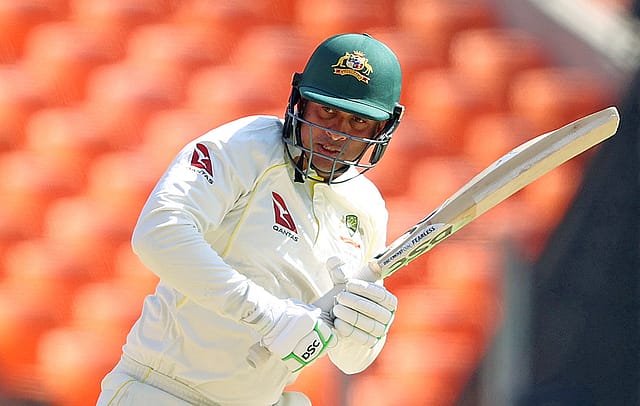
Usman Khawaja played 88 Tests for Australia. In Sabr, his first book, he revisits two moments when television cameras caught Australian cricket in trouble. At Lord’s in 2023, they showed members confronting players in the pavilion. In Cape Town in 2018, they caught Cameron Bancroft with sandpaper. Khawaja says there was more to both incidents. He says he knew about the tampering and stayed quiet. His account has divided former teammates, and Cricket Australia says it will stand by its original inquiry.
What does Khawaja say he heard at Lord’s?
He says someone among the members directed an anti-Pakistani slur at him as Australia walked in for lunch on 2 July 2023, the last day of the second Ashes Test. The Ashes is the Test series between England and Australia. The players were passing through the Long Room, a hall inside the pavilion that separates the field from the route to their dressing rooms. The Marylebone Cricket Club, or MCC, owns Lord’s and looks after the Laws of Cricket.

The Wealth Issue 2026
06 Nov 2026 - Vol 05 | Issue 45
Portraits of Dreamers and Doers under 35
Khawaja says one man shouted into his ear. He challenged him, walked on and then heard someone else use the slur. He asked security to intervene but says he could not identify the speaker. He also alleges that a member tried to trip him and David Warner on the stairs. The broadcast shows the confrontation. It does not establish who used the words Khawaja describes.
Who is Usman Khawaja?
He is a left-handed batter born in Islamabad who grew up in Sydney. When he made his Test debut against England in January 2011, he became the first Muslim and the first Pakistan-born cricketer to play Tests for Australia. He trained as a commercial pilot before establishing himself in the national team. Sabr, the Arabic word for patience, is a useful title for someone who lost his Test place eight times.
His most productive years came late. At 35, he returned to the Test side in January 2022 when Travis Head was unavailable with COVID and scored a century in each innings in Sydney. He made 180 against India in Ahmedabad in March 2023, helped Australia win the World Test Championship that June and was named the International Cricket Council’s men’s Test cricketer of the year. He retired from international cricket in January 2026 at the same ground where he debuted, with 6,229 Test runs and 16 centuries.
Why were the Lord’s members so angry?
England’s Jonny Bairstow walked out of his crease, the line that marks his ground, after letting the last ball of an over pass him. Australia wicketkeeper Alex Carey caught it and threw it at the stumps. Bairstow appeared to think play had stopped, but Carey still regarded the ball as live. The umpire ruled him stumped.
Some England supporters felt Australia should have withdrawn the appeal. The argument over sportsmanship spilled into the pavilion when the players left the field. Australia won by 43 runs. Khawaja criticised the members’ behaviour after the match. The specific allegation about the slur is the detail he has now put in his memoir.
Did the MCC punish anyone for racist abuse?
The MCC apologised to Australia and disciplined three members over the confrontation. In October 2023, it expelled one and suspended the other two for four and a half years and 30 months. The published charges covered abusive, offensive or inappropriate behaviour or language. The club kept the names and detailed findings confidential. Those sanctions do not tell us whether its panel heard evidence about the slur or identified anyone who used it.
On 10 November, The Guardian reported, citing MCC sources, that the club had no plans to revisit the case. The original confrontation came days after an independent commission reported widespread discrimination in English and Welsh cricket. Its findings concern the wider game and predate the incident.
What was Sandpapergate?
On 24 March 2018, during the third Test against South Africa at Newlands in Cape Town, television cameras caught Bancroft handling a small object and then hiding it in his trousers. Cricket Australia found he had used sandpaper in an attempt to alter the ball. As a cricket ball wears, it can start to bend through the air in the opposite direction to normal swing. That is called reverse swing. It is legal when it comes from ordinary wear. Deliberately scuffing the ball with sandpaper is against the rules.
The inquiry found that vice-captain David Warner developed the plan, Bancroft carried it out and captain Steve Smith knew about it and failed to stop it. Cricket Australia found that prior knowledge was confined to those three. It banned Smith and Warner for a year and Bancroft for nine months. India’s cricket board also barred Smith and Warner from the 2018 IPL.
What does Khawaja say the inquiry missed?
He says sandpaper had already been used during the second Test in Port Elizabeth, now Gqeberha. “It was all of us,” he says of how widely the plan was known. In his account, members of the touring party openly discussed changing the condition of the ball, and an unnamed member of the coaching staff later encouraged Bancroft to do more of whatever he was doing. Khawaja says he knew about the tampering and did not object. He says he did not personally alter the ball.
He describes similar behaviour in the Sheffield Shield, Australia’s domestic competition for the long form of the game. One episode he cites is on the record. In 2016, Victoria bowling coach Mick Lewis pleaded guilty to tampering in the Shield final and was fined. That case establishes one incident in domestic cricket. Khawaja’s wider account of how common the practice was remains his recollection.
Who backs him, and who disputes his account?
Warner, his childhood friend and one of the three players sanctioned, backed the account on 9 November. He said the inquiry had been rushed and questioned why Khawaja, who says he sat next to Bancroft, was not interviewed. Chadd Sayers, who was on the tour and played the following Test, also supported Khawaja’s account while questioning why he had waited to speak.
Fast bowler Mitchell Starc said on 10 November that his recollection had not changed. The dispute had already resurfaced in 2021 after Bancroft hinted that other players knew. Starc, Pat Cummins, Josh Hazlewood and Nathan Lyon then said they did not know anyone had taken a foreign substance onto the field until they saw the footage at Newlands. They pointed out that the umpires inspected the ball and did not replace it. Starc also said the claim about the previous Test was news to him. Then coach Darren Lehmann denies knowing about the sandpaper and doubts that everyone knew. On 11 November, ABC reported that Warner had backed former match referee Chris Broad’s criticism that Lehmann had escaped sanction. Cricket Australia found no evidence of prior knowledge on Lehmann’s part in 2018. He stepped down after the scandal.
Why did Khawaja wait eight years?
Khawaja says he wanted to speak in 2018 but Smith talked him out of it. He says he tried again in 2021 to get the team to accept collective responsibility. He felt unable to go public while he was back in the side and promised Warner he would give his account after retiring. He has rejected the suggestion that he did it to sell books.
The timing drew questions on ABC’s 7.30 on 10 November. Khawaja called for the team to accept responsibility and would not say what individual friends should do. He acknowledged he did not know what the book would do to his friendship with Cummins. After reports that planned TV and radio appearances were being dropped, Penguin told ABC on 11 November that the tour would continue with changes and that Khawaja would give further interviews.
Does he say race cost him the captaincy?
Khawaja writes that he thought he was in line to become interim captain when Smith was sent home from South Africa in 2018. He had led Queensland. He suspected that his role in a player pay dispute and his race counted against him when Tim Paine got the job. On ABC, Khawaja said he had no concrete evidence that race decided the appointment. Looking back, he said Paine had been a good captain and he did not think the decision was wrong.
What did he reveal about the 2013 India tour and the 2016 South Africa tour?
In India, Khawaja was one of four Australians stood down for the Mohali Test in 2013. After defeats in Chennai and Hyderabad, coach Mickey Arthur had asked players to send ideas for improving their performance and the team’s. Khawaja, Shane Watson, Mitchell Johnson and James Pattinson missed the deadline. That became known as Homeworkgate. The book adds Khawaja’s account of arguing with team manager Gavin Dovey over his attitude and stopping when captain Michael Clarke intervened. Arthur later said the players had forgotten the task and that he had intended to use their suggestions to plan training.
Khawaja also recalls a team meeting near the end of a 5–0 one-day series defeat in South Africa in 2016. He says some coaching staff appeared drunk, and remembers asking George Bailey, the captain, how the meeting could help. He describes Bailey as sober. That is Khawaja’s account of the meeting. It does not establish what caused the losses.
Why was he upset with Travis Head?
When back spasms kept Khawaja from opening in the first Ashes Test in Perth in November 2025, Head took his place in the chase and made 128 in a two-day win. Khawaja writes that he congratulated him. What hurt, he says, was hearing Head subsequently talk about wanting the opening job and quietly pushing for it. Khawaja says he did not think Head set out to displace him, but that the public discussion put his family under strain.
There was another argument over the same Test. Critics questioned whether Khawaja had prepared properly after he played golf before the match. At his retirement announcement, he said the back spasms were beyond his control and that some of the attacks on his work ethic echoed stereotypes he had faced for years. That was his assessment of the criticism.
What illness did he keep from teammates?
Khawaja says he was diagnosed with rheumatoid arthritis at 22, before his Test debut. It is a condition in which the immune system attacks the joints, causing pain and swelling. He told ABC’s Australian Story in October that at one point the pain in his knee left him unable to walk to the bathroom. He credits treatment with getting him back to cricket. He told medical staff and some officials but kept the diagnosis from teammates, including Warner. He says he feared being treated differently or having the illness held against him.
Why did he clash with the ICC over Gaza?
Before the December 2023 Perth Test against Pakistan, Khawaja trained in shoes bearing messages about freedom and equal human worth. He wanted to draw attention to civilian suffering in Gaza. He did not wear the messages in the match. The ICC reprimanded him for wearing a black armband without prior approval. Khawaja said the band was for a personal bereavement. A later request to display a dove and olive branch was also turned down. The ICC’s rules require approval for personal messages. Khawaja argued that his proposed message was humanitarian and asked for the rules to be applied consistently.
What could settle the questions the book has reopened?
Cricket Australia chief executive Todd Greenberg says the board has no compelling reason to reopen the inquiry. He says people can still bring forward information. The players’ accounts now differ on whether sandpaper was used before Cape Town and who knew about the plan at Newlands. Specific testimony about who was present and what they heard could help answer those questions. They matter to the current team because Cummins, one of the four bowlers who signed the 2021 denial, is now Test captain. He acknowledged speaking to Khawaja before publication. As of the morning of 11 November, he had yet to respond publicly to the book’s release.
At Lord’s, the question is narrower. The club has confirmed that it punished members for their conduct. Its public account leaves unanswered whether its inquiry examined the racist language Khawaja says he heard.