India Beat Pakistan in U19 Asia Cup Final: How Mohit Ulva Sealed a Last-Ball, One-Wicket Thriller
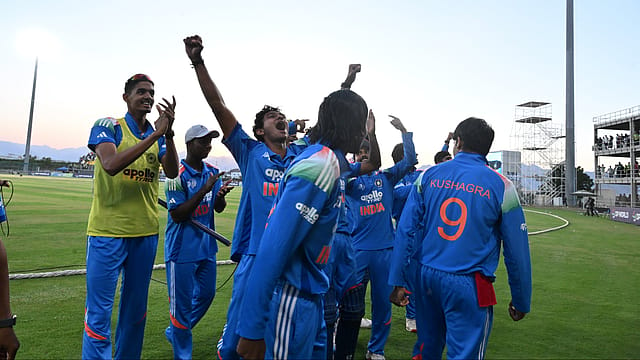
India needed 86 runs from 48 balls. Two wickets remained.
The scoreboard at the Al Amerat Cricket Ground in Muscat read 252/8 after 42 overs. Pakistan had made 337/9. India’s established batters had gone. Aaryavir Sehwag’s injured-arm resistance was over. Anvay Dravid was back in the pavilion. Pakistan had already beaten India once in the tournament and stood eight overs away from doing it again in the final.
Mohit Ulva was yet to score.
Forty-eight balls later, he stood unbeaten on 49. India had 339. The last ball had disappeared for four. A one-wicket victory had delivered India its 10th Under-19 Asia Cup title.
Some chases are constructed around a century. This one survived because a No. 10 batter refused to accept what the scoreboard was saying.

The Wealth Issue 2026
06 Nov 2026 - Vol 05 | Issue 45
Portraits of Dreamers and Doers under 35
How Pakistan Set India a Daunting 338-Run Target
Pakistan chose to bat and built an innings that appeared designed to break a chasing side.
Usman Khan made 107 from 111 balls, combining control with acceleration. Abdul Qadir supplied the violence, smashing 80 from 54 balls with eight sixes. Captain Farhan Yousaf added 63 from 60 as Pakistan reached 337/9 from its 50 overs.
India prevented the total from becoming even larger through a late burst of wickets. Kavya Patel finished with 4/69, while Chigurupati Venkata took three wickets. Pakistan had been 299/3 before losing six wickets for 38 runs.
The damage had already been done. India required 6.76 runs an over from the beginning of a final against an attack that had defeated it during the group stage.
Aaryavir Sehwag Batted Through Pain to Launch India’s Chase
Aaryavir Sehwag did not begin the innings like a batter chasing personal headlines. He absorbed Pakistan’s early pace, took a painful blow on the forearm and continued.
When he completed his half-century, he borrowed Virat Kohli’s familiar “let the bat talk” celebration. The gesture carried attitude. The innings around it required restraint.
Aaryavir made 58 from 61 balls and shared a century opening stand with captain Lakshya Raichandani. India reached 90 without loss after 17 overs. The chase had a platform, although the required rate was already rising beyond 7.5.

Niqab Shafiq ended Aaryavir’s innings when the opener advanced and miscued a loft to long-off. His dismissal removed India’s most fluent batter and gave Pakistan an opening.
The innings was also the closing argument in an outstanding personal tournament. Aaryavir finished with 361 runs, the highest aggregate in the competition. His final did not produce the century his surname might have encouraged people to expect. It produced something equally revealing: a teenager batting through pain in a chase of 338.
How India Slipped From a Strong Start to 252/8
The opening stand had kept India alive. The middle overs pushed the chase towards collapse.
Lakshya tried to hold the innings together, but Pakistan kept removing partners. Anvay Dravid departed. The asking rate climbed. Every wicket transferred more responsibility to batters with less experience and less room for error.
By the end of the 42nd over, India were 252/8. The equation was brutal: 86 runs, 48 balls and two wickets.
A conventional response would have been to preserve the last wickets and hope the bowlers lost control. Manal Chauhan and Mohit chose aggression.
Manal was already 21 from 15. Mohit was scoreless from three. Pakistan still had the advantage, but it no longer had a quiet ending.
Manal Chauhan and Mohit Ulva Turned Survival Into a Counterattack
The next four overs produced 52 runs.
Manal struck Mohammad Sayyam for two sixes in the 44th over. Mohit joined him with a boundary from the final ball. The over cost 19.
The pair took another 13 from the 45th. Ali Raza’s 46th over disappeared for 13 more, including a Mohit six over midwicket. India reached 304/8 with four overs remaining.
The target that had looked absurdly distant was suddenly 34 runs away.
Manal’s 47 came from 31 balls. His innings carried India from impending defeat into a contest Pakistan could feel slipping. When Niqab Shafiq dismissed him at 309/9 in the 48th over, Pakistan finally had the breakthrough.
India still needed 29 runs. One wicket remained. Mohit had 30 from 17 balls. Chigurupati Venkata walked in at No. 11.
How India Scored 25 Runs From the Final 12 Balls
The 48th over ended with India on 313/9. Twenty-five were required from 12 balls.
Mohammad Sayyam had the penultimate over. Mohit met the first delivery with four through the covers and sent the second for six. Two balls had cut the equation from 25 off 12 to 15 off 10.
Venkata found another boundary through third man. Singles kept the strike moving. The over produced 17 runs.
India entered the final over on 330/9. Eight runs were needed. Pakistan had one wicket to take.
Ahmed Hussain began with a dot ball. The next delivery went wide. Mohit and Venkata collected four singles, leaving India three runs short with one ball remaining.
Mohit was on 45. Ahmed ran in for the final delivery of the Under-19 Asia Cup. Mohit found the boundary.
India reached 339/9 from exactly 50 overs. Mohit finished unbeaten on 49 from 26 balls, with five fours and three sixes. Venkata’s 11 from eight balls completed a last-wicket partnership worth 30.
His score stopped at 49 after the title had been secured.
Why Mohit Ulva’s 49 Was Bigger Than a Fifty
Scorecards reward numerical landmarks, while matches are remembered through their circumstances.
Mohit arrived with India eight wickets down and the required rate above ten an over. He had no established batter available to guide him. A single error could end the final. He responded by scoring at a strike rate of 188.46.
He attacked Pakistan’s frontline bowlers and refused to wait for weaker deliveries. His boundaries came at decisive moments: the sixes during the eighth-wicket stand, the four and six at the start of the 49th over, and the final-ball boundary.
An unbeaten 49 can look incomplete on an ordinary scorecard. Here, it contains the entire ending.
How India Avenged Two Defeats Against Pakistan
Pakistan had beaten India by three wickets during the group stage of the same tournament. It had also defeated India in the previous U19 Asia Cup final.
The rematch appeared to be following the same direction when Pakistan posted 337 and then reduced India to 252/8.
India’s response carried significance beyond the rivalry. The chase demanded a kind of depth that age-group cricket is supposed to reveal. The opening batter absorbed a blow and made 58. The lower order attacked a target that had moved beyond the recognised batting. The No. 11 contributed under final-over pressure.
Those details matter more to selectors than the trophy photograph. They show which players can think when the match has abandoned its expected script.
India’s 10th U19 Asia Cup Title Came From Its No. 10
India’s record-extending 10th U19 Asia Cup title will carry familiar names. Aaryavir Sehwag finished as the tournament’s leading run-scorer. Anvay Dravid remains part of a team followed closely because of its cricketing bloodlines.
The final belonged to a less celebrated name batting in an unlikely position.
Mohit Ulva walked in at No. 10 with India 231/7. Soon, it became 252/8. By the time Manal fell, Mohit had become India’s senior batter. By the last over, he was carrying the trophy chase with the final wicket beside him.
Pakistan produced one century and three scores above 60. India’s highest individual score was 58, yet it chased 338 because its No. 10 produced the innings the match demanded.
At the start of the final ball, Mohit Ulva was one boundary away from the title and five runs away from a personal fifty.
He struck the boundary and took the trophy.