From Manchester to Mount Maunganui: Meet Matt Henry, the New Zealand Bowler Who Keeps Breaking India
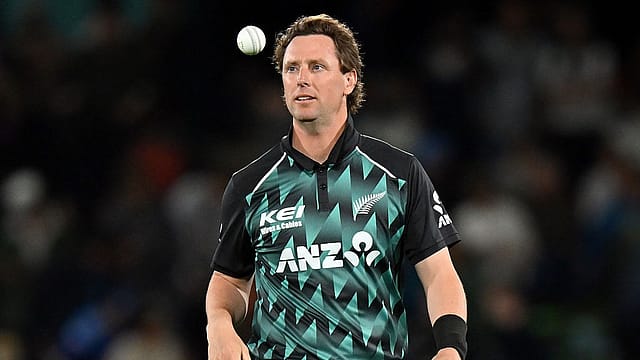
Ruturaj Gaikwad walked out to open India’s chase of 334 and watched the first over from the non-striker’s end.
He watched Rohit Sharma edge the first delivery to Finn Allen at slip. He watched Virat Kohli defend, miss and defend again before Matt Henry bowled him with the fifth ball. Shreyas Iyer replaced Kohli, faced the final delivery and was trapped lbw.
Gaikwad had started the innings as one of India’s two openers. Before he had faced a ball, he was the only member of the top four still standing.
The scoreboard at Mount Maunganui read 0/3. Henry had delivered a triple-wicket maiden.
India never recovered. They were dismissed for 89 in 26.4 overs and lost the fourth ODI by 244 runs, their second-heaviest defeat by runs in the format. Henry finished with 6/27 from 9.4 overs, the best figures of his international career.

The Wealth Issue 2026
06 Nov 2026 - Vol 05 | Issue 45
Portraits of Dreamers and Doers under 35
It was a startling spell with a familiar victim.
Henry made his ODI debut against India in 2014 and took four wickets. He dismantled India’s top order in the 2019 World Cup semi-final. He took five when India were bowled out for 46 in Bengaluru in 2024. He claimed another five against them at the 2025 Champions Trophy.
Across 12 years, formats and continents, India have repeatedly encountered Henry at the beginning of their most spectacular collapses.
The peculiar part is that New Zealand spent much of the same period struggling to find him a permanent place.
India were there at the beginning
Matt James Henry was born in Christchurch on December 14, 1991. He entered first-class cricket for Canterbury at 19 and immediately suggested that waiting would not come naturally to him.
Henry took 5/23 from nine overs against Wellington on debut in March 2011. New Zealand Cricket’s report described a teenager helping Canterbury complete a 76-run victory.
His progress soon encountered a threat far larger than selection.
At 21, Henry was diagnosed with a severe lower-back stress fracture after bowling with the problem for approximately a year. The damage required spinal-fusion surgery involving screws and a titanium cable in his lower back.

The procedure was considered an extreme intervention for a young fast bowler. Henry had to confront the possibility that the career visible at Rangiora might end before his international debut.
Shane Bond became an important source of reassurance. The former New Zealand fast bowler knew how quickly a back injury could turn pace into fear. He encouraged Henry to trust the repaired spine instead of treating every sensation as proof that the problem had returned.
“Coming back was a mental battle,” Henry later told The Guardian. “You have doubts, twinges and fears that the problem is returning.” Bond’s most important advice was direct: “Your back is now stronger than ever, you’ve done everything right, just let go and trust it.”
Henry did.
New Zealand handed him his ODI debut in Wellington on January 31, 2014, after Hamish Bennett was injured. India had already lost the series, but they possessed a batting order that included Rohit Sharma, Virat Kohli, Ajinkya Rahane, Ambati Rayudu and MS Dhoni.
Henry took 4/38. At the time, they were the third-best figures by a New Zealand bowler on ODI debut.
An international career began with India attempting to understand his seam. Twelve years later, the exercise remains unfinished.
The fourth seamer in a three-seamer age
Henry’s difficulty was never a shortage of skill. It was an abundance of New Zealand fast bowlers.
Trent Boult could swing the new ball late and at speed. Tim Southee had control, longevity and an outswinger refined across formats. Neil Wagner developed a short-ball method that made him indispensable in Test cricket.
New Zealand frequently required only three specialist seamers. Henry was often the fourth.
He travelled, prepared and waited. He entered when somebody was injured, bowled well enough to invite a selection debate, then returned to the edge of the XI when the established attack became available.
That arrangement was particularly punishing in Test cricket. Fast bowlers benefit from rhythm, confidence and consecutive matches. Henry sometimes received isolated appearances on unhelpful pitches and was judged against bowlers who had accumulated years of tactical authority.
His white-ball career advanced more quickly. He was initially left out of New Zealand’s 15-member squad for the 2015 World Cup, but Adam Milne’s heel injury created an opening before the semi-final. Henry played against South Africa and then appeared in the final against Australia.
The sequence established a pattern. Henry was often close enough to be required, accomplished enough to perform and expendable enough to disappear again.
He responded by treating preparation as a position of its own.
Manchester: the day India’s World Cup chase disappeared
India entered the 2019 World Cup semi-final at Old Trafford as the league-stage leader. New Zealand had squeezed into fourth place on net run rate after losing their final three group matches.
New Zealand made 239/8 across a rain-interrupted innings. India appeared to possess the deeper batting order and the more convincing tournament form.
Henry altered the calculation immediately.
He found Rohit’s outside edge in the second over. KL Rahul followed in the fourth. Dinesh Karthik became Henry’s third wicket after Jimmy Neesham completed a spectacular catch.
India were 5/3 and then 24/4. Ravindra Jadeja and Dhoni eventually threatened a recovery, but the damage inflicted by Henry and Boult had made the chase fragile from its opening minutes.
Henry finished with 3/37 and was named Player of the Match as New Zealand won by 18 runs.
“India have a world-class batting line-up and to break that opening partnership was huge,” he said afterwards. “We knew it would be tough for them if we took early wickets.”
The spell became one of the defining performances of his career. It also established an uncomfortable Indian memory that Mount Maunganui would later revive.
At Manchester, India lost their first three wickets for five. On Friday, Henry removed three batters before India had scored.
The method behind the collapses
Henry does not require mystery to take wickets.
His action is smooth, his wrist position strong and his method repeatable. He attacks the area where a batter must decide whether to play, then allows an upright, scrambled or wobble seam to create the uncertainty.
At his quickest, Henry could move beyond 140kph. Injuries and age have refined his dependence on control. The ball still arrives heavily, but the threat lies in the small deviation after pitching. A delivery does not need to swing extravagantly when it moves just far enough to avoid the middle and locate an edge.
Henry admired Glenn McGrath, another fast bowler who turned repetition into intimidation. His own career has demonstrated the same principle: the good ball becomes more dangerous when the batter knows another is coming.
At the 2025 Champions Trophy, tracking data placed Henry close to Jofra Archer for average seam movement among bowlers who took at least five wickets. Henry achieved that movement without sacrificing the discipline required to exploit it.
The combination is particularly awkward for India’s top order. Technically correct batters are conditioned to commit to deliveries within their scoring and defensive zones. Henry keeps presenting the familiar picture, then changes the ball’s path late enough to turn a correct stroke into a dismissal.
The wicket may belong to the seam. The pressure comes from the ball before it.
Bengaluru: five wickets and 46 all out
The next historic Indian collapse arrived in October 2024.
Rain prevented play on the first day of the Bengaluru Test. India chose to bat when the match began, despite heavy overhead conditions and a pitch that had remained covered.
Henry and William O’Rourke made the decision catastrophic.
Henry took 5/15 from 13.2 overs. India were bowled out for 46, their lowest Test total at home. He dismissed Sarfaraz Khan, Rishabh Pant, Ravichandran Ashwin, Kuldeep Yadav and Jasprit Bumrah, and completed 100 Test wickets in the process.
Henry required only 26 Tests to reach the landmark. Among New Zealand bowlers, only Richard Hadlee had done it faster.
The match did more than improve his record. It helped New Zealand begin a series that would end in a 3-0 sweep, the country’s first Test-series victory in India and India’s first home whitewash in a series of three or more Tests.
Henry played two matches and took 10 wickets at 15.30.
His explanation of the Bengaluru spell was revealingly plain. New Zealand had discussed being “relentless” and patient. The dramatic collapse had emerged from an undramatic instruction: keep bowling in the right place.
The tournament’s leading bowler who missed the final
Henry’s Champions Trophy in 2025 carried professional fulfilment and personal cruelty.
He took a wicket in every match he played. Against India in Dubai, he dismissed Shubman Gill, Virat Kohli, Ravindra Jadeja, Mohammed Shami and Varun Chakravarthy to finish with 5/42.
Henry ended the tournament with 10 wickets at 16.70 and was its leading wicket-taker despite appearing in only four games.
New Zealand reached the final against India. Henry did not.
He injured his shoulder while completing a catch during the semi-final victory over South Africa. New Zealand waited for him to recover but ruled him out on the morning of the final. India won by four wickets.
The episode condensed much of Henry’s career. He had finally become the leader of New Zealand’s attack at a global tournament. His body removed him from the match that should have confirmed the achievement.
The injury was less severe than the back condition that threatened his career at 21, but the timing was brutal. Henry had taken five wickets against the eventual finalist and then watched the title match from outside the XI.
How the surplus bowler became the attack leader
Time gradually changed New Zealand’s selection equation.
Boult relinquished his central contract in 2022 and became less regularly available outside major tournaments. Wagner retired from international cricket in 2024. Southee ended his Test career later that year.
Henry no longer needed an injury or a rotation policy to create his place. He inherited responsibility and produced the richest phase of his career after turning 30.
In the 2023 T20 Blast, Henry took 31 wickets in 14 innings and helped Somerset win the title. Against Australia in early 2024, he claimed 17 wickets across two Tests and was named Player of the Series despite New Zealand losing both matches. He then played a decisive role in India and led the wicket table at the Champions Trophy.
By 2025, New Zealand had awarded him the Sir Richard Hadlee Medal as its leading men’s cricketer.
The reserve had become the reference point.
His rise also challenges the usual timetable imposed on fast bowlers. Henry’s body underwent spinal surgery before his international debut. His selection remained intermittent during years that should have formed his statistical peak. He entered his thirties carrying physical history and fewer Test appearances than his talent merited.
Greater responsibility made him more productive.
Why India keep meeting Henry at their lowest moments
Before Friday’s match, Henry had taken 21 wickets in 11 ODIs against India. The six wickets at Mount Maunganui lift that total to 27 in 12 matches, subject to confirmation in the completed statistical databases.
The raw total only partly describes the damage.
His wickets have repeatedly arrived at moments that define tournaments, tours and scorecards. The 2019 semi-final ended India’s World Cup campaign. The Bengaluru five-for initiated a historic Test-series defeat. His Champions Trophy haul provided New Zealand with their best chance of beating India in Dubai. The 6/27 at Mount Maunganui produced India’s sixth-lowest ODI total and second-heaviest defeat by runs.
Those spells were delivered in England, India, the United Arab Emirates and New Zealand. Conditions changed. Henry’s proposition remained recognisable.
He attacks early, gives the batter little width and makes the seam relevant. When the first wicket falls, he does not search for a more spectacular delivery. He repeats the pressure that created the first mistake.
India’s top order discovered that again on Friday.
Rohit was squared up by bounce and edged to slip. Kohli survived three deliveries, missed one and was bowled. Iyer encountered a full, straight ball before he had absorbed the damage around him.
Three dismissals, six balls and no runs.
From spare bowler to India’s recurring problem
Henry turns 35 in December. The screws and titanium cable remain part of the body with which he has taken hundreds of professional wickets.
His career lacks the clean ascent often reserved for great fast bowlers. Surgery interrupted its beginning. A celebrated New Zealand attack obstructed its middle. Injuries removed him from the 2023 World Cup and the 2025 Champions Trophy final.
The interruptions also created the qualities that now define him. Henry learned to prepare without selection guarantees, enter teams without needing an extended settling period and rebuild his method whenever the body demanded an adjustment.
India encountered that readiness on his ODI debut. They met it in a World Cup semi-final, on a damp Bengaluru morning, during the Champions Trophy and again at Mount Maunganui.
New Zealand once possessed three famous fast bowlers and struggled to accommodate a fourth.
India would probably like them to have struggled a little longer.