Dropped on 5, Unstoppable at 125: Meet Will Young, New Zealand’s Permanent Replacement
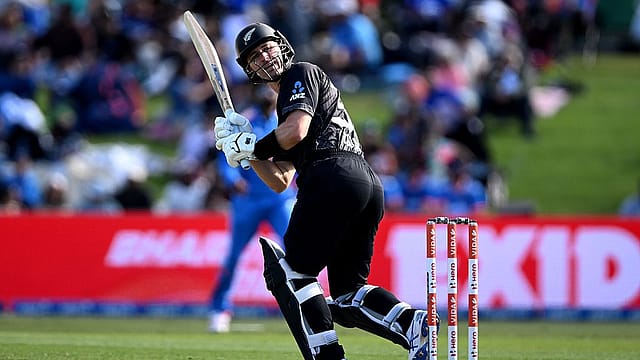
Will Young had five runs when India gave him a third innings.
Ishan Kishan dropped him. One delivery later, Rohit Sharma dropped him again. Both chances came in the second over of New Zealand’s fourth ODI against India at Mount Maunganui on Friday.
Young has spent enough of his career depending on events beyond his control. This time, the mistake belonged to somebody else. He accepted it.
By the time Naman Dhir finally dismissed him, Young had made 125 from 108 balls, with 14 fours and four sixes. He had helped New Zealand reach 333 and recorded his first ODI century against India. The batter who had almost departed at five walked back to an appreciative dressing room after producing the defining innings of the day.

The Wealth Issue 2026
06 Nov 2026 - Vol 05 | Issue 45
Portraits of Dreamers and Doers under 35
It was an unusually neat summary of an untidy international career.
New Zealand have often selected Young when somebody else was injured. Kane Williamson’s groin injury opened a place during the historic Test series in India in 2024. Devon Conway’s absence helped Young enter the XI in Kanpur in 2021. Rachin Ravindra’s injury created an opening at the 2025 Champions Trophy. Each opportunity arrived with an implied expiry date.
Young kept responding with runs.
The better-known player returned, and Young frequently returned to the margins.
At 33, William Alexander Young remains one of international cricket’s strangest success stories: a former New Zealand Under-19 captain who waited eight years after his first-class debut to play a Test; a Player of the Series discarded immediately after helping to deliver one of his country’s greatest victories; and a reserve batter whose preparation has often been more permanent than his position.
The Test debut that disappeared overnight
Young’s long wait for international cricket appeared to have ended in March 2019.
Kane Williamson was nursing a shoulder injury, and New Zealand announced that Young would make his Test debut against Bangladesh at Hagley Oval in Christchurch. His parents, partner and brother booked flights. Young attended the pre-match press conference and prepared to receive his cap the following morning.
The match never began.
A terrorist attacked two Christchurch mosques on March 15, killing 51 people. Members of the Bangladesh team narrowly avoided the attack, and the Test was cancelled.
Young’s coach and long-time mentor, Ruwan Debu, later recalled the cricketer’s reaction: “Will called me and said, ‘This is bigger than a game of cricket.’ I know it was hard for him, and yes, it was his dream to play Test cricket for his country, but not once did he say, ‘I missed my chance.’”
His debut had vanished for reasons that made personal disappointment feel insignificant. Cricket, however, soon found another way to delay him.
Young received his first New Zealand central contract a few weeks later. During a training camp, he tore the labrum in his right shoulder. An MRI confirmed that surgery would be necessary.

Before the operation, he travelled with a New Zealand XI to Brisbane and faced an Australian attack preparing for the 2019 World Cup. Pat Cummins and Mitchell Starc were among the bowlers. Young scored 60, 130 and 111 in three consecutive innings.
Those performances should have accelerated a young batter’s career. Young returned home for surgery instead. He spent approximately seven months away from the game and had to rebuild the strength and confidence required to throw, dive and catch.
“Those knocks were very special to me,” he later told Central Districts Cricket. “It was a short opportunity to play and show that I was capable of playing at that level.”
The phrase “short opportunity” would keep reappearing in different forms.
A New Zealand captain before he became a New Zealand player
Young had been marked for international cricket long before his eventual debut.
Born in New Plymouth on November 22, 1992, he entered first-class cricket for Central Districts during the 2011-12 season. New Zealand then appointed the 19-year-old captain for the 2012 Under-19 World Cup, where his team reached the semi-finals.
He soon became one of the most productive young batters in domestic cricket. Young scored 909 runs during the 2014-15 Plunket Shield and was named Central Stags Player of the Year. At 23, he became the team’s captain. Central Districts won the Ford Trophy in 2016 and later secured successive Plunket Shield titles in 2017-18 and 2018-19.
Young eventually stepped away from the captaincy to concentrate on batting. By 2019, New Zealand Cricket considered him valuable enough to award him a central contract before he had played an international match.
He still had to wait until December 2020 for his Test debut against the West Indies. Young was 28, an age by which many former age-group captains have either established an international career or stopped expecting one.
The delay shaped the cricketer he became. Young could not build his game around a guaranteed batting position. He learned to open, play at No. 3 and prepare for almost any role in the top five. He also travelled to England, representing Durham, Northamptonshire, Nottinghamshire and Warwickshire. County cricket gave him exposure to the Dukes ball, unfamiliar dressing rooms and the recurring requirement to contribute immediately.
For Nottinghamshire in 2023, he scored 299 runs at 59.80 across six innings. His 145 against eventual champions Surrey was the highest score of the match.
The reserve batter was developing a specialist’s skill: arriving without security and batting as though he belonged.
The day Young removed his front pad in Chennai
Young’s proficiency against spin has a physical origin story.
In 2017, before a New Zealand A tour of India, he travelled to Chennai for a preparatory camp. Gary Stead and former India batter Amol Muzumdar worked with him on turning pitches. They wanted Young to defend securely, rotate the strike and develop complete trust in his sweep.
Stead devised a drill that made partial commitment painful. He asked Young to remove his front pad and sweep off-spinners, leg-spinners and left-arm spinners.
“If he didn’t commit fully to the shot, he is going to get hit on the pads,” Stead explained at the time. Without the protection, Young had to put his head over the ball and execute the stroke correctly.
The lesson travelled with him.
In the 2021 Kanpur Test, Young opened because Conway was injured. He made 89 and shared a 151-run stand with Tom Latham on a surface increasingly affected by cracks and uneven bounce. Young credited the Chennai camp and recalled nearly two weeks of practising the sweep without his front pad.
His innings contained 14 fours but also demonstrated something more important: he could alternate between survival and scoring against Ravichandran Ashwin, Axar Patel and Ravindra Jadeja.
Three years later, those lessons became central to New Zealand cricket history.
Player of the Series, followed by the bench
New Zealand entered the 2024 Test series in India after being swept 2-0 in Sri Lanka. Williamson missed the tour through injury, and Young entered the side.
He did not make a century across the three Tests. His value resided in the repeated prevention of collapse.
Young scored 244 runs at an average of 48.80. He faced 460 deliveries, comfortably more than any other batter in the series. On pitches where wickets could fall in clusters, he occupied time, created partnerships and refused to allow India’s spinners to dictate every passage of play.
New Zealand won 3-0. It was their first Test-series victory in India and the first time India had been swept in a home Test series of three or more matches. Young was named Player of the Series.
The award did not secure his position.
Williamson recovered for New Zealand’s next Test, against England in Christchurch. Young was omitted from the XI.
Few selection decisions explain his career more completely. Young had just been judged the best player across a historic away series. New Zealand still possessed an established great whose place was beyond reasonable dispute.
Young understood the arithmetic, even when the arithmetic worked against him. He had spent years preparing to replace Williamson, one of New Zealand’s finest batters, without pretending that a replacement innings automatically erased Williamson’s career.
That acceptance should not be confused with a lack of ambition. It requires a particular kind of mental stamina to prepare intensely for a match one may not play and then contribute before rhythm, certainty or failure has time to settle.
The Champions Trophy chance that might not have existed
The pattern returned at the 2025 Champions Trophy.
Rachin Ravindra suffered a head injury during a warm-up match and missed New Zealand’s opening game against Pakistan. Young played and made 107, his first international century outside New Zealand. His innings helped the Black Caps defeat the hosts and established the foundation for a campaign that carried them to the final.
Once again, an injury had created the opening. Once again, Young had treated temporary selection as a full-time responsibility.
This habit had already earned him national recognition. During the 2021-22 home season, New Zealand played only three ODIs because of pandemic-related cancellations. Young batted three times against the Netherlands and made 103 not out and 120. New Zealand Cricket named him its men’s ODI Player of the Year.
“It’s obviously a bit strange to have only played three one-dayers this season and then to win an award like this,” Young said. “But you’ve got to take the opportunities as they come.”
That sentence could sit beneath almost every score in his international career.
When national opportunities became scarce, he returned to domestic cricket. In February 2026, Young scored 105 for Central Districts in the Ford Trophy elimination final against Wellington. Two days later, he made 157 in the final against Canterbury and carried his team to the title.
Selection uncertainty never became an excuse to allow his standards to drift.
Why Will Young keeps fitting into different teams
Young’s batting does not demand attention through eccentricity. His method is recognisable and adaptable. He drives fluently despite a pronounced bottom-hand influence, plays comfortably from the front and back foot, and possesses the sweep and reverse-sweep required to disturb a spinner’s length.
His career has forced those technical options to serve different jobs.
In India’s Test conditions, he used defence, footwork and calculated sweeps to extend innings. Against Pakistan in the Champions Trophy, he balanced caution with the scoring rate required by ODI cricket. At Mount Maunganui, after surviving the two early chances, he accelerated sufficiently to reach his hundred from 88 balls and added another 25 from his final 20 deliveries.
Young’s usefulness also extends beyond international selection. County teams have repeatedly recruited him as short-term cover. New Zealand have moved him around their batting order. Central Districts have used him as a captain, senior batter and title-winning anchor.
His career has not supplied the uninterrupted sequence that usually creates a star. It has produced a cricketer capable of entering interrupted sequences.
Has the permanent replacement finally become indispensable?
Age makes Young’s story more urgent. He turns 34 on November 22. He has already lost significant years to a crowded New Zealand top order, a major shoulder injury and an international debut that arrived later than expected.
There may never be a long, protected stretch in which he is allowed to fail repeatedly and retain his place. His career has been built under the opposite condition: perform quickly because the original occupant may soon return.
That is why the two dropped catches at Mount Maunganui feel so appropriate. India allowed Young to restart his innings before it had properly begun. He turned five into 125.
New Zealand cricket has repeatedly offered him another person’s position, another short series or another emergency assignment. Young has turned those openings into an ODI award, a Champions Trophy century, a Player-of-the-Series performance in India and now a first ODI hundred against the same opposition.
The term “replacement” can sound diminishing. In Young’s case, it describes the difficulty of the job rather than the quality of the player. A replacement receives little ownership and even less time. He must be ready before he is required, useful wherever the vacancy appears and composed enough to leave when the vacancy closes.
Young has performed that role so often that it has become his distinction.
India dropped him twice on five. He reached 125 because he has spent a career learning what to do with one more chance.