Six Balls, Three Ducks: Rohit Sharma and Virat Kohli Fall as India Slump to 0 for 3
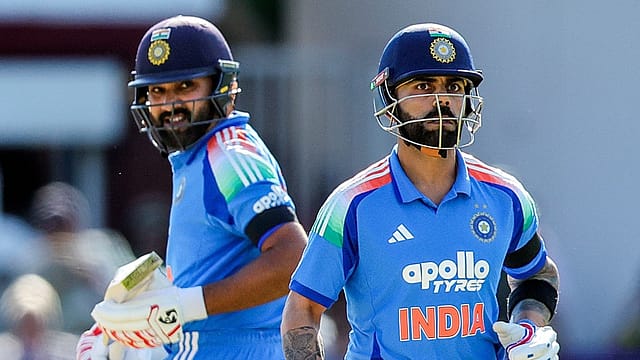
Ruturaj Gaikwad watched all six balls from the non-striker’s end. Matt Henry had Rohit Sharma caught by Finn Allen off the first delivery. Virat Kohli faced four balls and was bowled. Shreyas Iyer arrived for the last delivery and was trapped lbw. By the time Gaikwad was due to face his first ball, India were 0 for 3. He was the only member of the top four left.
The lowest previous score at the fall of India’s third wicket in a men’s ODI was 2 for 3 against Australia in Chennai at the 2023 World Cup. That came in the second over. At Bay Oval, Henry took three wickets in the first without conceding a run.

The Wealth Issue 2026
06 Nov 2026 - Vol 05 | Issue 45
Portraits of Dreamers and Doers under 35
The Arithmetic Barely Moved
India began the chase needing 6.68 an over. After Henry’s maiden, it was 6.82. With 49 overs left, Gaikwad and Ishan Kishan had time to recover from a slow start. They also had to work out how much of the chase they could leave to the batters below them.
India had lost the opener who could get them ahead of the rate, the No. 3 who could steer a long chase and the captain who would normally carry it through the middle overs. Gaikwad and Kishan could afford to give a good bowler a quiet over. A string of quiet overs would leave Axar Patel and the lower order more ground to make up. Going hard at the new ball carried a cost too. Another wicket would bring Axar in while Henry was still in his opening spell.
Chennai Had Kohli
Against Australia in Chennai, India were 2 for 3 chasing 200. Kohli was still there. He and KL Rahul added 165 for the fourth wicket, and India won by six wickets. Kohli made 85, and Rahul finished unbeaten on 97. A partnership of that size left India just 33 runs to get. At Bay Oval, the same stand from 0 for 3 would still have left 169.
The other time Rohit and Kohli both fell for ducks in an international match, India had an opener who batted through. Virender Sehwag made an unbeaten 99 against Sri Lanka in Dambulla in 2010 and India won by six wickets. They were chasing 171. Sehwag supplied well over half the target himself. A hundred from Gaikwad at Bay Oval would still leave 234 runs for the rest of the innings. India needed a second substantial contribution even if their surviving opener went on to make a century.
What Will Young Showed
New Zealand’s innings showed how much it helps to have a batter already in when the third wicket falls. They went from 85 without loss to 125 for 3 in the 20th over. Will Young was still there. When Finn Allen came in, he had a partner who had opened the innings and had spent nearly 20 overs judging the pace of the pitch. Allen made 41 off 30 balls. By the time he fell, New Zealand had added 90 for the fourth wicket and reached 215 in the 31st over.
Young went on to make 125 off 108 balls. His innings gave New Zealand time to absorb those three wickets and a way to keep scoring while they did it. The position also gave Allen room to attack. Had he fallen early, the next batter would still have walked out to join Young. When Kishan came in at 0 for 3, he joined an opener who had yet to face a delivery. Both men had to judge the new ball for themselves, and neither had a settled partner who could take charge of the scoring.
At 0 for 3, New Zealand could keep catchers close and bowl for a fourth wicket. Gaikwad and Kishan had to find runs against that field while keeping Axar away from the new ball. Every over they stayed together gave him a better chance of batting against an older ball. The rate at which they scored in those overs would decide how much he had to do when he got there.