India vs New Zealand, 4th ODI: From 0/3 to 89 All Out, India’s Worst ODI Defeat Against New Zealand
Microsoft Outlook was down for hours. India’s outlook took six balls.
Ruturaj Gaikwad watched all six from the non-striker’s end. Rohit Sharma edged the first to Finn Allen at slip. Virat Kohli faced four balls and was bowled. Shreyas Iyer walked in for the last delivery and was trapped lbw. Gaikwad had walked out with one batting partner. By the time he took strike, he was waiting for his fourth. The target was still 334.
India were all out for 89 at Mount Maunganui. The 244-run defeat was their heaviest against New Zealand in men’s ODIs and came within one run of the 245-run loss to Sri Lanka in Sharjah in 2000. The last pair took India past the 88 they made against New Zealand at Dambulla in 2010. They finished three short of the 92 they made in Hamilton in 2019, setting a new low for India in a men’s ODI in New Zealand.

The Wealth Issue 2026
06 Nov 2026 - Vol 05 | Issue 45
Portraits of Dreamers and Doers under 35
INDIA DROPPED YOUNG TWICE ON FIVE
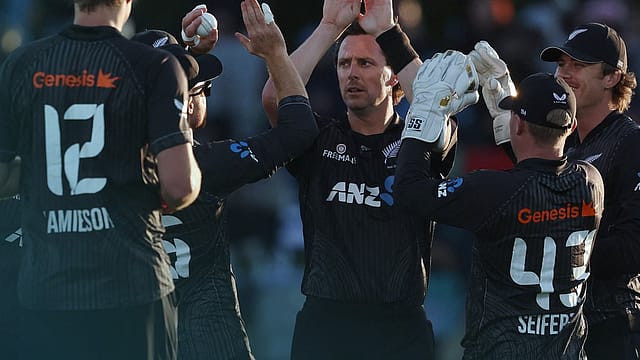
Shreyas Iyer had chosen to field and India had two chances to remove Will Young on five. Both went down. Young made 125 off 108 balls, Tim Seifert hit 58 off 48 and New Zealand reached 333. Young alone made 36 more than India’s entire batting order.
The hosts had a spell of their own to get through. They went from 85 without loss to 125/3, giving India a chance to pull the innings back. Young and Allen put on 90 in 65 balls. Because the openers had put runs on the board, Allen could come in at No. 5, take on the bowlers and still leave New Zealand with more than 19 overs to use after his dismissal. India’s No. 5 walked in during the first over with every run of the chase still to get.
WHAT SIX BALLS COST INDIA
Henry made Rohit account for movement away from the bat, bowled Kohli and beat Iyer in front of his stumps. Kyle Jamieson kept a second slip in play and Gaikwad edged to Michael Bracewell for five. India were 9/4 in the sixth over. A chase that started at nearly seven an over was already asking two middle-order batters to score faster while protecting the wickets India needed for the last 20 overs.
Ishan Kishan and Axar Patel put on 44 in 70 balls, India’s biggest stand. Those 70 deliveries took more than a fifth of the innings and yielded barely an eighth of the target. You could see the bind they were in. A boundary would bring some relief, but a fifth wicket would leave Naman Dhir batting with the bowlers close behind him. Matthew Fisher removed Axar for 21. Henry returned in the 21st over and bowled Kishan for 27 with his first ball back. He also bowled Kuldeep Yadav to complete his five-wicket haul.
THE WARNING WAS THERE IN WELLINGTON
India had won both completed matches before Bay Oval, each with a rain-revised target. In Auckland they chased 143 with five wickets to spare. In Wellington they slipped to 47/4 chasing 110 and needed an unbeaten 26 from KL Rahul to win by four runs. At Bay Oval, Rahul and regular captain Shubman Gill were away preparing for the Tests. Gaikwad opened with Rohit and Kishan took Rahul’s place. Both were playing their first match of the series.
Wellington showed what India could salvage when the top order fell cheaply and the target still allowed Rahul to take his time. At Bay Oval, India had to score at nearly seven an over from the outset. By the end of the powerplay they had 26/4, leaving 308 to get in 40 overs. A run a ball for the rest of the innings would still have left them 68 short.
India still lead 2–1 and can win the series on Sunday at the same ground. That gives them an immediate chance to show how they’ll handle Henry with a new ball and slips waiting. At Bay Oval, India’s three most experienced batters in the top four had used up six balls between them before Gaikwad got one of his own.