EXPLAINED | Usman Khawaja’s Sandpapergate Claim: Did Australia Use Sandpaper Before Cape Town?
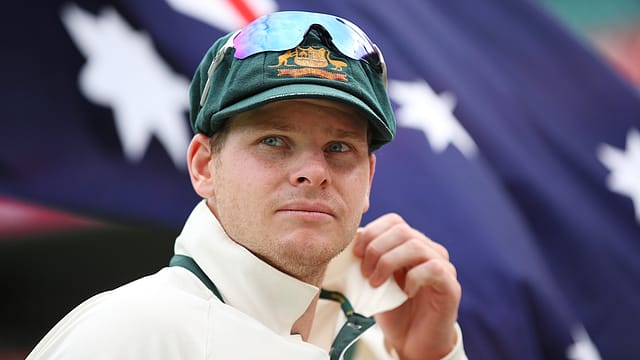
On March 24, 2018, a television camera at Newlands in Cape Town caught Australia’s Cameron Bancroft pushing a small yellow object down his trousers. It turned out to be sandpaper. Cricket Australia banned Bancroft, captain Steve Smith and vice-captain David Warner. Its investigation concluded those three alone knew about the plan in advance.
On November 7, 2026, former Australia batter Usman Khawaja challenged that finding. He says players and staff knew, and that sandpaper had already been used in the previous Test. That puts two places at the centre of the story. One is Cape Town, where the cameras caught Bancroft. The other is Port Elizabeth, where Khawaja says it happened first.

The Era of Forever Wars
30 Oct 2026 - Vol 05 | Issue 44
Coping with an explosive Middle East
What does Khawaja say happened before Cape Town?
In his memoir Sabr, excerpted by Nine newspapers, Khawaja says Australia discussed roughing up the ball during the second Test at Port Elizabeth, now Gqeberha. He recalls Smith walking out of the room saying he wanted no part of the discussion. Khawaja alleges Bancroft volunteered and used sandpaper in South Africa’s first innings. That earlier use remains Khawaja’s allegation.
How far does he say the knowledge went?
“It was all of us,” Khawaja told Nine. He says he urged the team to take collective responsibility after Cape Town and that Cricket Australia’s investigators never interviewed him. His account puts two things in dispute: who heard sandpaper discussed, and who knew it had actually gone onto the field. Cricket Australia says it stands by its investigation and will consider relevant information.
What did the cameras catch at Newlands?
Bancroft handled the yellow object while working on the ball, then hid it. That evening he said he had used tape with grit from the pitch. Smith said the plan had been discussed at lunch. Cricket Australia later identified the object as sandpaper.
Why did the umpires keep the ball in play?
They inspected it and saw no marks they could attribute to Bancroft’s actions. They kept the ball and gave South Africa no five-run penalty. The footage and Bancroft’s admission gave cricket authorities grounds to act. A player can be punished for trying to change the ball’s condition.
What does sandpaper do to a cricket ball?
It roughens one side faster. Bowlers want the ball to bend in the air so a delivery that looks easy to play can dart towards the stumps or away from the bat. As the ball ages, one side can get rougher than the other. At sufficient speed and with the seam angled, that difference can make the ball bend the other way from ordinary swing. That’s reverse swing. Sandpaper is a shortcut to wear that can occur naturally.
Where do the rules draw the line?
Today’s men’s Test rules let players polish the ball on their clothing using sweat. They can remove mud under an umpire’s supervision. Players cannot apply saliva or use an object to scuff the ball. A delivery that swings a long way can be perfectly legal. What officials look for is how the ball was treated.
Why did Australia ban only three players?
The board found Warner devised the plan and instructed Bancroft, who attempted to carry it out. It found Smith knew, failed to stop it and told Bancroft to hide the evidence. Cricket Australia banned Smith and Warner for 12 months and Bancroft for nine. The ICC imposed separate match sanctions, including a one-Test suspension for Smith.
What do the bowlers and the coach say?
In 2021, Pat Cummins, Mitchell Starc, Josh Hazlewood and Nathan Lyon said they learned a foreign substance had gone onto the field when they saw it on the stadium screen. The board contacted Bancroft after his comments prompted fresh questions. It said he gave it no new information. Lehmann, who resigned after the scandal, told ABC Sport on November 7 that he knew nothing about the sandpaper and doubted everyone else knew.
Has cricket seen a case like this before?
Hobart, 2016. South Africa captain Faf du Plessis shone the ball with saliva while a mint was in his mouth. The ICC fined him his full match fee and his appeal failed. At The Oval in 2006, England were awarded the Test after Pakistan refused to return to the field following a tampering penalty. An ICC hearing later cleared Pakistan captain Inzamam-ul-Haq of tampering. Those cases show how much turns on the evidence of what was done to the ball.
Which other scandals changed cricket?
Bodyline in 1932–33 turned England’s short bowling at Australia into a diplomatic row. In 1981, Australia rolled the final ball underarm to deny New Zealand a chance to hit the six it needed to tie. The rules then allowed it. In the 2008 Sydney dispute known as Monkeygate, the racial-abuse charge against Harbhajan Singh was found unproven on appeal. He pleaded guilty to abusive language.
How is ball-tampering different from fixing?
Tampering tries to change how the ball behaves. Fixing involves an illicit arrangement about what will happen in play. In 2000, South Africa captain Hansie Cronje admitted taking money from bookmakers and was banned for life. In the 2010 Lord’s case, an ICC tribunal found that Pakistan’s Mohammad Amir and Mohammad Asif deliberately bowled no-balls and captain Salman Butt was party to it. Arranging a specific act like that is called spot-fixing.
How did Sandpapergate hit the IPL and India’s tour?
The BCCI barred Smith and Warner from the 2018 IPL. They were still serving their bans when Virat Kohli’s team went to Australia and won the Test series 2–1, India’s first series victory there.
When did an IPL scandal take teams out of the league?
In 2015, the Supreme Court-appointed Lodha committee suspended Chennai Super Kings and Rajasthan Royals for two years after findings that team officials Gurunath Meiyappan and Raj Kundra had bet on IPL matches.
Why did Michael Vaughan say cricket should move on?
The former England captain treated Khawaja’s account as confirmation of something he already suspected. He mocked the eight-year wait and asked whether the sport could move on. That was his reaction. The detail worth testing is the earlier Test, where Khawaja has made a specific allegation.
What could settle the Port Elizabeth claim?
Accounts from people who saw the sandpaper used there, or records made at the time, would help test Khawaja’s account. Australia’s separate 2018 culture review found that the organisation put too much emphasis on winning. The specific question Khawaja has raised now is whether the evidence can place a piece of sandpaper on the field one Test before the cameras caught Bancroft.