India Scored 720 against New Zealand. Could a Draw in Wellington Hurt Their WTC Final Hopes?
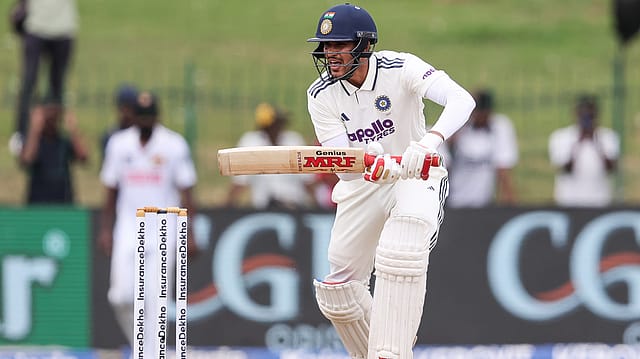
Devon Conway had faced 137 balls by the time he walked off the Basin Reserve on Sunday. He had made 59. A few hours earlier, India had declared on 720 for nine, the highest Test total by any team in New Zealand. By stumps the home side were 119 for two, still 233 behind. Shubman Gill had a record, a commanding lead and one day to take eight wickets. Conway would be back in the morning with the same job he had been doing all afternoon.
He could do India considerable damage without getting those 233 runs back. If New Zealand bat out Monday for a draw, India’s share of the available World Test Championship points will fall from 51.52 per cent to exactly 50. A side can spend four days away from home doing nearly everything a captain could ask, score more runs in an innings than any Indian team has managed abroad, and leave town a little further from the pace it needs to reach the final.

The Wealth Issue 2026
06 Nov 2026 - Vol 05 | Issue 45
Portraits of Dreamers and Doers under 35
There is a consolation for Gill in the fixture list. India arrived in Wellington fourth, behind South Africa, New Zealand and Australia. Their last seven Tests, including this one, comprise two away to New Zealand and five at home to Australia. That gives India seven opportunities to take points off the teams immediately above them. The catch is that every opportunity India let slip gives one of those rivals a better afternoon too.
What eight wickets are worth
India brought 68 points from 11 completed Tests to Wellington. The ICC awards 12 for a win, four for a draw, six for a tie and none for a defeat. It ranks teams on the percentage of available points won because their schedules are of unequal length. India will play 18 Tests this cycle. Australia will play 22. A raw points tally would give the side with the longer fixture list more chances to accumulate them.

Beat New Zealand here and India have 80 points from a possible 144, or 55.56 per cent. New Zealand fall from 72.22 to 61.90. Share the points and India have 72 from 144, while New Zealand finish on 66.67 per cent. Subject to any over-rate deductions, Monday will determine whether the gap between them is about six percentage points or nearly seventeen. That is a substantial difference to take into the second Test at Christchurch.
Why should a draw hurt India’s percentage when it adds four points? Because four out of twelve is a return of one-third. India have been collecting a little over half the points on offer. Each draw pulls that average down. It does the same to New Zealand, who came into the match having won four of six. From the hosts’ dressing room, though, four points and a sizeable cushion over India would be a handsome salvage operation after conceding 720.
India have seen this ending before
In August in Colombo, India scored 503 for nine declared and bowled Sri Lanka out for 290. They had already won the first Test in Galle. They enforced the follow-on in the second, putting Sri Lanka straight back in and giving themselves the time they thought they would need. On the final morning, Sonal Dinusha and Keshara Nuwantha occupied the crease for the entire 31.2-over session. India went to lunch still looking for their first wicket of the day.
Dhruv Jurel took two catches after lunch. Dinusha was still there at tea, on 98, with another partner for company. He completed his second hundred of the match from the first ball of the evening session. Sri Lanka finished on 429 for nine declared. The unbeaten batter at the other end, Asitha Fernando, had faced 24 balls for nought. His contribution looks rather different if you count how many chances those 24 deliveries gave India to finish the innings. They needed only one.
India came home with a 1–0 series win. In the championship standings, they had taken 16 points out of 24. That is why Colombo belongs in any discussion of Gill’s declaration in Wellington. In Sri Lanka, India had made the aggressive choice to enforce the follow-on. They still ran out of wickets to show for the overs they bowled. A captain can give his attack time. He cannot decide what a batter such as Dinusha, or a number eleven content to defend, will do with it.
Wellington offers an older warning of its own. In 2014, India led New Zealand here by 246 runs and had them 94 for five in their second innings. Brendon McCullum made 302. BJ Watling made 124. Their sixth-wicket partnership was worth 352, precisely the lead Gill took on Sunday. New Zealand declared at 680 for eight and drew the Test. Conway and Rachin Ravindra have a considerably smaller assignment. They can save this one without getting anywhere near McCullum’s score.
Did Gill need all 720?
India began Sunday at 486 for four, already 118 ahead. A declaration then would have given New Zealand the chance to wipe out the deficit in a session and a half of good batting. Gill let India add another 234. Rishabh Pant made 128 from 153 balls and Jurel 78 from 79. When Jurel was caught in the deep, Gill called his men in, about an hour before tea. That left India 45 overs at New Zealand before the close and the whole of the fifth day, weather and light permitting.
There was a cricketing return on those extra runs. New Zealand batted through two partnerships worth 119 between them and went in still facing an innings defeat. Gill can bring the field up on Monday and accept a few boundaries in the pursuit of a wicket. He can give a bowler another over against a batter who has started to take chances. A lead of 352 buys those freedoms. Pant and Jurel also bought them more cheaply, in balls consumed, than a pair batting simply to drive up the score.
The cost becomes apparent when Conway takes guard. Every over India chose to bat was one they could have spent trying to dismiss him. Jasprit Bumrah got Tom Latham for a duck. Prasidh Krishna removed Henry Nicholls for 31 after Jurel held a sharp catch at short leg. Conway and Ravindra then added an unbroken 59. By the close, Ravindra had faced 72 balls for 27. If that pair occupy the first session on Monday, the 233 runs between the sides will be of rather less interest to Gill than the overs left on the clock.
It would be easy, after a draw, to pick a round number somewhere between 486 and 720 and declare it the moment Gill should have pulled out. Colombo is a reason to resist that temptation. The fair question is what India gained with the last hour of batting compared with what their bowlers might have done with it. At stumps, there was evidence on both sides. New Zealand had spent 45 overs doing little damage to the lead. India had spent the same 45 overs taking two wickets.
Can India win all seven and still miss the final?
Yes. With seven wins and no deductions, India finish on 152 points from a possible 216, or 70.37 per cent. That would be a remarkable recovery for a team that lost both its home Tests against South Africa. It would also leave two opponents capable of finishing above it. South Africa, already on 75 per cent, have a Test against Bangladesh, three against England and two against Sri Lanka left. Gill has had his last chance to take points off them.
New Zealand have a longer route. Even if India beat them twice, they still have eight other Tests: four in Australia, two against Sri Lanka and two in Pakistan. Win those eight and they finish on 148 from 192, or 77.08 per cent. South Africa could finish above India as well. A seven-win Indian sweep therefore carries no mathematical guarantee. Equally, 70 per cent is no compulsory entry mark. The Oval takes the top two at the end of the cycle, whatever their percentages happen to be.
A draw in Wellington changes India’s best possible finish to 66.67 per cent, even if they win all six remaining matches. That would still leave them in contention. It would make results in a series India do not play especially interesting. Australia host New Zealand for four Tests before playing five in India. An Australian victory there takes points away from Conway’s side and gives them to a team Gill will shortly have five chances to beat. A New Zealand win leaves Australia more exposed but strengthens an opponent India will already have finished playing. By the time the Border-Gavaskar Trophy begins, the identity of the rival India most need to catch could look quite different.
There is a reason the home series against South Africa hangs over all these permutations. By winning 2–0, the defending champions collected 24 points in India, then beat Australia 2–1 at home. The results have given South Africa room to absorb a setback. India, meanwhile, can win a series in Sri Lanka, dominate the first Test in New Zealand and still need an exceptional run against Australia. Championships accumulate quietly that way. The points dropped months ago turn up again in the demands placed on a bowler on a Monday morning.
For now, Gill can put Australia aside. He can put the calculator aside too. At the Basin Reserve on Monday, his first problem is the opener Anshul Kamboj dismissed for four in the first innings. In the second, India have sent down 137 deliveries to Conway without getting him out. The next one will be worth watching.