Why India’s Hockey Forward Mumtaz Khan Kept Her Injuries From Her Parents
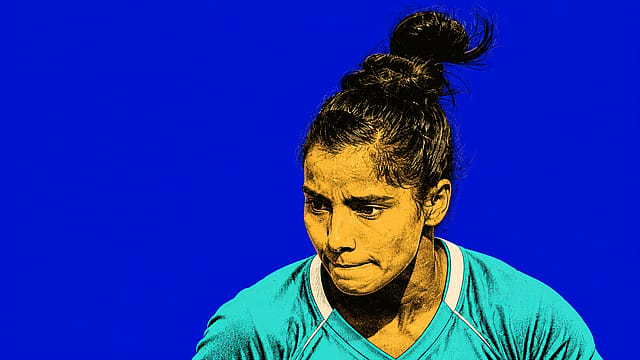
Farah was getting married when her little sister went off to try for a place in a hockey hostel. The family was busy with the wedding preparations. Mumtaz Khan made the trip from Lucknow’s Topkhana Bazaar to the KD Singh Babu Stadium on her father’s rickshaw. There were eight kilometres between the two. The trial seems to have been the easier part. When the letter came saying she had got in, Mumtaz began to cry.
“How will I convince mummy, appi? How will I go?” Farah remembered her asking, in a 2022 interview with Scroll. The bride took on the job. She asked their mother, Qaiser Jahan, to let Mumtaz give the hostel a try. If it didn’t work out, the family could bring her back. It was a modest request to make on behalf of a girl who had already gone to considerable trouble to get out of the house. Qaiser agreed.

The Wealth Issue 2026
06 Nov 2026 - Vol 05 | Issue 45
Portraits of Dreamers and Doers under 35
On 21 November 2026, in Bhopal, India had a few seconds left to score before half-time against South Korea in the Women’s Asian Champions Trophy. Sakshi Rana found Navneet Kaur. Navneet picked out Mumtaz. The Lucknow forward put India ahead in a match they would win 2–1. She had scored against Malaysia two days earlier, too. For much of the preceding season, while India played a World Cup and won an Asian Games gold, Mumtaz had been trying to get back into the side.
Years after Farah persuaded Qaiser to let her younger sister leave home, Mumtaz began making plans for where her mother might live. In September 2025, the striker told Hindustan Times that she had bought a house in Lucknow for ₹40 lakh, half of it financed by a bank loan. Buying her mother a home was something she had been happy to discuss in public for years. There were other things she had gone through for hockey that she had found it quite possible to keep from her parents, including going under the knife.
The ₹10 trial that got Mumtaz out of Topkhana
Asked on Hockey India’s Hockey Te Charcha podcast how she had started, Mumtaz gave an answer familiar to anyone who has spent a school break watching friends play. Her parents wanted her to concentrate on her studies. She tried watching for a while. Eventually the others were having too much fun, so she picked up a stick and joined them. Her first ambition for hockey was quite specific. She thought it might get her a job. Playing for India was an idea her coach entertained before she did.
Neelam Siddiqui had a good eye for what a runner might do in a circle crowded with defenders. At the hostel trials, the coaches put the schoolgirl in a match with older players. Siddiqui recalled for The Indian Express that Mumtaz went past a couple of them. Speed had brought her to the coaches’ attention. What interested Siddiqui was how long the girl could wait before using it. Arrive a moment too soon and the defender can go with you. Mumtaz already had a sense of when to go. Siddiqui had reportedly encouraged her to fill in the ₹10 form for the trial.
In Topkhana, the cost of getting a child as far as that trial was easy to underestimate. Hafiz Khan, her father, had earned his living pedalling a cycle rickshaw. Farah told the Express that a maternal uncle helped the family set up a vegetable cart when the physical demands on Hafiz began to outweigh the money he could bring home. The cart paid towards food and school fees. A hockey kit was beyond the family, her younger sister Shirin said. Coaches helped. The scholarship gave Mumtaz somewhere to live and train.
Farah and Mumtaz each remembered something different about getting their mother’s permission. In an interview published in the March 2024 report Empowering Women Through Sports, Mumtaz recalled her mother’s objection to her spending time away from home. To the girl, that resistance felt like something she had to prove her mother wrong about. Years later she could also see how much her parents had given her. Speaking to Dainik Jagran before the 2025 Asia Cup, she credited them with finding a way to equip her for a profession the family could scarcely afford to contemplate. Both accounts belong to Mumtaz. Growing up gave her another view of the same decision.
The Korea goal her mother missed
On 8 April 2022, Mumtaz came in from the right and went down on one knee in front of South Korea’s goal in Potchefstroom, South Africa. Her stick reached the ball in time to turn it in. It was the 11th minute of a Junior World Cup quarterfinal. In Lucknow, her sisters were following the game on a phone. Hafiz had gone to the mosque. Qaiser had customers to serve before Friday prayers.
“That was a busy hour for me,” Qaiser told Mihir Vasavda of The Indian Express. It is hard to imagine a more straightforward account of missing your daughter’s big goal. Qaiser would have liked to see it. She also knew what an hour at that particular time of day was worth to her household, and expected there would be other games. Earlier in the tournament, when an ANI reporter found her at work, she had spoken of the remarks people made about her having daughters. People were coming up to the family with a good deal more respect now, she said. She carried on selling vegetables.
That goal was one of eight Mumtaz scored in six games in South Africa. Against Wales, she chased a lifted ball from Salima Tete, took the pace off it with her stick and lifted it over the goalkeeper. Against England in the bronze-medal match she scored both Indian goals. The score was level at the end and England won the shootout. Mumtaz went home as India’s leading scorer, having scored against every side she faced apart from the Netherlands. The International Hockey Federation named her its women’s Rising Star for 2021–22.
People who watched her described a natural goalscorer. Mumtaz’s own description to Scroll had rather more players in it. In training, the forwards would recreate situations they might face in a match and pass amongst themselves until the player best placed to finish got the ball. A defender losing track of her for an instant could be enough. Four years later in Bhopal, Navneet knew where to find her just before the break.
What she told the people at home
By the time she played in South Africa, Mumtaz already knew how a season could disappear. In 2019 she injured the anterior cruciate ligament in her left knee. She was a junior then, without a job or an income she could depend on. Speaking in April 2023, in remarks published by the Asian Hockey Federation, she recalled wondering whether she would be able to walk again. There was also the question of who would look after her while she tried.
A letter from Hockey India settled that one. She was to rehabilitate with the senior team. A physio and a trainer worked with her, medical staff reassured her, and senior players came to see how she was getting on. She put that first rehabilitation at six or seven months. Then came another ACL injury in 2022. By the time of the April interview, she estimated she had spent eight months out on the second occasion. She had come back to a senior camp where the others had been able to keep playing through all that time.
“I never told my parents about my injuries even when I went under the knife,” she said in the account published by the Asian Hockey Federation. In a Hockey India podcast the following month, she also recalled pressure from home to give up the game after the first injury. People had told her parents the girl had been flying too high. Mumtaz never dated the conversation in which her parents learnt what had happened. She did explain why she kept the surgery to herself. She thought her parents already had enough to worry about.
She understood by then what her mother could say on her behalf. When ANI interviewed Qaiser in Lucknow in April 2022, she said her daughter was the equal of a hundred sons. More than a year later, on the hockey podcast, the daughter brought up that remark herself. Of all the verdicts on her Junior World Cup, she had kept her mother’s.
The house Mumtaz Khan wanted for her mother
When Mumtaz spoke to Hindustan Times in June 2023, five people were living in the family’s one room in Topkhana. There had once been eight. Back from winning the Junior Asia Cup in Japan, she explained to Sharad Deep what another award payment might mean. She had ₹15 lakh saved. She was expecting a further ₹5 lakh. That would give her enough to start planning. “Now, I want to build a home for my mother,” she said.
She had also secured the job she had once hoped a hockey stick might get her. IndianOil records that she joined in 2022. A salary made a difference, though there were limits to how far hers would stretch. In the 2025 Dainik Jagran interview, she said her parents were still selling vegetables. She had suggested to Hafiz that he open a bigger shop. He brought up the expense of his daughters’ weddings. Anyone following the fortunes of the family through their daughter’s medals alone would have missed the father and daughter discussing what to do about the shop.
It was another injury that nearly kept her out of the senior Asia Cup in Hangzhou in September 2025. On tour in Australia she fractured her hand, an injury that required surgery and a month of rehabilitation, Fazal Khan reported in The Times of India. She came through selection and scored six times in Hangzhou, level with Navneet as India’s leading scorer. China beat India in the final. Back in Lucknow, Mumtaz told Deep she had been awake all night afterwards. A win would have qualified India directly for the World Cup.
In the same conversation, Deep returned to the subject of the house. This time Mumtaz could give him the price and tell him how much she had borrowed. “Still I had to take a loan of ₹20 lakh from a bank,” she said. It was a characteristic qualification from a woman who had once counted up her prize money for the same reporter, taking care to distinguish the sum she had already saved from the amount she expected to receive. She knew exactly how far hockey had taken her. The loan belonged in her account of buying the house as surely as the prize money did.
The following year India went to Japan and won the Asian Games without her. In Lucknow she trained at the Sports Authority of India centre with Rashid Aziz Khan. He had expected her to make that trip, he told Hindustan Times when the Bhopal squad was announced. He was the husband of Neelam Siddiqui, the coach who had seen a schoolgirl dodge older players all those years earlier. It fell to him to watch a senior India forward put in the months of work for another chance.
In Bhopal, Mumtaz wore No 15. Against Malaysia on 19 November, the opposition had barely finished celebrating the opening goal when she equalised. Two evenings later, with Korea holding India scoreless, Navneet gave her the ball in the last seconds of the half. There would be other chances to see her play, Qaiser had told the Express on that busy Friday in 2022. In the space of three days, her daughter had given her two more.