‘You Caused the Mess’: Goyal Takes on Europe Over Climate Finance, Carbon Tax
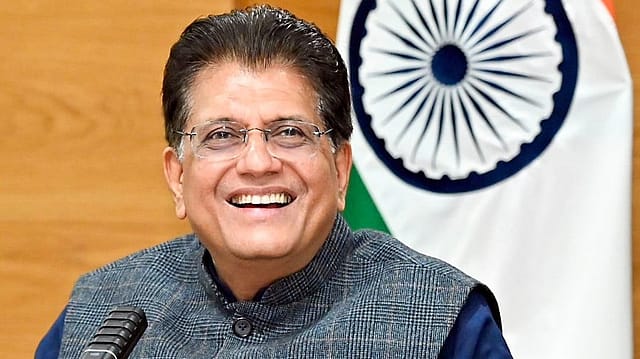
Commerce and Industry Minister Piyush Goyal challenged Europe over its historical responsibility for climate change, linking inadequate support for developing countries with trade measures that he warned would make the continent more expensive and less competitive.
Speaking at the Berlin Global Dialogue on Thursday, Goyal questioned the fairness of imposing additional carbon-related costs on developing economies while their demands for financial and technological assistance remained inadequately addressed.
“Who’s responsible for this mess in the first place? Where did the ozone layer get damaged? Who sent all that carbon into the atmosphere?” he asked.

Losing Memory
16 Oct 2026 - Vol 05 | Issue 42
The making of a medical and social emergency
“The problem was caused by you.”
His remarks combined a demand for greater climate responsibility from wealthy nations with a warning that the European Union’s Carbon Border Adjustment Mechanism, or CBAM, could hurt European manufacturers and consumers.
‘IT’S ALL PROMISES’
Goyal invoked the developed world’s commitment to mobilise $100 billion annually in climate finance for developing countries.
“It was agreed that the developed countries, who have enjoyed the fruits of messing up the climate for so many decades, will pay a greater price,” he said, referring to support for developing economies and vulnerable island nations.
“Just $100 billion a year. That was the commitment.”
“Eleven years later, we haven’t seen a nickel or a dime of that. It’s all promises,” he added.
The commitment originated at the Copenhagen climate conference in 2009, with a target date of 2020. It was subsequently extended through 2025. Goyal’s broader criticism concerned the adequacy of assistance and the burden placed on poorer economies.
“They have failed to respond adequately to the needs of less-developed countries or support them in their decarbonisation efforts,” he said.
‘YOU’RE INVITING DISASTER’
Turning to European trade policy, Goyal argued that carbon-related charges and other restrictions would increase the cost of industrial materials and undermine the bloc’s competitiveness.
“You put a CBAM on yourself. You put a 50 per cent import duty to bring steel into your country. You’re inviting disaster. Your cost of living will go up,” he said.
The two measures he cited should be distinguished: CBAM is a mechanism for pricing emissions embedded in covered imports, rather than a uniform 50 per cent steel tariff.
According to the European Commission, CBAM seeks to address carbon leakage by ensuring that the price of imports reflects their embedded emissions. Its definitive regime began on January 1, 2026.
Goyal challenged the economic consequences of layering such requirements onto European industry.
“We’ve lost count. You keep adding to your regulations, add to the burden of your industry, make yourself uncompetitive,” he said.
COSTLIER STEEL, COSTLIER INFRASTRUCTURE
The minister warned that higher costs for steel, aluminium and cement would spread through Europe’s infrastructure economy, affecting transport networks, utilities and construction.
“Now, imagine going forward, every infrastructure, whether it’s a port or an airport or your autobahns in Germany or your expressways, your utilities, your water pipelines,” he said, pointing to the impact of costlier materials and overlapping regulations.
He also warned that restrictive measures could trigger retaliation from trading partners.
“In this reciprocal world, you bring in a regulation and stop some other country from working with you. They’ll bring in two regulations, which will hurt your businesses,” he said.
“You will not be able to compete in global markets. Your auto industry is suffering that already.”
INDIA’S DEVELOPMENT ARGUMENT
Goyal contrasted India’s development needs with the historical emissions of wealthy economies, arguing that climate obligations must account for differences in population, prosperity and responsibility.
He cited India’s share of the global population and offered several emissions comparisons. The reported remarks did not consistently specify whether those comparisons concerned annual emissions or cumulative historical contributions, which are different measures.
His central argument was that India must expand access to energy and basic necessities while pursuing cleaner growth.
“I also have to meet the needs of 1.4 billion people. I have to meet their energy needs, their food needs, and ensure that my nation remains secure,” he said.
“Despite all of that, we have one of the world’s fastest-growing clean energy programmes.”
On trade, Goyal said India was seeking partnerships based on complementary strengths and competitiveness.
“We’ve got fair, equitable, and balanced agreements with every one of the partners with whom we are working,” he said.
With inputs from ANI