Hanuman Ansh Success Tells Us Why Religion Is Part of Everyday Lives in India
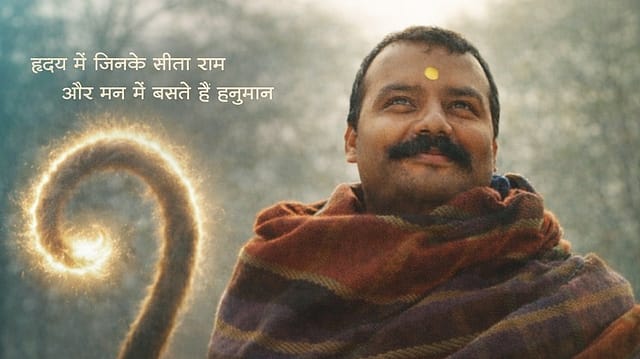
Released on a modest budget, the recent Bollywood movie Hanuman Ansh has earned more than ₹400 crore worldwide. The surprise success of the movie, based on the life of Neem Karoli Baba, reflects the centrality of religion for people in India. Most public discussions of religion in India start with an event, from the public celebration of a festival to an active dispute over a site. Usually, religion becomes news when a crowd gathers, or a quarrel breaks out. So, what role does religion play in the everyday lives of Hindus in India?
Long ago, sociologist M N Srinivas distinguished between the “book view” and the “field view” of Hinduism. Much of what passes for commentary on religion today is neither — it is the ‘news view’ and misses most of what people do. We use data from the Indian Political and Social Attitudes Study (IPSAS), a national survey conducted by us that included questions on religious beliefs and religiosity, to look at the ‘field view.’ The survey was conducted in 2025 among over 7,382 respondents across 18 states. The analysis in this article is limited to 6,187 Hindu respondents in the survey.

The Era of Forever Wars
30 Oct 2026 - Vol 05 | Issue 44
Coping with an explosive Middle East
Broadly, we find that faith matters a great deal and it is nearly universal without everyone practicing it the same way. Beyond the sporadic events, religious belief and activities remain ubiquitous in everyday life of Hindus in India. Someone prays only at home, someone else regularly visits the neighbourhood temple while some others do both. For some religious practice is limited to the private sphere, while for some others it also includes participation in collective, public activities within local communities. None of these make the news; it is considered too familiar to remark upon.
What people believe and what they do
The criticality of religion in everyday life and deep faith at the individual level are evident in the study. Respondents were asked how important religion was in their everyday life. We find that nearly four of five respondents (78%) described religion as being ‘very important’ in their lives, and another 17% considered it ‘somewhat important’. Only 4% of respondents said it is not at all important. Religion plainly matters to a very large majority. But the stated importance often may leave many things unsaid. For example, how often does a person pray and where? Which rituals do they observe? Which religious ties do they inherit from family rather than choose for themselves? A statement of belief is a place to begin asking these questions.
Alongside importance of religious beliefs, the study also recorded frequency of prayer at home, visits to a local place of worship, fasting and participation in collective gatherings such as Kathas, Sangats or Bhajan-Kirtan. These activities often have different meanings and salience. Thus, they collectively show what a single religiosity measure would conceal.
Prayer begins at home
The home is the principal setting for religious practice. Nearly six out of 10 respondents (59%) pray at home every day. Another one-fifth (19%) do so weekly and one-tenth (9%) around once a month. Another 9% of respondents reported praying at home rarely or only on festivals. For most people, daily prayer is an integral part of the day. We do not know how long these prayers take, what form they follow, which deity is worshipped or whether they are said alone or with others. But the regularity is striking, and any account of religion that focuses just on public institutions and large gatherings will miss it.
Visits to a local place of worship are also undertaken regularly. In the survey, 18% of Hindu respondents stated that they visit a temple on a daily basis. About 34% and 23% of respondents reported visiting a temple weekly and monthly, respectively. A little over one-fifth (22%) reported going rarely and only 4% said they never visit a temple. Thus, the share of those praying daily at home is much more than those visiting a temple daily. This shapes how one should read religious visibility. A neighbourhood shrine may be busy only on particular days of the week even while prayer goes on, unseen and recurringly, in houses around it. Counting crowds alone would give an incomplete picture of what religion means to individuals.
Daily devotion, it turns out, does not require daily attendance. Distance, working hours, health and household routine may all account for the gap; the survey does not establish which. It does establish, however, that the two practices are not interchangeable. The person who is seldom seen at the temple may nonetheless pray every morning and an account built around attendance would not be able to see her at all.
Fasting on designated days or festivals is considered a common practice among Hindus. In the survey, nearly one-fourth respondents (23%) reported fasting at least once a week on a regular basis; 17% reported fasting on a monthly basis. A plurality of respondents (46%) reported fasting rarely or only on specific festivals. Overall, the survey suggests that more than four out of five Hindus engage in religious fasting, at varied frequencies. A fast kept on a particular day may be a serious, long-standing commitment even if it comes round only a few times a year.
Religious practice is not limited to individual activities and also entails collective participation. Nearly a quarter (23%) of respondents reported attending a collective religious activity, such as a Katha or Bhajan, at least once a week. Another one-sixth (17%) said they engage in such activity around once a month. Thus, four out of 10 respondents (40%) seem to be attending such activities at a regular frequency. Participation in such gatherings is not limited to the relatively old with frequent participation among the youth as well. This reflects the current trend of thronging Bhajjan Clubbing concerts.
As expected, the importance people attach to religion and how often they practice their faith are related. Among those who consider religion very important, 63% pray at home daily and by contrast only around half of those (49%) who said religion is ‘somewhat important’ pray daily.

The Ubiquity of Religious Practice
A familiar expectation, an implication of modernization, is that each younger generation will leave religion a little further behind. In India, there is no evidence for this. Among Gen Z respondents (18-26 years), 79% consider religion to be very important. The figures are 76% for those aged 27–40 years, 78% for those aged 41–60 years, and 83% for those 61 years and above. There is little difference in the importance attached to religion across age cohorts. Engagement in various religious practices also shows little difference across age cohorts, especially after accounting for time availability.
There is a clear pattern in the stated importance of religion and education. More than eight out of ten respondents classified as non-literate (85%) and those with primary education or less (83%) reported religion as being very important. The figures are 77% for those educated up to Class 10 and 74% among those educated up to Class 12. Among those who completed college, the number drops marginally to 71%. Relatively higher education is associated with only slightly lower likelihood of considering religion as ‘very important’.
Stated importance aside, one does not find any substantial differences in engagement in religious practice based on education. For instance, more than half (54%) of illiterate respondents prayed daily, compared with 61% of graduates. Similarly, other activities, such as visiting temples or attending public religious meetings, do not decline with education.
The urban–rural differences are also minimal. Religion is very important to more than three-fourths of respondents from villages (78%), towns and small cities (79%) and big cities (76%). Religious practice is slightly more prevalent in urban areas than in rural areas, as per the data. For instance, one-fourth of respondents from big cities (24%) reported daily visits to temples as compared to around 17% among those from villages. This suggests that modernization theory may not apply in the Indian context, and urban residence is a poor proxy for religious (dis)engagement.
The stated importance of religion doesn’t vary much even by gender; nearly a similar proportion of women (78%) and men (77%) consider religion as ‘very important’. However, women are slightly more likely to regularly engage in religious practices such as praying or visiting a temple.
Caste differences in stated importance and religious practice underline the limits of treating Hindu religious practice as uni-dimensional. Religion is very important for 77% of General-category respondents, 79% of OBCs, 78% of Scheduled Caste respondents and 68% of Scheduled Tribe respondents. While the frequency of religious practice among upper castes and OBCs is relatively higher as compared to SCs and STs, there is no difference in likelihood of disengagement. These figures demand explanation, not a ranking of devotion. Regional tradition, sectarian differences, access to institutions and long histories of exclusion from them are all plausible candidates, and all deserve further study.
What the findings tell us
Seen against this survey, the audience for Hanuman Ansh becomes rather less puzzling. A devotional story was released to an audience in which more than three-fourths consider religion very important. None of this explains why any particular individual bought a ticket, and the survey doesn't let us assess whether religiosity is rising. What it does explain is the familiarity such a film could draw on. A story about a spiritual figure reached an audience that already spoke the language of devotion in its daily routine.
The larger lesson is about where we look for religion. Its public expressions are easy to see and often deserve scrutiny. But the analysis highlights the importance of looking beyond specific events and public manifestations and capturing the private sphere and localized collective activities. The lack or limited differences across various demographic and social groups merits further research to understand determinants of religiosity in India. This also has implications about how we understand social change. The usual story is that education, urbanization and generational replacement often weaken religious attachment. Our findings add nuance to that story. Graduates are slightly less likely than respondents with little schooling to describe religion as very important, but their participation in religious practices does not show a corresponding decline. Urban residents and younger adults likewise remain substantially engaged. These patterns suggest that education and urban life can coexist with sustained religious practice.
Another important thing that these findings point at is that prevalence of widespread faith should not be mistaken for uniformity of faith. The importance people attach to religion, the practices they observe and the frequency of their participation are distinct dimensions of religious life. Measuring everyone against a single model of regular observance risks obscuring this variety. A widespread commitment to faith does not inherently dictate political alignments or intercommunity relations; assessing those dimensions requires distinct empirical investigation. Ultimately, the survey highlights a fundamental reality: for most Hindus surveyed, religion is seamlessly integrated into daily life. Comprehending its role in India demands paying consistent attention to these everyday routines alongside public manifestations. These quiet, unremarked practices provide the crucial context for why devotional narrative works resonate so deeply.
Omkar Joshi is Research Scholar at the Department of Sociology, University of Maryland, College Park. Pranav Gupta is Assistant Professor at OP Jindal Global University. The Indian Political and Social Attitudes Study was supported by the Centre for Applied Social Sciences.