Chepauk Without Dhoni, Wankhede Without Sachin: When a Stadium Loses Its Favourite Son
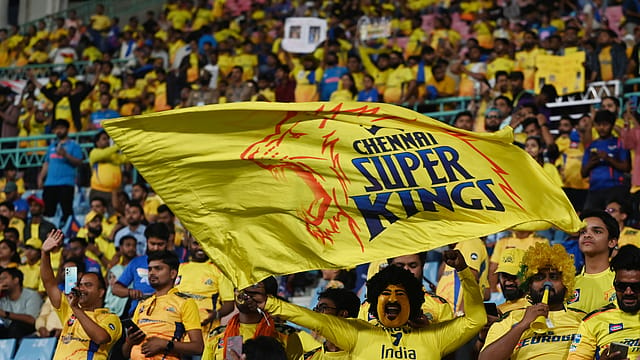
The fan’s body remembers the road to Chepauk before his mind does.
The turn towards Wallajah Road. The impatient horns. The warm Chennai air carrying salt, sweat and exhaust. Yellow shirts brush against his arms as the crowd narrows near the gates. A vendor lifts a bundle of plastic whistles above his head. Somewhere ahead, a drum begins to beat and is answered by another. The floodlight towers appear between buildings, white ribs against the evening sky.
For years, the fan has entered this ground with one private certainty. At some point, a door in the pavilion will open and Mahendra Singh Dhoni will walk through it.
The certainty shaped everything. He listened differently when a wicket fell. He studied the dugout after every over. If the stadium announcer reached Dhoni’s name during the playing XI, the remaining names dissolved beneath the noise. On nights when another Chennai batter was dismissed, a forbidden ripple of excitement sometimes moved through the stands. Nobody wanted CSK to lose a wicket. Thousands still wanted the next man.

The Wealth Issue 2026
06 Nov 2026 - Vol 05 | Issue 45
Portraits of Dreamers and Doers under 35
Then the gate would open.
The first sight was often incomplete: a flash of yellow pads, the dark helmet, gloves tightening around the bat. It was enough. Plastic whistles shrieked. Phones rose and turned the lower tiers into a field of tiny screens. The sound struck the concrete roof, fell back upon the crowd and grew thicker. The fan felt it first in his chest and then in his throat.
He had paid for a cricket match. In that instant, the rest of the cricket became supporting material.
The next time he enters Chepauk, every ritual may remain intact. The vendors will still sell yellow shirts. The drums will find their rhythm. A child will press a whistle between his lips and blow until an adult begs for mercy. Chennai Super Kings will run onto the field. The scoreboard will glow above a full ground.
One seat will still feel empty
Dhoni never occupied that seat. It has no number and cannot be found on a stadium map. It exists somewhere between the fan and the pavilion, inside the space where expectation used to live.
For the first time, the door can open without the possibility of No. 7 emerging from it.
That is when retirement becomes real.
Announcements happen elsewhere. They arrive on phones as club statements, farewell videos and breaking-news alerts. A fan can read the words, forward them, post a yellow heart and continue with his evening. The eyes accept the information before the body does.
The body understands only when it returns to the old place and waits for the old cue.
Chepauk will call Dhoni its mentor now. He may sit in the dugout, walk across the outfield during training and appear on the giant screen. The camera will find him, and the crowd will roar from habit and gratitude. His physical presence may even make the first season easier.
Yet the fan will know the difference. Dhoni can advise a chase, but he cannot enter it. He can study the field, but he cannot move a fielder with one raised glove. The familiar shape will remain near the boundary while the match travels beyond his reach.
Proximity can sharpen absence
Chepauk is not the first Indian ground to learn this.
Wankhede inherited its invisible vacancy in November 2013. Sachin Tendulkar walked out for his 200th Test while Mumbai attempted to hold a farewell and a cricket match at the same time. His name rose from the stands in waves. When he bent to touch the pitch after his final appearance, a piece of the ground’s identity seemed to bend with him.
Wankhede filled again. Mumbai Indians found new champions. International cricket returned. Spectators bought tickets, climbed the same concrete ramps and looked towards the same square.
The ground remained Wankhede, but the anticipation had changed. For almost a quarter of a century, a Mumbai crowd could believe that the small man adjusting his helmet might still emerge to make the city feel larger. After retirement, the pavilion became an ordinary entrance.
Sudhir Kumar Gautam carried the absence on his skin.
Before Tendulkar retired, Sudhir painted his body in the colours of the Indian flag and wrote “Tendulkar 10” across it. He waved the Tricolour, blew a conch shell and travelled extraordinary distances to follow the Indian team. For Sachin’s farewell, two words appeared above the name: “Miss U.”
The message stayed after the batsman left
Sudhir did not retire from being a fan. He continued travelling for India, continued painting his body and continued carrying Tendulkar into grounds where Tendulkar would never again take guard. The ritual changed its purpose. Once it summoned the player. Later it preserved him.
This may now become the quiet work awaiting Chepauk’s most recognisable devotees.
For years, Saravanan Hari prepared for CSK matches by turning his own body into a yellow banner. The transformation could take around five hours. Yellow paint covered his torso and face. A black wig rose above his head. “Dhoni” and the number 7 occupied his chest. He carried a large CSK flag and became part of the ground’s visual language.
Television cameras found him because he made devotion impossible to miss. Thousands wore replica jerseys; Saravanan made himself the jersey.
What does such a fan paint after the player retires?
The question is larger than whether the name remains on his chest. A superfan’s ritual begins as celebration but gradually becomes identity. The route to the stadium, the preparation, the strangers asking for photographs and the instant recognition in the stands all gather around the player’s career. Retirement removes the central event without erasing the life built around it.
Perhaps the paint stays exactly where it was. The number may become more important now that the man no longer wears it on the field. A name painted on the body can stop being a cheer and become an act of remembrance.
Sudhir showed how that happens. Tendulkar’s retirement did not take the colour out of his fandom. It added “Miss U” to it.
Feroz Shah Kotla knows another version of the vacancy
Virender Sehwag belonged to Delhi in a way statistics could not contain. He batted with the impatience of its traffic, the appetite of its streets and the confidence of a man who saw no reason to treat a good ball with excessive respect. At Kotla, his presence connected the old city ground to Najafgarh and to a generation that enjoyed Test cricket most when Sehwag appeared intent on shortening it.
The pavilion continued producing openers after him. None carried the same threat that the first delivery of a Test might be treated like a loose ball in a Sunday game. When Sehwag left, Kotla did not lose a position in the batting order. It lost a particular form of mischief.
Every stadium’s vacancy has its own texture.
Wankhede carries the remembered chant stretching his first name across several seconds: Sachin, Sachin. Kotla retains the expectation that the scoreboard might begin running before the spectators have settled into their seats. Chepauk will remember the door in the pavilion, the sudden forest of raised phones and the whistles that once announced a man before the public-address system could.
Stadiums are often described through capacity, pitch dimensions and the number of stands. Fans know that a ground is also built from repeated expectation. They return to the same seat, argue with the same strangers, buy tea from the same corridor and wait for a particular figure to appear in the same rectangle of light.
When that figure stops coming, the concrete remains. The emotional architecture shifts.
The game moves on with professional efficiency. Another captain attends the toss. Another wicketkeeper crouches behind the stumps. A younger batter receives the loudest cheer. Children arrive wearing a new name across their backs. Winning accelerates the transfer of affection because supporters want fresh memories, and sport cannot survive by holding a memorial service every evening.
But replacement is an administrative word. Fandom does not experience succession so neatly.
The fan who came to Chepauk for Dhoni will still support CSK. He may applaud the new captain and complain about the auction. He may bring his child and point towards the stand where they once sat together. His loyalty will stretch because that is what loyalty does.
At some point, probably when the light begins to fade and the match tightens, his eyes will return to the pavilion.
The movement will be involuntary
For a second, the old calculation will begin. How many overs remain? How many wickets have fallen? Is this the moment?
Then memory will correct expectation.
There will be no helmet appearing in the doorway. The number 7 will exist on old shirts, painted bodies, phone cases, flags and the backs of people who refuse to update their wardrobes. Dhoni may be visible in the dugout, close enough to trigger a roar and too far away to finish the chase.
The fan will turn back towards the middle. Cricket will insist upon the present.
Another batter will face the next ball and attempt the final six. Chepauk will discover new reasons to rise from its seats because a stadium cannot remain silent forever.
Yet beneath the new sound, an older whistle will survive.
It will belong to the man who taught Chepauk how to wait until the final over, and to the fan whose body still remembers exactly when to expect him.