Quick Commerce vs Kiranas: Who Really Wins India’s Grocery War?
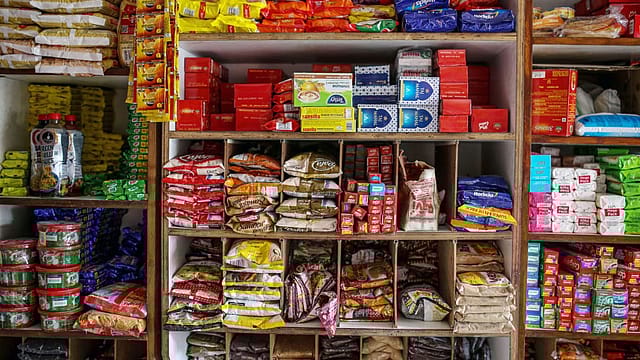
India’s grocery market will remain kirana-led as low-value, high-frequency purchases make large-format retail and quick commerce structurally uneconomical at mass scale, despite rapid digital growth
What is this study really saying?
Despite the rise of quick commerce, supermarkets, and e-grocery apps, India’s grocery market still belongs to kiranas and will continue to for the foreseeable future.
Why is grocery such a big deal in India?
Because grocery is India’s largest retail category, worth ~₹55.9 trillion in 2025 and projected to reach ~₹84.3 trillion by 2030. It reflects how Indians actually live, earn, and spend.
So, why do kiranas still dominate?
Because India shops small and often. The typical grocery basket is ₹100–200, bought 10–20 times a month. Kiranas are structurally built for this reality.
What’s the ‘AOV trap’?
Average Order Value (AOV). Low AOVs make big-box retail and online commerce economically fragile. Their cost structures demand larger baskets. Kiranas don’t.
How big is the kirana economy really?
Massive. Kiranas account for ~91% of India’s grocery market in 2025 and are expected to still hold ~86% by 2030, even as other formats grow faster percentage-wise.
Why can’t quick commerce replace kiranas?

The Liberation of Bengal
05 Jun 2026 - Vol 04 | Issue 74
A silent revolution ends the reign of fear
Because quick commerce is a convenience model, not a mass model. It serves urban, affluent consumers, prioritising speed over price—and thrives on higher-value, time-sensitive orders.
Then what is quick commerce actually disrupting?
Mostly supermarkets and slotted e-commerce, not kiranas. It’s stealing convenience-led baskets from people who already shop digitally—not from India’s mass, value-driven households.
Where do hypermarkets fit in this picture?
Hypermarkets survive because they sell value at scale: bulk packs, predictable pricing, and monthly stock-ups. That’s why players like D-Mart remain resilient, growing at ~14–16% CAGR.
Why are supermarkets the most vulnerable?
Because they sit awkwardly in the middle. They are not cheap enough to beat hypermarkets, and not fast enough to beat quick commerce.
Who actually drives India’s grocery consumption?
Low-to-mid income households—over 230 million of them. They account for the bulk of grocery spending and depend on affordability, proximity, and credit.
Why are small packs so critical?
It’s not just about price—it’s about cash flow. Many households earn daily or weekly. Small packs allow branded consumption without locking up cash.
What makes kiranas economically unbeatable?
Multiple reasons. First comes low or zero rent (often family-owned stores).
Second is family-run operations. Then comes fast inventory turns (9–10 days). Add to this negligible delivery and marketing costs. They can stay profitable even at ₹100–200 baskets.
Are kiranas changing at all?
Yes, quietly. They’re adopting UPI, simple inventory tracking, planned sourcing, and B2B platforms, while keeping their core strengths intact.
So, what’s the future of India’s grocery market?
Coexistence and not replacement. While quick commerce will own convenience, hypermarkets will own value stock-ups. But kiranas will remain the backbone of mass grocery.
What’s the big takeaway?
India’s grocery story isn’t about disruption. It’s about economic fit and kiranas fit India better than any other format.
(With inputs from ANI and Redseer report)