Indian Markets Tumble as Middle East Tensions Trigger Broad Risk-Off Sentiment; Sensex Tanks 2,775 Points
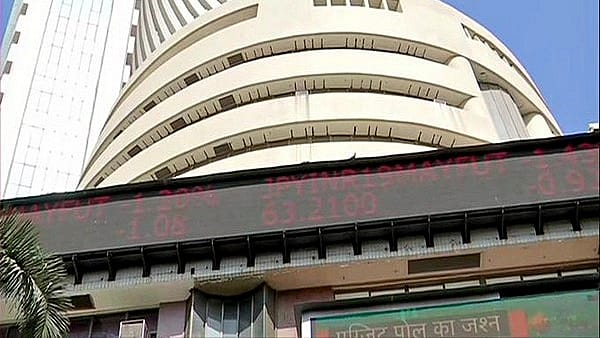
India’s equity markets opened sharply lower on Monday amid a broad risk-off sentiment triggered by rising tensions and military escalations in the Middle East, which dented investor confidence across asset classes.
The Nifty 50 index opened at 24,659.25, declining by 519.40 points or 2.06 per cent at 9:00 am.
The BSE Sensex opened at 78,512.05, falling 2,775.14 points or 3.41 per cent, reflecting heightened nervousness across domestic equities.

Losing Memory
16 Oct 2026 - Vol 05 | Issue 42
The making of a medical and social emergency
He further said Indian markets will assess three key impacts from the Iran-US conflict.
How Is the Iran-US Conflict Impacting Indian Markets Through Oil and the Strait of Hormuz?
"The first risk transmitter is higher oil prices due to the de facto closure of the Straits of Hormuz. The second is the impact on major trading partners of India in the Gulf, with Indian exporters suffering due to the closure of these shipping lanes and supply chains. The third is the risk to the 9 million Indians who work in the Middle East," Bagga said.
He added that the best outcome would be if the new Iranian leadership returns to negotiations, allows tankers to sail through the Strait of Hormuz, and stops attacking GCC targets.
"The worst outcome we all know is consigned to a low probability event," he noted.
The decline was broad-based in the domestic market. On the NSE, Nifty 100 declined by more than 2 per cent, Nifty Midcap 100 fell 3.43 per cent and Nifty Smallcap 100 dropped 3.78 per cent, indicating widespread selling pressure.
Sectoral indices also remained under pressure, with Nifty Auto down by 3.42 per cent, Nifty FMCG losing 2.3 per cent and Nifty IT declining by 1.91 per cent, as overall selling sentiments were visible across sectors.
What Does the Slip Below 200-EMA Signal for Indian Markets Amid Global Weakness?
Nifty Metal was the lone sectoral index in the green, while financial and energy stocks were expected to decline and defence stocks failed to capitalise on the prevailing geopolitical climate.
Sunil Gurjar, SEBI-registered analyst and Founder of Alphamojo Financial Services, said, "The index has now slipped below its 200-EMA, which signals emerging long-term weakness in the overall structure. The decline was largely driven by global market weakness and rising bond yields, which reduced risk appetite among investors."
He added that sustained closing below the 200-EMA in upcoming sessions could trigger a sharper fall.
"However, a strong bounce back from this level would indicate support holding and could confirm renewed bullish momentum," he said.
Commodity markets reflected the shift to safe-haven assets, with gold prices surging 3 per cent to Rs 1,67,329 per 10 gm for 24 karat and silver prices rising 3.89 per cent to Rs 2,85,700 per kg.
Japan’s Nikkei 225 fell 1.55 per cent to 57,930, Singapore’s Straits Times declined 1.86 per cent to 4,903, Hong Kong’s Hang Seng dropped more than 2 per cent to 26,113 and Taiwan’s weighted index lost 0.33 per cent to 35,297.
In the US, Dow Jones Futures were down 0.77 per cent at 48,593, indicating continued selling pressure, while on Friday the S&P 500 declined 0.43 per cent to 6,878 and the Nasdaq fell 0.94 per cent to 22,663.
Why Is the Surge in Crude Oil Prices a Key Risk for Indian Markets?
Crude oil prices have surged to $76 per barrel after rallying by as much as 13 per cent to the highest level since January 2025, intensifying concerns for import-dependent economies like India.
Tanker traffic through the Strait of Hormuz, the chokepoint off Iran’s coast that handles a fifth of the world’s oil and large volumes of gas, has largely halted due to a self-imposed pause by shipowners and traders as the Iran war spreads.
The spike in crude prices is expected to pile fresh pressure on Indian markets, with aviation stocks, oil marketing companies, and sectors such as paints, tyres and automobiles likely to remain weak.
Analysts warn that a sustained rise in crude oil prices above $75 could shave off 20 to 30 basis points from India’s GDP growth and widen the current account deficit.
One basis point is one-hundredth of a percentage point.
(With inputs from ANI)