Kirana Goes Formal: How 70 Crore QR Codes Are Rewriting India’s Retail Economy
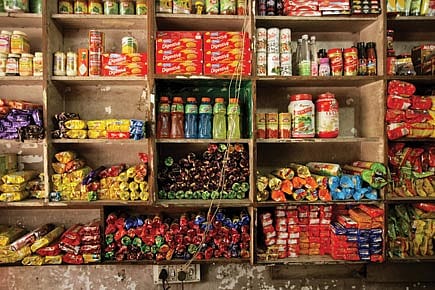
India’s neighbourhood kirana stores—long seen as informal, cash-driven, and disconnected from the financial mainstream—are quietly undergoing a structural transformation. Powered by digital payments, they are now firmly stepping into the formal economy, with over 70 crore active QR codes linking small merchants directly to India’s financial system, according to a report by Worldline.
This shift marks more than just a change in how payments are made. It signals a fundamental reordering of merchant retail in India.
The report highlights how India has decisively moved from taps to a scan-first economy, where digital payments are no longer an occasional convenience but an everyday habit—for both consumers and shopkeepers. From buying milk to settling monthly grocery bills, QR-based payments have become embedded in daily commerce.
QR CODES & INFLECTION POINT
The third quarter of 2025 emerged as a clear inflection point. With 709 million active QR codes in circulation, even the smallest kirana stores are now digitally discoverable, transaction-ready, and visible within the formal financial ecosystem. As the report notes, this has placed neighbourhood stores on near-equal footing with modern retail formats, at least in payments acceptance and transaction traceability.
This mass adoption has also reshaped India’s broader payments landscape. The Unified Payments Interface (UPI) continues to dominate high-frequency, low-value transactions, making it the default choice for daily purchases. At the same time, an 8% rise in credit card issuance is fuelling higher-value and aspirational spending, reflecting growing consumer confidence.

The Liberation of Bengal
05 Jun 2026 - Vol 04 | Issue 74
A silent revolution ends the reign of fear
Rather than competing, different payment instruments are settling into distinct roles. Credit cards remain the preferred option for big-ticket purchases, while prepaid cards are finding traction in micro-payments and recurring use cases. Debit cards, meanwhile, are seeing a gradual decline as faster and more flexible digital options take over.
The report underscores that these payment rails now coexist, rather than crowding each other out—QR scans for everyday needs, card swipes for aspirational consumption. This layered behaviour points to a maturing ecosystem capable of serving diverse spending patterns across income groups and geographies.
Perhaps most striking is the global implication. India is no longer following international models of digital payments—it is setting them. The sheer scale of QR adoption, the ubiquity of UPI, and the balanced role of cards demonstrate how deeply digital payments are woven into India’s economic fabric.
For kirana stores, this evolution is transformative. Digital payments are not just simplifying transactions; they are bringing millions of small merchants into the formal economy—improving transparency, financial access, and long-term sustainability. In 2025, the humble kirana is no longer on the margins of India’s growth story. It is increasingly at its digital core.
(yMedia and ANI are content partners for this story)