When Donkey Milk is Just the Tip of the Iceberg
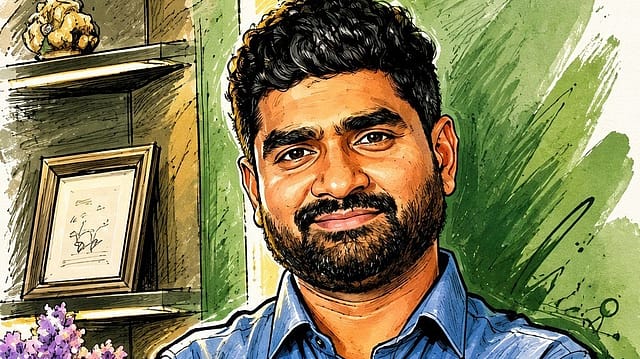
What makes Iceberg ice cream different from so many ice cream brands we know, which are almost similar but swap flavour here and there? Not the ones that make a real-fruit-looking ice cream with vegetable oil but claim to sell “actual” ice cream. Iceberg is made of not just milk, but a variety of milks—as unusual for many as donkey or camel.
“We started in 2013 as a regular ice-cream brand. I slowly converted into an organic ice-cream brand in 2019. Then I worked on the ingredient story and developed the preservative-free formulation,” says Suhas B Shetty, founder of Iceberg Organic Icecreams. A PhD in pharmacy, Shetty has spent the last 13 years building a brand that is less about novelty flavours and more about redefining what goes into every scoop.

Zeroing In on ECI
09 Oct 2026 - Vol 05 | Issue 41
Constitutional legitimacy versus political opportunism
Today, Iceberg is projecting ₹100 crore in revenue for 2026, up from ₹26 crore last year, with a monthly run rate of ₹7–8 crore, as Shetty claims. It has done this with just over 10 outlets—seven in Hyderabad, one each in Nellore, Vijayawada and Bangalore—and virtually no traditional marketing spend.
The 1% category play
Then there are the headlines: donkey, camel and goat milk ice creams. They account for roughly 1–2% of revenue. They are not meant to be volume drivers. They are meant to create a new category.
“We have roughly 45 SKUs, and only three SKUs are part of this category. Moreover, I don’t even make these products available throughout the year or across all outlets. Sometimes they are available and sometimes they are not. They are hot-selling products, but they are not a revenue source for me. They represent a new category that I have entered and excelled in,” Shetty says.
The inspiration came from adjacent categories. “There are many cosmetic brands using donkey milk and many nutraceutical brands using camel milk. So the thought process was simple: since I’m already in the ice-cream industry, why can’t I bring these ingredients into ice cream?”
He calls them “traditional milk” because the ingredients have long existed in traditional knowledge and Ayurveda. “People have traditionally talked about donkey milk for certain ailments. Similarly, camel milk has been discussed for digestive issues. These things were not invented by me,” he says.
The strategy is first-mover advantage, not immediate revenue. “This isn’t about creating a new revenue source. It’s about creating a new category. I want to excite people. And how do I excite them? By being open and transparent… Many brands will enter this space and create new categories. I have the opportunity to get ahead of them, and that’s what I’ve done,” Shetty says.
Pricing is calibrated to avoid the novelty trap. “We are not a novelty brand. We are in a slightly premium segment, and our pricing is at par with brands such as Baskin-Robbins and Naturals… I’m not here to compete with novelty-based brands or the ‘buy one, get one free’ type of brands. I’m here to create my own niche. Clean-label products don’t come cheap.”
The numbers that don’t add up—until they do
By conventional D2C logic, Iceberg shouldn’t be where it is. It has no venture funding. It has spent “not even a single rupee on traditional marketing.” In the last 12–18 months, it has spent no more than ₹20–25 lakh on influencer marketing. Everything else has been social media and word-of-mouth, as claimed by Shetty.
Yet customer retention in outlets is more than 45%—“very difficult to achieve in the ice-cream or FMCG segment,” Shetty says.
“Many people in North India don’t know about my brand. I’m not as familiar to consumers there as some of the bigger brands in the market. Even though we have this revenue, we have only around 10-plus outlets. If you look at other brands that are available on e-commerce, FMCG and supermarkets, have celebrity endorsements, raised venture capital or appeared heavily on Shark Tank, our cumulative revenue is still comparable or higher,” he says.
“What are we doing right? Only the product. Our consistency in the product, sourcing story and everything around it.”
The acquisition that wasn’t
In 2019, before COVID, Iceberg supplied keto ice cream to Cure Foods through white-label manufacturing, as well as Iceberg-branded tubs. Cure Foods, which operates multiple cloud-kitchen brands, later proposed acquiring a 51% stake in Iceberg after seeing the retention rates across its outlets.
“But the numbers didn’t match. We weren’t happy with the proposal. If I wanted to do that, I would have raised funds during the 13-year journey itself. I bootstrapped the company, and even today—and for the next two years—I intend to continue doing that,” Shetty says.
The next phase: national, with a brand ambassador and a quick-commerce hack
From January, Iceberg is going national. “We are entering the space where our products will be available across the country. We are also hiring a brand ambassador. We already have a brand ambassador, but we are going to take this to the next level,” Shetty says.
Physical outlets alone can’t deliver national reach. “With physical outlets alone, I cannot deliver the product to consumers across the country. The spending capacity of Tier-2 consumers has increased, but getting better products is the real game now. If you have a better product, rather than restricting yourself to physical outlets, e-commerce gives you a much better opportunity to reach consumers.”
The quick-commerce strategy is specific. “For a new brand that isn’t available on e-commerce or in FMCG, the conversation with quick-commerce platforms can start with a 30–35% margin. I’ve heard stories about how much quick commerce can take from brands,” Shetty says.
His countermove: use the brand-ambassador deal as leverage. “I’ll sign an MOU with the brand ambassador and pay an advance. I’ll take that documentation to quick-commerce companies. There are six or seven major aggregators in the market—Zepto, BigBasket, FirstClub, Amazon, Flipkart Minutes and others. I’ll approach them and potentially negotiate a six-month exclusive agreement.”
The pitch to platforms: “My marketing budget is roughly ₹30 lakh a month, including Meta and Google advertising. With the brand ambassador campaign, I can bring a new audience to their platform. Customers who discover my brand through the brand ambassador can also be directed to their platform. They get an additional advantage. So my negotiation should start at around 15% rather than 30–35%.”
He cites SuperYou as a reference. “Have you heard of SuperYou? Can you imagine SuperYou without Ranveer? Exactly. The first-mover advantage wins the game. Ranveer is involved as a co-founder, but his association with the brand gives it a completely different recall.”
Signature stores and a franchise pivot
Iceberg is also rethinking its retail format. Current outlets are 1,000–1,200 sq ft. The plan is to create three or four “signature outlets” across Tier-1 cities—Delhi, Mumbai, Bangalore, Hyderabad—in a bigger, experiential format. “Something like Starbucks Reserve, where the same product becomes a different experience,” Shetty says.
On franchising, the brand is drawing a line. “We don’t sell franchises under Iceberg Organic Icecreams. We have more than 5,000 franchise inquiries, but we don’t want to continue selling franchises. We have more than 40 franchise outlets from the earlier phase of the business. After 13-plus years, I don’t want to give franchises anymore. That’s why I started Organic Creamery.” The product is the same; the brand architecture is different.
The market shift he’s betting on
Shetty sees a paradigm shift in consumer behaviour over the last five years—around ingredients, transparency and innovation in FMCG. “The same thing will happen over the next five to seven years. Many brands will enter this space and create new categories. I have the opportunity to get ahead of them, and that’s what I’ve done,” he says.
Gen Z, he notes, is more aware. “They read more and want to know what ingredients are going into products.” For a brand that has been doing ingredient transparency for years, this is an advantage. “The newer brands are now trying to build ingredient sourcing stories, consumer confidence, founder-driven formats and storytelling. We were already doing all of this.”
The product, as strategy
At a time when D2C food brands are burning cash on celebrity endorsements and performance marketing, Iceberg’s thesis is simple: “All these things give you first-mover advantage. If I bring the customer in once and they like the product, they will come back. That’s what I’m doing.”
In a category where “frozen dessert” labels are common and vegetable oil is often passed off as ice cream, Iceberg is trying to make a different bet: that consumers will pay for actual ice cream, made from a variety of milks, with ingredients they can see and trust.
“We are still far behind many aggressive markets such as Japan, South Korea, China and the Middle East, where this kind of product innovation is much more advanced,” Shetty says. “I want to create something new in the market—new innovation.”
For a brand that has turned down a 51% acquisition offer, is scaling to ₹100 crore without VC money, and is using donkey milk not as a revenue driver but as a category moat, the innovation is not just in the flavours. It’s in the entire business model.
And for Shetty, the job is not to claim superiority. “I only talk about the ingredient story and the benefits associated with those ingredients. I’m not forcing any customer to purchase the product. I’m not saying I’m better than another brand. That is not my job.”
His job, as he sees it, is simpler: create the category, build the ecosystem, and let the product do the rest.