Maggi Sold Us Two-Minute Noodles. Now It Wants Two Minutes of Us
Maggi used to have a fairly clear brief. Somebody was hungry. Somebody else had to produce something they wanted to eat. “Bas do minute” made a reassuring answer.
The noodles now have a more delicate assignment. The people in the house are still there. They may even be sitting together. But how much do they actually know about one another?
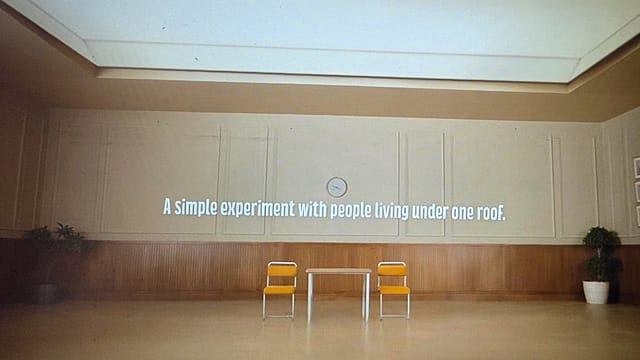
In ‘The Togetherness Table’, Maggi brings parents and children, couples and siblings around a specially designed table. They answer questions about each other; the table responds to make the distance between them visible. As the questions become more personal, certainty encounters hesitation and discovery.

Zeroing In on ECI
09 Oct 2026 - Vol 05 | Issue 41
Constitutional legitimacy versus political opportunism
A packet of noodles is asking the family some difficult questions.
There is an obvious joke available about fixing relationships in the time it takes to cook a snack. It would also let the advertising off too easily. The more interesting question is how Maggi’s famous two minutes acquired this second job.
A brand that became familiar by asking for very little of our time is asking whether we give the people closest to us even that much.
THE CHILDREN GREW UP. THE BOWL STAYED.
Affection was present long before the interactive furniture.
The familiar “Mummy, bhook lagi hai” commercials placed Maggi within a mother’s response to her children. Speed made the product useful; the relationship made its usefulness matter. The brand did not have to explain why feeding somebody could express care.
A later commercial returned to that memory with grown-up siblings arriving home and Deepti Naval as their mother. The children had acquired adult lives. Their appetite for the old exchange remained.
‘Me and Meri Maggi’ widened the frame further. Consumers were invited to share their own experiences, with selected stories appearing on packs and becoming films. The brand could draw on the lives people had already lived with it.
That history matters because it prevents a convenient but inaccurate reading of the current work: that Maggi once sold only speed and has now discovered feelings.
Its advertising has long combined the two. What has changed is the responsibility it gives the product. Providing food for a familiar encounter is one thing. Helping people recognise what is missing from an encounter asks more of the bowl.
Marketing and branding experts reckon that an emotional association becomes stronger when people can connect it to something they already do with the product. “The challenge is to build on that behaviour without making the product responsible for everything the relationship needs,” says Ashita Aggarwal, professor of marketing at SP Jain Institute of Management & Research.
GRANDMOTHER HAD A RECIPE
The clearest bridge sits in ‘Rishte Maange, Bas Do Minute’.
A grandmother asks her grandson for two minutes while he is occupied with a guitar tutorial. Seeing the Maggi packet, he supplies the cooking instructions. She draws his sister into the preparation, then their mother. Making the noodles gives the family a reason to assemble.
The idea understands a small domestic difficulty: asking for company can feel more exposing than asking for help.
The grandmother has something to make. Everybody can contribute. The family can spend time together without anybody having to announce that it needs to work on itself.
Here, Maggi’s two minutes do useful creative work. They make the request sound manageable, and the preparation provides the activity through which people come together. The product is involved in what happens.
‘Me and Maggi: So Good Together’ subsequently explored a father and daughter, a couple and a joint family absorbed in separate worlds. The familiar bowl offered a reason to reconnect.
The Togetherness Table takes that concern into a more explicit exercise. Gathering is the starting point. The questions expose how much may have gone unasked or unnoticed.
The shift is revealing. Grandmother invited people to help make something. The table asks them to demonstrate what they know.
WHEN THE TABLE DOES THE WORK
That makes the current device interesting, and worth examining.
Emotional distance is difficult to photograph. A table that responds to answers gives it a physical expression. The campaign turns an abstract concern into something participants can encounter and viewers can follow.
But the device also complicates Maggi’s role.
In the grandmother commercial, preparing the noodles creates the interaction. Here, the questions and the responsive table produce the discoveries. Could another food brand, or a furniture company, sponsor much the same encounter?
There is a global precedent for the crowded territory around distracted dining. IKEA’s ‘Let’s Relax’ imagined the absurdity of food-posting culture in a historical setting, encouraging people to enjoy eating together instead of seeking approval for the meal. A furniture retailer could credibly enter that conversation through the home and dining table.
Maggi has a different advantage: a familiar food that people can make and share. Its earlier commercials demonstrate how directly that behaviour can carry a story. An elaborate installation raises the question of whether the creative device strengthens the product’s role or begins to overshadow it.
The commercial ambition is understandable. A noodle brand associated with shared memories has something to offer beyond a comparison of flavours and prices. It can make a particular packet feel appropriate for a particular moment.
Yet affection for a campaign is not automatically a preference at the shelf. Maggi still needs viewers to connect the encounter with a reason to choose its noodles.
A relationship with the audience cannot be outsourced entirely to the table.
TWO MINUTES IS AN OPENING
There is also a limit to what the exercise can establish.
Knowing somebody’s answers may reflect attention. Failing to know them does not, by itself, diagnose a relationship. People change, keep things private, forget details or struggle to express what matters. Closeness cannot be reduced to a successful quiz.
An edited encounter can make an audience recognise something uncomfortable about its own habits. It cannot tell us whether participants subsequently listened more closely, changed those habits or became less distant.
That leaves Maggi with a smaller, more credible proposition: a shared bowl can create an opportunity.
There need be nothing trivial about that. A familiar snack requires little planning. Making it together gives hands something to do while a conversation finds its way. The invitation can be casual enough for somebody to accept without feeling summoned to a family meeting.
“Two minutes can make the invitation feel easy to accept,” says Aggarwal. What matters is whether that invitation leads to attention. "The brand can encourage a beginning; the people involved have to take it further," she adds.
The distinction is especially useful for judging a brand built around convenience. In the kitchen, reducing effort is a benefit. In a relationship, some effort remains necessary. Listening can be inconvenient. An answer may take longer than expected or lead somewhere neither person intended.
Maggi’s history earns it a place in this story. It has accompanied the hungry child, the grown-up returning home and the family coaxed into cooking together. Those situations give the brand a credible understanding of how an ordinary food can become part of a relationship.
They also set a demanding benchmark. Its strongest invitation may still be the simplest: make something together and see what gets said. The noodles can be ready in two minutes. The person across the table may need longer.