MS Dhoni Has Retired From the IPL. Why Brand Dhoni May Now Command an Even Bigger Premium
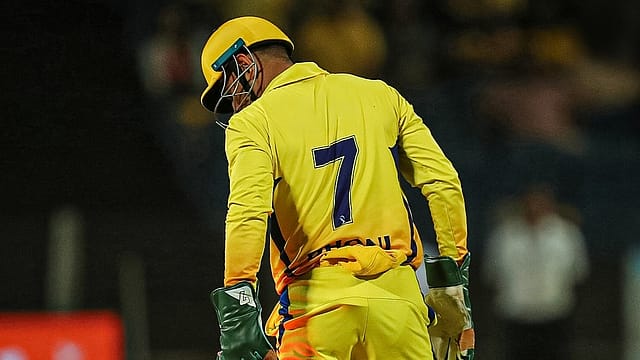
MS Dhoni retired from the Indian Premier League. But 'Brand Dhoni' had already spent a season rehearsing for life without him on the field.
A calf injury kept Dhoni out of every Chennai Super Kings match in IPL 2026. There were no helicopter shots, stumpings or final-over cameos. He could not walk towards the crease while a stadium rose in anticipation. Yet his advertisements remained difficult to escape.
Dhoni accounted for 8 per cent of celebrity-led television advertising volume during the first nine months of 2026, second only to Shah Rukh Khan. He appeared in commercials for 33 brands. A year earlier, TAM AdEx counted 59 television brand associations, the highest for any Indian celebrity.
The numbers produce a fascinating contradiction. Dhoni’s playing visibility had disappeared before his endorsement visibility did.

The Wealth Issue 2026
06 Nov 2026 - Vol 05 | Issue 45
Portraits of Dreamers and Doers under 35
Retirement will now test whether that separation can endure. The annual IPL stage had refreshed his commercial mythology at no additional cost to advertisers. One stumping, one six or one slow walk from the dugout could place him at the centre of national conversation. That recurring supply of new sporting imagery has ended.
Something else has arrived in its place: scarcity.
The central question is no longer whether Dhoni can remain famous after retirement. He retired from international cricket in 2020 and became more commercially active. The question is whether Brand Dhoni can exchange mass availability for a higher, more durable premium.
Dhoni stopped needing runs to sell products
Celebrity valuation studies indicate that Dhoni’s commercial value had already detached itself from his recent performance.
Kroll valued Brand Dhoni at $115.3 million in its 2025 rankings, placing him fifth among Indian celebrities. He climbed from seventh position even as his cricketing output declined. Fortune India and Interbrand subsequently valued him at ₹2,141 crore in 2026, behind only Virat Kohli, Shah Rukh Khan and Priyanka Chopra Jonas. The assessment highlighted coherence, trust and affinity rather than current athletic dominance.
Industry estimates during IPL 2026 placed his endorsement fee between ₹3.5 crore and ₹6 crore per deal. His portfolio stretched across automobiles, financial services, consumer goods, technology platforms and entertainment. He invested in Kuku and became an ambassador for its mobile-first storytelling business even while injury kept him out of the tournament.
This is where Harish Bijoor, brand strategist and founder of Harish Bijoor Consults, sees Dhoni's biggest advantage. He believes the former India captain's commercial identity is built on values that do not depend on his performance with a bat.
"One is the fact that there is a value called calm, and Dhoni defines calm very well. He has the tag of being called Captain Cool, for instance. The second is the fact that he has a clean image. There have been no compromises in all these 20 years plus, and that's a big positive. The third is the Bharat story. Dhoni, umbilically, Dhoni is connected to Ranchi, and he is forever seen as the small-town boy," Bijoor says.
He identifies these as three defining pillars of Dhoni's commercial identity: "I do believe these are strong values of calm, trust, and Bharat. You don't need a bat to brand these values."
This is the foundation of Brand Dhoni then and now.
The playing Dhoni could sell power, finishing and match-day excitement. He also carried leadership, small-town ambition, mechanical curiosity, patriotism and composure. Retirement removes the first group from the present tense. It strengthens the second.
A soft-drink company may prefer an athlete generating weekly highlights. A bank, insurer, automobile manufacturer or technology company can value Dhoni for qualities that do not expire with his wicketkeeping gloves: control, dependability, judgement and the ability to remain calm when everybody else appears hurried.
Playing Dhoni sold performance. Retired Dhoni must sell permanence.
The Sachin comparison: God versus leader
Bijoor believes Dhoni could eventually become commercially bigger than Sachin Tendulkar, despite the latter's extraordinary post-retirement brand longevity.
"I do believe Dhoni is going to be bigger than Sachin on this score, fundamentally because Dhoni has a very clearly defined set of brand values, as I see in his persona," he says.
The distinction, according to Bijoor, lies in how the two cricketers are perceived.
"Sachin is really Bharat Ratna. Sachin is God. Whereas Dhoni is not a Bharat Ratna, but Dhoni is the Thala. And Thala is a leader. And to be a leader is that much more difficult."
It is an interesting distinction. Tendulkar's commercial identity is rooted in his extraordinary achievements and the almost devotional relationship he has shared with Indian cricket fans. Dhoni's appeal, meanwhile, is built around leadership, decision-making and an ability to command loyalty without appearing to seek attention.
The two are not necessarily competing for the same commercial territory. Tendulkar represents devotion to the craft and the burden of national expectation. Dhoni represents decision-making under pressure, the small-town route to power and an apparent refusal to be altered by fame.
Tendulkar offers a useful domestic precedent. More than a decade after his retirement, Kroll valued his celebrity brand at approximately $125.9 million, above Dhoni. His number of television brand associations also increased during 2026.
Tendulkar's commercial identity changed after he stopped playing. Brands no longer bought the promise of another century. They bought heritage, multigenerational recognition and national trust.
Dhoni has those assets, but his image contains a different emotional texture. Whether that can eventually translate into a higher commercial valuation remains to be seen.
The IPL was his greatest unpaid advertisement
The danger should not be underestimated. Dhoni’s continuing commercial strength has been supported by his presence around the IPL, even when he contributed fewer runs.
For two months every year, yellow shirts filled stadiums across India. Broadcasters tracked his arrival, training, batting position and future. Opposing venues became temporary CSK home grounds because thousands of supporters believed each season might be their final opportunity to see him play.
Brands benefited from that attention without paying to create it. Dhoni’s sporting appearance renewed the emotional association before his commercial appeared in the next advertising break.
Retirement interrupts that cycle. Younger fans will encounter fewer live Dhoni moments. Memories of the 2011 World Cup final, the 2018 CSK comeback or the helicopter shot will remain powerful, but heritage cannot indefinitely perform the work of current relevance.
The mentor role at Chennai Super Kings therefore carries commercial significance beyond cricket. Dhoni can remain visible at auctions, training sessions, strategic discussions and matches. The dugout allows him to retain an annual connection with the league while removing weekly scrutiny over his fitness, strike rate and batting position.
CSK keeps its most powerful audience magnet. Dhoni keeps the IPL’s distribution network.
The arrangement may also improve his image. His final playing seasons increasingly produced debates about whether nostalgia had delayed Chennai’s transition. Mentorship shifts attention towards the attribute advertisers have long wanted from him: judgement.
Michael Jordan turned the athlete into the product
The greatest post-retirement sports brands did more than preserve endorsement contracts. They changed the source of their economic value.
Michael Jordan earned approximately $90 million in playing salary during his basketball career. Forbes estimates that he subsequently accumulated about $2.4 billion before tax from commercial partners including Nike, Gatorade and Hanes. Nike now reportedly pays him close to $300 million annually through the Jordan relationship.

Jordan’s decisive achievement was converting his name from an endorsement into a product ecosystem. Customers do not merely buy shoes advertised by a retired basketball player. They buy Jordans.
Dhoni does not possess a comparable global product, and the Indian endorsement market operates at a different scale. The underlying lesson remains relevant. Appearance fees provide income for as long as advertisers require a face. Royalties, intellectual property and equity allow the athlete to participate in the value created by that face.
Dhoni has invested across electric mobility, fintech, drone technology, fitness, entertainment and consumer businesses. His reported portfolio has included CARS24, Khatabook, Garuda Aerospace, EMotorad, Rigi and several other ventures.
The post-retirement opportunity is to make those holdings more coherent. A collection of celebrity investments does not automatically become a commercial institution. Dhoni needs a few businesses in which his identity, distribution and ownership reinforce one another.
Federer made retirement look like an upgrade
Roger Federer constructed a different model. His commercial portfolio was designed around elegance, discipline and permanence long before his final match.
Federer’s ten-year Uniqlo agreement, reportedly worth $300 million, was signed in 2018, four years before he retired. Rolex, Mercedes-Benz and other long-term partners stayed with him after he stopped competing. His estimated stake in Swiss footwear company On became far more valuable than a conventional appearance fee.
Brands were no longer paying for his ranking. They were buying entry into the Federer idea: precision, global refinement and controlled excellence.
Dhoni offers an Indian variation. His persona is less luxurious and more rooted. He brings Ranchi, motorcycles, military associations, functional clothing, unshowy wealth and the belief that authority need not advertise itself.
That makes him unusually suitable for products seeking trust across metros and smaller cities. He can speak to aspiration without appearing distant from the audience that produced him.
The risk lies in trying to imitate Federer’s premium through superficial luxury. Dhoni’s value comes from appearing comfortable without display. His version of premium must be based on credibility and limited access rather than polished exclusivity.
Beckham built a company around being Beckham
David Beckham presents a third route. He turned his name into a professionally managed licensing, media and investment operation.
The commercial company supporting the Beckham brand reported revenue of $110.5 million for 2025, an increase of about one-fifth. Its businesses included advertising, licensing, fashion, media production and investments. Beckham appeared in roughly a dozen campaigns around the 2026 FIFA World Cup, two decades after his final appearance at the tournament as a player.
His continuing relevance was not accidental. A production company created documentaries and commercial content. Licensing arrangements carried the brand into products. Investments in Inter Miami and other ventures kept Beckham connected to football, entertainment and American culture.
Dhoni’s private temperament makes a constant media operation unlikely and possibly counterproductive. He does not need to become a pundit, reality-show personality or daily social-media performer. He could still build a more deliberate content and licensing company around leadership, motorsport, fitness, cricket development and the CSK relationship.
Rarity can create demand only when the audience receives occasional, meaningful access. Total silence eventually becomes absence.
Tendulkar proves that Indian trust has a long shelf life
Sachin Tendulkar offers the closest domestic comparison. More than a decade after his retirement, Kroll valued his celebrity brand at approximately $125.9 million, above Dhoni. His number of television brand associations also increased during 2026.
Tendulkar’s commercial identity changed after he stopped playing. Brands no longer bought the promise of another century. They bought heritage, multigenerational recognition and national trust.
Dhoni shares those assets, but his image contains a different emotional texture. Tendulkar represents devotion to the craft and the burden of national expectation. Dhoni represents decision-making under pressure, the small-town route to power and an apparent refusal to be altered by fame.
This distinction allows both to remain valuable without competing for precisely the same commercial role.
Brand Dhoni has an overexposure problem
Retirement itself is unlikely to cause a sudden collapse in Dhoni’s endorsement value. The more immediate threat is the size of his portfolio.
Fifty-nine television brand associations in one year demonstrate extraordinary demand. They also make scarcity difficult to claim. When one celebrity advertises products across too many unrelated categories, recall can accumulate around the person while becoming detached from the companies paying for it.
The decline from 59 television brands in 2025 to 33 during the first nine months of 2026 should not automatically be treated as evidence of weakness. Part of the difference reflects the measurement period, while Dhoni’s absence from the IPL reduced campaign activity. It may also point towards a necessary correction.
Brand Dhoni after retirement should become narrower and more expensive. Fewer partnerships, longer contracts and clearer category ownership would protect distinctiveness. Equity, royalties and profit-sharing should become more important than multiplying short-term fees.
He should ask a harder question before accepting a campaign: does this product strengthen what Dhoni means, or merely rent his recognition?
The endorsement numbers cited by Bijoor offer another indication of the demand for Dhoni's image. He says his last count put Dhoni at 42 brand associations, compared with 35 for Shah Rukh Khan and 28 for Amitabh Bachchan. These figures will need to be reconciled with television-only measurements, since the two sets of numbers may use different definitions of an endorsement.
Jordan can remain ubiquitous because the product carries his name. Federer can remain scarce because his partnerships have been curated for years. Beckham produces new cultural material through his businesses. Dhoni cannot build a permanent brand by repeating the endorsement model of his final playing seasons indefinitely.
CSK must learn to sell yellow without the pads
Dhoni’s retirement also creates a commercial test for Chennai Super Kings. Recent valuation studies placed the franchise brand at approximately $244 million and connected much of its stability to Dhoni’s presence and audience.
The mentor appointment protects that value during the transition. Sponsors can continue using him. Supporters can still associate the franchise with Thala. Younger players receive access to his authority and decision-making.
Yet CSK must gradually create stars whose commercial relevance does not depend on their proximity to Dhoni. A franchise that keeps marketing its mentor more prominently than its captain and players may preserve nostalgia while weakening succession.
Dhoni has to perform a delicate double act. He must remain visible enough to reassure CSK’s audience and withdraw enough to let another identity develop.
The quality of that handover will influence both Brand CSK and Brand Dhoni. If the team continues winning under a structure associated with his mentorship, his leadership premium grows. If Chennai stagnates while every decision is attributed to him, the mentor role could expose him to a new form of accountability.
Retirement can turn fame into an annuity
The global examples establish that athletic retirement does not impose one commercial outcome.
Jordan became a product and royalty stream. Federer aligned himself with long-term premium partners and equity. Beckham created a licensing and media enterprise. Tendulkar converted performance into national trust.
Dhoni has pieces of all four models. He owns extraordinary sporting memory, a powerful regional home, national affection, investment interests and a persona built around restraint. The combination is rare in Indian sport.
His commercial future will depend on whether he can resist the easiest money. Continuing to appear in dozens of interchangeable advertisements would maintain revenue for a period. Building ownership, selective partnerships and meaningful access could sustain value for decades.
The playing field made Dhoni famous. The way he handles scarcity will determine whether the brand becomes permanent.
Retirement will finally reveal whether Dhoni was India’s busiest sporting endorser or one of its few athletes capable of becoming a commercial institution.