De Beers Wants Indian Husbands to Propose Again. Would they fall in love again?
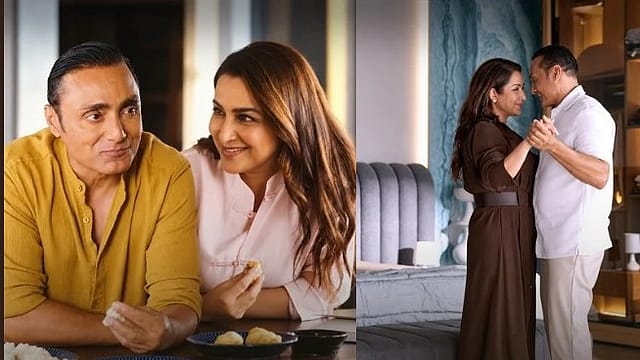
Ishita and Arjun have just sent their daughter off to college. Arjun, played by Rahul Bose, asks his wife to date him again. He brings a one-carat natural diamond. You have to admire a man who can turn asking his wife out to dinner into a visit to the jeweller.
Ishita is played by Tisca Chopra, who spotted something quite tender in the set-up. Her character has spent years looking after other people. Being asked out by the person who has been there all along catches her off guard. As Chopra put it in the launch coverage, “marriage isn’t the finish line”. That is a good line for a marriage. A diamond company has its own reasons to agree.

The Wealth Issue 2026
06 Nov 2026 - Vol 05 | Issue 45
Portraits of Dreamers and Doers under 35
The scene comes from Phir Se, Thoda Romance, a six-part Instagram drama that De Beers India scheduled to begin on November 12. It extends Love, From Hubby, the campaign the company announced in October. The original film has its own page on De Beers’ site, along with four designs for a second proposal and a link to find a shop. You can go from the newly quiet house to the nearest participating jeweller without leaving the page.
The kid gets a new address. The ring gets a new occasion
The college detail belongs to De Beers. On its campaign page, the company goes right down to the airport goodbye. It describes parents who have been organising school runs and saving for college for years. Then they come home to the silence and have to work out what they like doing together. The new series gives that premise names, a daughter and a ring box.
It’s a sound observation. You can be very good at running a household with someone and still have to think for a minute when they ask where you’d like to go for dinner. There’s a scene in that, even without the ring. There’s also an audience that gets less screen time in jewellery advertising than the new bride. De Beers is giving a couple well past the wedding album a chance to be the people someone is making a fuss about.
Then comes the retail proposition. A wedding gives the jeweller a date on the calendar. An anniversary will come round whether you’ve remembered to book a table or not. The first evening after the college drop-off comes with no such instruction. That is exactly the opening De Beers is after. It wants to give a couple a way of marking a change they already feel, and a specific thing to buy when they feel it. The company’s October announcement spells out the product: one-carat natural diamond solitaire rings intended as gifts from husbands to wives.
The specificity is half the joke. Most of us can imagine someone looking across the table and thinking, I’d like to do this more often. You can almost hear the jeweller pulling up a chair: Have you considered one carat?
The series gives De Beers a reason to stay in the story after the box opens. In the synopsis, the couple cooks together and revisits old memories. That’s an unusual problem for a jeweller: its product has already done its work, and the audience still needs a reason to come back for the next episode. The commercial test is whether people carry the idea of a second proposal from the series to the shop. Six episodes can make the idea feel familiar. Whether anyone makes a habit of it is another matter.
Tanishq has a couple of its own
It’s easy to see why this might sound like a Tanishq film. In A Soulmate Story, released around the turn of the year, Tanishq put Shabana Azmi and Javed Akhtar in conversation. They tease each other about how their relationship began. You get the impression that if you left them in the room a little longer, they would carry on disagreeing amiably about whose version of the story is right. The piece ends with Tanishq’s Soulmate Diamond Pair, two stones cut from the same natural diamond and made into two rings.
The couples are doing different work. Tanishq uses a real marriage of more than four decades to give the two stones a story. There’s no child heading to college and no second proposal to set the plot going. De Beers, with a fictional couple, goes looking for the moment when a husband might take his wallet out again. The difference is small on a mood board and quite large at the till.
Tanishq and De Beers have had a strategic partnership to promote natural diamonds in India since 2024. The partnership gives them a common interest in making provenance count for something when a buyer is deciding how much to spend. The college storyline belongs to the De Beers campaign.
And then there’s Mia by Tanishq. In October, its Precious, Every Day film had Aneet Padda turn up wearing a diamond ring. A friend sees it and assumes she’s engaged. Padda’s character bought it herself. The friend has spotted the ring and reached for the same story De Beers has spent decades teaching people to tell. Mia gets an entire ad out of letting her be wrong.
The timing is a gift. De Beers announced Love, From Hubby on October 6. Mia’s film was covered that same day. One brand wants a husband to discover an occasion hiding in his own marriage. Mia has found a customer who can close the sale on the way home, without checking whether anyone is free on Friday. Mia’s campaign is about self-purchase, and its film is a useful reminder that the argument over who buys a diamond also takes place within natural-diamond jewellery.
“Mia makes the buyer the author of the occasion," reckons Ashita Aggarwal, professor of marketing at SP Jain Institute of Management & Research. De Beers has a tougher task: it has to make the second proposal feel like something couples would have wanted to do anyway. "Once it starts to feel like an obligation, the magic goes out of it,” she adds.
What the jeweller can sell on an ordinary day
Titan has another door into this market. BeYon, a separate brand from the same group, sells lab-grown diamond jewellery. Titan says it started the brand for younger, style-led buyers who wanted accessible designs. It has taken BeYon online across India. A person who wants a ring for the way it looks can find one there without being asked to furnish a story about the last twenty years of her life.
That gives the natural-diamond campaign its competitive bite. De Beers has something BeYon can’t put in a display case: a natural stone and the association between diamonds and lasting commitment it has worked to build since the 1940s. BeYon can sell the freedom to wear a diamond more often, at a price and in a style its own customer finds accessible. The two are likely to meet when a shopper wants the look of a diamond but hasn’t settled on what its origin is worth. There’s no evidence the college scene has made anybody change aisles. The marketing tells us where the brands think the decision might be made.
De Beers knows the other aisle well. It launched its own lab-grown jewellery business, Lightbox, in 2018. In May 2025, the group announced it intended to close it and put more resources behind demand for natural diamonds. It cited a steep fall in wholesale lab-grown prices. That history makes the new Indian pitch easier to understand. If your argument is that the origin of a stone justifies paying for it, you want a customer who cares about what the purchase is meant to mark. A second proposal is the company’s attempt to find one.
There is a precedent for the other side of this argument, and it comes from De Beers itself. In the US in the 2000s, its Diamond Trading Company promoted the diamond right-hand ring. The right hand left the ring free to signify something besides an engagement or marriage. A company executive told trade magazine JCK the idea was about self-expression and the buyer could be the woman herself or someone giving it to her. Years later in India, Mia has turned that old opening into a little joke between friends. De Beers, meanwhile, has found a way back to the proposal.
Can a diamond win the money India sets aside for gold?
Gold has a place in the wedding, the locker and the family’s plans for a rainy day. High prices have made it harder to buy without making it easy to give up. In July–September 2026, India bought 100 tonnes of gold jewellery, down 20 per cent from a year earlier, yet spent 16 per cent more, according to the World Gold Council. That is no sign of a rush to diamonds. A solitaire can sit in a gold ring anyway. De Beers has a better shot at winning the money for one particular gift than at persuading a family to rethink what it keeps in the locker.
Platinum is already at the counter making a remarkably similar pitch. Platinum Guild International’s 2026 Platinum Season of Love put Platinum Love Bands in jewellery stores across India and sold them on rarity and commitment. A couple can choose matching bands and give the jeweller two fingers to think about. They can also put a diamond in one: Tanishq sells platinum bands set with diamonds. The fight is over what gets top billing. De Beers wants people to walk in asking for the stone. Platinum’s pitch can start with the pair.
Aggarwal reckons that a jeweller can put platinum and a diamond in the same ring. "What matters to the brand is which one the couple came in asking for," she says. If they’ve already decided that matching bands tell their story, the diamond has to earn its place in the design.
The best part of the new series is the possibility that Ishita might want to know what happens on the second date. People who have known each other for years can still surprise each other. It’s worth showing that without reducing the couple to somebody’s parents, or assuming their romantic life ended when the wedding photographer went home. On the next date, maybe she picks the restaurant and the best thing he does is put his phone away.
That is where I’d put the question to De Beers. The brand has found a lovely reason for two people to sit across from each other again. Can it make the ring feel like something they chose, or will it end up giving a couple who have just paid a college bill one more thing to budget for?