Samant Chauhan’s Couture Calculus: Craft, Commerce and Growth
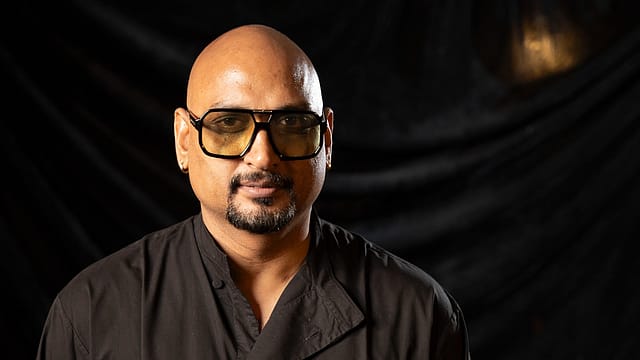
A loom does not know where its fabric will end up. It does not know whether the silk will become a wedding gown, a runway showpiece or a garment hanging in a store thousands of miles away. For the weaver, the immediate concern is the next order. For designer Samant Chauhan, the challenge over the past two decades has been to make sure there are enough of those orders to keep the loom working.
It is an ambition that began with Bhagalpur silk, a textile that was better known for furnishing homes than dressing fashion-conscious consumers. Today, Chauhan has a designer label, a couture business and a retail presence across cities. His recent collection at Lakmé Fashion Week, developed in collaboration with Jaisalmer, returned to the cultural histories that have informed much of his work. But behind the clothes is a business negotiating a rather less romantic reality: overseas markets have become uncertain, Indian retail is expensive to build, and the designer who once resisted outside capital is beginning to consider whether he might eventually need it.

The Wealth Issue 2026
06 Nov 2026 - Vol 05 | Issue 45
Portraits of Dreamers and Doers under 35
Chauhan's first investment in the business was $4,000. He won the money at the Asian Young Designer Contest at Singapore Fashion Week and used it to buy a machine. "That was my first seed investment, if you want to call it that," he says, as he told OPEN Digital.
There was no institutional investor, corporate partner or elaborate expansion plan. He wanted to work with a textile he believed had been overlooked. The business followed.
"Once you take money from a bank, a partner or an investor, there is pressure to commercialise your work and deliver certain results. When you invest your own money, you can do things at your own pace and according to your own vision," he says.
That approach has allowed him to retain control over the label, but it has also meant growing without the financial cushion that larger fashion houses can access. After two decades, Chauhan is not entirely ruling out investment. He says he could consider a corporate or private equity partner in the next one or two years. First, however, he wants to establish whether the retail business he has recently built can sustain itself.
Making Bhagalpur silk fashionable
The original idea came during Chauhan's design education. He chose Bhagalpur silk for his graduation project after recognising that the fabric had possibilities beyond its traditional uses. The textile could be coarse and difficult to work with, but he was interested in transforming its texture and natural qualities into high-fashion garments.
He was also interested in its identity. The fabric was frequently referred to simply as tussar or silk, rather than being associated with its place of origin.
"Banarasi silk comes from Banaras, and Kanjeevaram silk comes from Kanchipuram. So why shouldn't people recognise Bhagalpur silk by its geographical identity?" he asks.
It was more than a branding exercise. Chauhan wanted to give the textile a contemporary vocabulary without removing the qualities that made it distinctive. Initially, that meant working extensively with natural and off-white shades. The dyeing infrastructure he needed was not readily available in Bhagalpur, and he personally preferred silk in its uncoloured form.
The consumer, however, was not immediately convinced. He recalls brides having to explain to their mothers and mothers-in-law why they wanted to wear natural-coloured silk. Social media and fashion magazines gradually helped change that perception.
The broader opportunity is significant. According to the Ministry of Textiles' Fourth All India Handloom Census (2019-20), India had 35.22 lakh handloom weavers and allied workers across 31.45 lakh households. The sector is largely organised around household-based, self-employment activities rather than conventional factory employment. It is an enormous livelihood ecosystem, but one that remains fragmented.
For designers, the challenge is to turn this craft into something consumers will pay a premium for. For weavers, the more immediate concern is whether that demand translates into regular work and adequate compensation.
Chauhan is careful about the distinction. His label does not necessarily buy directly from weavers; it works through agents and other intermediaries. He prefers to measure his contribution by the amount of fabric his designs require rather than claim to employ a fixed number of artisans.
One example is an order from American retailer Anthropologie. The retailer selected a design that required Banarasi handloom fabric. An order of around 7,000–8,000 pieces meant sourcing approximately 70,000–80,000 metres of fabric.
The easier option would have been to replace the handloom with a machine-made alternative. Chauhan chose to ask for an additional month to complete production. "I felt that handloom was the soul of that design. If we changed it, the fall and overall look would not be the same."
The decision also involved cutting his own margins. During a visit to Banaras, he remembers seeing weavers across the area working on the order. They might not have known who the final customer was, but they knew that a large order had arrived.
It is a telling example of how a designer can create demand for traditional textiles. Yet, there is a distinction between generating work and improving the economics of the people producing it. Without information on procurement prices, payments and the share of the final garment's value reaching the weaver, the larger livelihood impact is difficult to establish. Chauhan's example demonstrates the potential of commercial demand; it does not, by itself, settle the question of how much value travels back down the supply chain.
When overseas markets disappear
For a considerable part of its journey, Chauhan's business depended on international markets. The US once contributed around 30 per cent of his business, he claims, while the Middle East accounted for approximately 50–55 per cent at its peak.
That exposure has become a vulnerability. Chauhan says the US business effectively fell to zero following the imposition of tariffs, while Middle Eastern business has also been severely disrupted since February last year.
These are the designer's estimates of the impact on his own business, rather than independently established figures for the markets as a whole. Nevertheless, the consequences have forced a change in direction. The label is now placing greater emphasis on Indian retail.
The American business had an interesting dimension. Chauhan was not simply selling Indian occasionwear to the diaspora. Through Anthropologie- an American lifestyle and fashion retailer, selected runway designs were adapted for a different price segment. The process involved changing the base materials and embroidery techniques while retaining the overall design language.
He had also experimented with more accessible fashion in India through a collaboration with Indya, a D2C fashion wear brand. Initially, the price points seemed difficult to work with. But his team managed to execute the collection, which sold out. He recalls the collaboration generating a substantial increase in social media followers, bringing the label close to a million.
For consumers who could not afford a couture gown priced at ₹80,000–90,000, the collaboration offered an entry point at around ₹10,000.
The proposition is attractive for designer labels: widen the audience without necessarily reducing the price of the main collection. But accessibility can become a problem if the economics of a lower-priced line begin to interfere with the core business.
Chauhan learnt this while experimenting with a separate print business. His main business had an average ticket size of around ₹80,000. Producing thousands of lower-priced pieces, he realised, could divert resources and affect the existing business.
"We wanted the main business to remain focused, and if we were to pursue another category, it needed a separate system and a separate team," he says.
It is a relatively unglamorous lesson in brand expansion. A designer's name may travel across categories, but each category has its own production costs, customers and distribution requirements. The ability to create a beautiful garment does not automatically translate into an ability to run a mass-market business.
The expensive business of retail
With overseas markets becoming less dependable, India is now central to Chauhan's growth plans. The label has stores in Khan Market and Mehrauli in Delhi and Kolkata, among its five retail locations. Hyderabad and Bengaluru are among the cities he would eventually like to enter.
He is, however, more cautious about retail than his expansion ambitions might suggest.
"The moment you open a store, your expenses begin. You start losing money every day until the store becomes viable," he says.
Rent, staff, inventory and the time needed to build a customer base can make physical retail expensive, particularly for a designer whose products are not bought frequently. A store may strengthen brand visibility and allow customers to experience the fabric and workmanship, but footfall does not necessarily translate into sales.
The opportunity is nevertheless worth examining. A January 2026 Deloitte India report on the fashion market identifies growing consumer interest in quality, experience and premium products. Its research suggests that around 30 per cent of shoppers consider sensory and in-store experience an important influence on fashion purchases. The report also points to strong projected growth in premium apparel.
But a growing premium market is not a guarantee of profitability for individual brands. The distinction between consumer interest and repeat purchasing remains crucial, particularly when the average transaction is expensive.
Chauhan says his immediate priority is to make the existing stores profitable before expanding further. The business is also exploring wedding décor and collaborations in other categories. Handwoven textiles, organic cotton and yoga wear are among the areas he would like to consider.
The caution reflects a business that has had to change direction several times. Chauhan began with menswear, entered womenswear and participated in international fashion shows. He subsequently developed the Middle East market before returning his attention to India. Now, the next experiment is retail.
Independence meets the question of scale
Chauhan's reluctance to raise money stands in contrast to a wider shift in Indian designer fashion. Established labels have increasingly entered partnerships with large corporate groups that can provide capital, distribution and access to new markets.
In 2021, Aditya Birla Fashion and Retail acquired a 51 per cent stake in Sabyasachi for ₹398 crore. Reliance Brands also acquired a 40 per cent stake in Manish Malhotra's business that year. Such partnerships reflect the growing commercial appeal of Indian designer brands, particularly those with established identities and a strong presence in occasionwear and luxury fashion.
For an independent designer, however, outside capital can change the terms of growth. Investors typically expect a business to expand, improve returns and build systems that can operate beyond the founder's individual creative involvement. That may be necessary for scale, but it can also create tension between commercial priorities and design choices.
Chauhan's own position is evolving. He says he is open to investment in the next one or two years, once the performance of the retail business becomes clearer. He does not want to commit to a specific revenue milestone yet. The label has to establish what its different business segments can achieve and what kind of capital would be useful.
His recent collaboration with Jaisalmer at Lakmé Fashion Week offers a reminder of what the brand is trying to preserve. The collection forms part of Rajputana Couture, a line inspired by his family's origins in Rajasthan and its migration to Bihar. Earlier collections explored Rajputana's royal history, its relationship with the British and even the influence of motorcycles during the Second World War.
For Chauhan, these are not simply historical references. They are ways of negotiating his own identity. Born and brought up in Bihar, he has spent much of his adult life in Delhi, while his family history reaches back to Rajasthan.
There is a commercial value to this distinct design language, too. In a crowded fashion market, a recognisable point of view can be more valuable than chasing every passing trend. Chauhan has largely relied on fashion weeks to build visibility, rather than extensive advertising campaigns. He believes social media has made designers their own media platforms, allowing them to communicate their identity directly to consumers.
But storytelling can only take a label so far. The business must eventually deliver consistent products, reliable distribution and repeat customers.
Two decades after turning a $4,000 prize into his first machine, Chauhan has built a business that has survived several disruptions without institutional capital. That is an achievement, but it is not the end of the test. The loss of overseas markets has made domestic retail more important, while the cost of opening stores has made expansion more complicated.
His next challenge is not simply to sell more clothes. It is to make the business less vulnerable to the next market disruption, while keeping the handloom and design language that distinguish it. Independence gave Chauhan the freedom to build the label on his own terms. Whether it can also give him the means to scale it is the question that will define its next decade.