BMW Wants India’s Back Seat. Mercedes-Benz Has a Van for It
The Mercedes-Benz V-Class offers a little administrative problem. In the first row behind the driver, there are two seats that recline, warm or cool their occupants and give them a massage. If you’ve bought the car and hired somebody to drive it, deciding who gets the seat with the massage is easy. The harder question is why you’d ever volunteer to swap.
BMW India has an answer: Saturday. In a recent interview, BMW Group India president and CEO Hardeep Singh Brar was asked whether Mercedes-Benz’s V-Class left a hole in BMW’s India line-up. He reportedly said there were no plans for an MPV at present. A BMW buyer might pay for the room and comfort in the rear, he explained, and still want to drive the car on the weekend. Sedans and SUVs will do the job, as far as he’s concerned.

The Wealth Issue 2026
06 Nov 2026 - Vol 05 | Issue 45
Portraits of Dreamers and Doers under 35
It is a wonderfully specific thing for a car company to know about a person it hasn’t met. BMW would like to sell you one car for two versions of yourself. On a workday you can answer emails in the back. When the weekend comes, you get to be the person in the BMW ad. Mercedes has made a different calculation with the V-Class. The customer in the rear might be perfectly happy to stay there.
The owner’s seat has moved
The funny part of BMW’s argument is how much work it has already done for the passenger. In the first half of 2026, the company claimed it sold 4,428 long-wheelbase cars in India, up 24% from a year earlier. They made up 52% of BMW’s car sales in that period. That number tells us buyers chose the longer cars. It doesn’t tell us who drove them home, or whether a single one of those buyers gave a thought to Saturday.
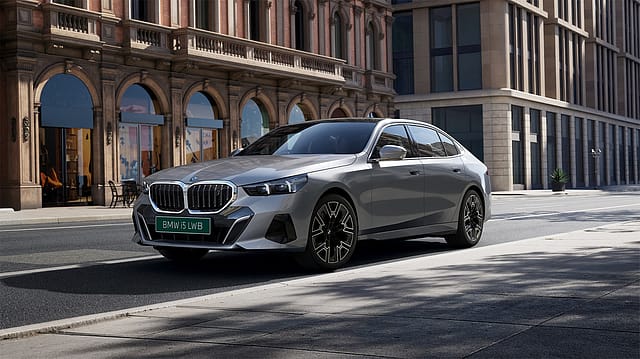
A longer wheelbase puts more distance between the front and rear axles. The customer gets the benefit without having to know where either axle is. Take the i5 Long Wheelbase, which BMW launched in India in September at ₹79.6 lakh ex-showroom. It was the company’s first locally produced electric sedan, built in Chennai. BMW gave it extra space in the rear and air suspension at the rear axle to make the ride more comfortable. Somewhere in the development of a car sold under the banner of driving pleasure, somebody had to think quite hard about the person whose feet never touch a pedal.
That is a better reason for BMW to hold its ground than any line about brand heritage. It can sell the space people want in a shape that already makes sense to them. Mercedes knows the appeal of that shape perfectly well. Its own long-wheelbase E-Class gives it a sedan to put in front of the same sort of customer. The V-Class is what Mercedes can show a buyer who wants to take the rear-seat idea further. It returned to India in March at a starting price of ₹1.4 crore ex-showroom. The price gap with the i5 matters; these are two illustrations of what the brands are selling, rather than a like-for-like shopping comparison.
BMW knows the person paying for the car may be sitting in the back. It still wants that person to feel the driver’s seat belongs to them. That’s the value of the weekend line. It gives the buyer a reason to see themselves as the driver even if they spend most of the week being driven.
Mercedes would like you to stay seated
You can see what Mercedes is after in the language it uses for the V-Class. Its India page spends time on what each of the two occupants in the first rear row can adjust for themselves. The seats have their own massage, climate and reclining functions. The person on the left can settle in without negotiating with the person on the right. That’s a small but meaningful luxury in a vehicle whose owners may be buying it precisely because they often travel with other people.
The van also puts pressure on an old idea of what an expensive car should look like. A sedan can announce itself in the hotel driveway before anyone opens the door. A van has to persuade you that there is something worth paying to sit in. Toyota’s Vellfire calls its top version the Executive Lounge. The four-seat Lexus LM puts a partition and a 48-inch screen behind the front seats. Lexus has found a way to sell the distance between the owner and the dashboard as part of the specification. If the driver does something particularly elegant with the steering, the person watching the screen has every right to miss it.
Those models are also the check on the idea that this is a straight fight between two German badges. A buyer shopping for a luxury people mover might compare Mercedes with Toyota or Lexus and never ask what BMW has to offer. Somebody choosing between an i5 and an E-Class may simply want a familiar sedan with enough room in the back. The overlap is the buyer who could go either way. Mercedes can put both shapes in front of that person. That gives its dealer a second conversation to have with a customer who has already decided the usual sedan won’t do. BMW is betting that a sedan or SUV will cover enough of the week to make the van unnecessary.
China put a cinema behind the driver
BMW has done a version of this calculation before. Its China-market long-wheelbase 5 Series and i5 were developed for China and made there. BMW offered a 31.3-inch screen for the rear, a feature borrowed from the 7 Series. You could order a BMW and spend the journey watching a film about something other than BMWs. The company had already worked out that moving the centre of attention to the back needn’t require a different body shape.
Mercedes has gone further in the other direction. It unveiled the electric VLE globally in March 2026, built on a new van architecture, and calls it a “Grand Limousine”. The VLE is a separate model from the V-Class that returned to India in March. The revealing bit is the name. Mercedes could have spent the launch explaining why a van can be posh. Instead, it chose a word that already tells you where the important passenger sits.
The two examples give the India story a little more bite. BMW’s Chinese buyers can get a cinema in a car still called a 5 Series. Mercedes wants a vehicle built on van architecture to be read as a limousine. Each is making room for the same passenger and asking for a different concession from the badge. BMW can move the party to the back without changing the silhouette. Mercedes is willing to change the silhouette if it makes the party better.
Who takes the test drive?
The weakness in Brar’s Saturday pitch is that it makes a good story about a customer whose behaviour BMW hasn’t demonstrated. More space helps when you take your parents out. It helps when your children have outgrown the back seat. The longer car might simply be the version the dealer has and the buyer likes. Even a buyer who wants a driver five days a week may want one on the sixth. A long-wheelbase sales number can’t tell those people apart.
You can learn a lot from who gets into which seat on the test drive. If the buyer starts at the wheel and asks to try the back, BMW’s two-in-one pitch makes sense. If the buyer goes straight to the rear and stays there, Mercedes gets to ask what else that person would pay to have within reach.
There’s a fair test for the showroom. Find buyers considering both a long-wheelbase sedan and a luxury van, then ask who will actually drive each vehicle, what else is already in the garage and whether there’s a regular passenger beyond the person signing the cheque. If the van is an addition to the household, BMW could sell the Saturday car and Mercedes could still sell the Monday one. If the customer is buying one car to do both jobs, Brar’s argument has to survive a very comfortable demonstration from the other side.
Picture that buyer at the end of the test drive. The Mercedes salesperson is explaining the massage settings. The BMW salesperson is holding out the key. The customer asks if the driver can come along on the next test drive. At that point, it would be useful to know who the salesperson hands the key to.