Maybelline's new 'Maybe': A beauty revolution or a marketing reset?
For 35 years, Maybelline has left women with a rather convenient explanation for looking good. Maybe they were born with it. Maybe it was Maybelline. The cosmetics brand has now decided that the line, which became one of advertising's most recognisable slogans, could do with a little more room for interpretation. And, perhaps, a little less emphasis on looking pretty.
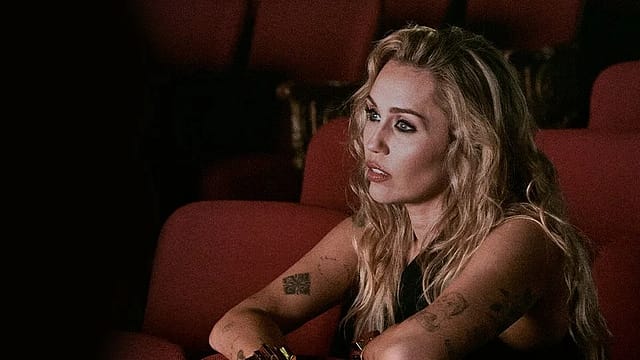
Maybelline New York is rewriting its famous tagline, replacing 'Maybe she's born with it. Maybe it's Maybelline' with 'Maybe. We're born with it. Maybe. It's Maybelline.' The new version is not a limited-edition campaign line but a permanent evolution of the brand's positioning. It comes with a new global platform, The Beauty of Infinite Possibility, and a familiar face in an unfamiliar role: Miley Cyrus, now the brand's Global Brand Ambassador.

The Wealth Issue 2026
06 Nov 2026 - Vol 05 | Issue 45
Portraits of Dreamers and Doers under 35
"At Maybelline, we believe makeup can open doors to new ways of seeing ourselves, expressing who we are and becoming who we want to be," said Sandrine Jolly, Global Brand President, Maybelline, in the press release issued by the company. "With 'Maybe.', we're building on our legacy and inviting women everywhere, at every stage of life, to explore the possibilities within them. Makeup can be a spark of curiosity in the everyday, a 'what if?' that becomes a 'why not?', and a reflection of the freedom, confidence and self-expression at the heart of our beauty philosophy."
The change is small enough to fit on a billboard but big enough to alter the sales pitch. The original line played on a delightful ambiguity: was that flawless face the result of good genes or good makeup? The new one is less interested in settling the argument. By replacing 'she' with 'we', Maybelline is making the proposition collective. And by putting a full stop after 'Maybe', it is turning a question into an invitation.
It is also a neat way of keeping the most valuable part of the old slogan while giving it a new job. 'Maybe' stays. The meaning changes.
For a brand that has been selling makeup for more than a century, this is not an inconsequential exercise in copywriting. Maybelline, part of the L'Oréal Group, is trying to move its brand story beyond the mirror. The new positioning is built around the idea that makeup is not simply about looking a certain way. It can be about experimenting, expressing oneself and trying on different versions of one's identity.
In other words, the product may still be mascara or lipstick, but the promise is becoming bigger than the tube.
The timing is not accidental. Beauty companies are increasingly competing in a market where consumers are exposed to an endless stream of tutorials, product recommendations, celebrity looks and social media trends. The challenge is no longer just getting someone to notice a product. It is giving them a reason to care about the brand behind it.
Maybelline is using consumer research to make its case. Citing McKinsey's Global Beauty Consumer Survey 2025, the company says just over half of consumers globally associate beauty with feeling confident. Around 26 per cent associate it with looking attractive to others or remaining young for as long as possible. A separate 2026 study by Cosmetics Europe found that 79 per cent of European consumers surveyed believed makeup went beyond appearance, helping them feel confident and express themselves.
The figures offer a useful glimpse into changing beauty perceptions, though they need some qualification. The Cosmetics Europe study is European, not Indian, and neither set of findings establishes whether these attitudes are translating into greater purchases. But they give Maybelline a reason to expand its pitch. If consumers see makeup as a form of self-expression, a brand can sell more than the promise of a particular look. It can sell the freedom to change that look.
Enter Cyrus. The singer's career has been marked by reinvention, from her early years in the public eye to the different musical and visual identities she has adopted since. Maybelline is using that journey to give its new platform a face. Cyrus had lent her voice to the brand's iconic tagline in 2025; this time, she is leading its reinvention.
"I think of 'Maybe.' as all the doors being open," she said in the announcement. "Who you are is something you're born with, but you can always become something that you've dreamt of being by staying true to yourself."
It is a useful fit for a campaign about possibility. Maybelline says it will extend the platform through stories of women from music and other fields, alongside product innovations and collaborations. The idea is to make reinvention a continuing brand conversation rather than a one-off celebrity campaign.
There is, however, a business problem with selling possibility: it has to eventually sell products. A consumer may agree that makeup is about confidence and self-expression, but that does not automatically mean she will buy Maybelline rather than another brand. The company still has to compete on product performance, price, availability and the ability to keep up with changing tastes.
The campaign does have a product portfolio to support the pitch. Its featured products include Lash Sensational Sky High Mascara, Super Stay Matte Ink, Instant Eraser Concealer and Lifter Gloss, among others. Cyrus has spoken about using the mascara for extra length during performances and the long-wearing lipstick for its staying power. These are familiar product propositions, but they now sit inside a much larger story about identity and experimentation.
The more interesting question is how this global message will travel. Maybelline operates across markets with different beauty preferences and consumer habits. A proposition built around individual expression may be universal in its appeal, but the way it is communicated cannot be identical everywhere. The announcement does not yet provide details of an India-specific rollout, local campaign investment or the commercial targets against which the new platform will be measured.
For Maybelline, which describes itself as the world's No. 1 makeup brand, the challenge is not introducing itself to consumers. It is remaining relevant to the next generation without losing the recognition built over decades. The old tagline gave the brand a place in popular culture. The new one is an attempt to keep that place.
There is a certain irony in the exercise. Maybelline is telling women that they do not need makeup to become someone else, while selling them products that promise to help them experiment with exactly that. But perhaps that is the point. The brand is no longer asking women to choose between being born with beauty and buying it. It wants them to believe they can be both, and much more besides.
Maybe the slogan needed a makeover. Maybe the business did, too.