Sting Says ‘Energy' But the Label Says ‘Not Recommended for Children’
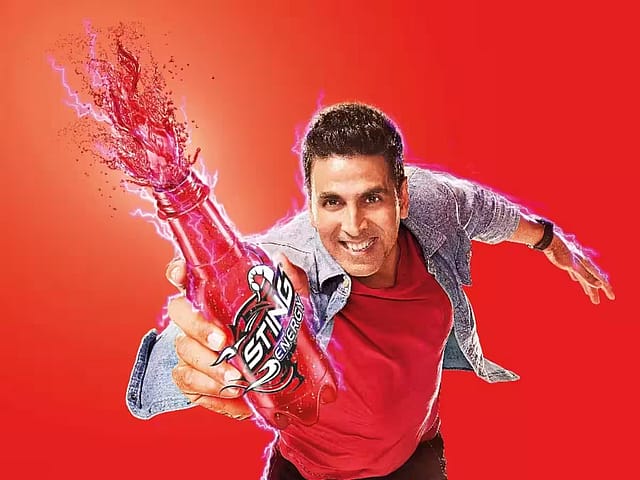
Sting once hired Akshay Kumar to settle an argument in four words: “Energy bole toh Sting.”
The Food Safety and Standards Authority of India would like a word. Two, actually.
The food regulator has reportedly accused PepsiCo and Monster of misleading consumers by marketing their high-caffeine beverages as “energy drinks”. India, it argues, has no prescribed standards for a category by that name. The companies have challenged the regulator’s directions, saying they were given no notice or chance to respond.
Now turn the bottle around. An Indian Sting label on record lists 72 mg of caffeine per 250 ml serving and says it is “Not recommended for children”. The warning also covers pregnant or lactating women and people sensitive to caffeine. The same size bottle was listed at ₹20 on Bigbasket when I checked. Pocket money will get you that far.

The Era of Forever Wars
30 Oct 2026 - Vol 05 | Issue 44
Coping with an explosive Middle East
The word “energy” does all sorts of jobs on a bottle. It can tell you which shelf to look on. It can make an ordinary afternoon sound like the opening ceremony of something. It can also leave you thinking the drink will help you play harder, concentrate longer or get through the evening without feeling tired. Those are different propositions. A shopper ought to know which one the brand is making.
Manisha Kapoor, CEO and Secretary General of the Advertising Standards Council of India, put it plainly when she spoke to OPEN Digital for an earlier story on the crackdown. “Claims that imply enhanced energy, performance, focus or other functional benefits can significantly influence consumer perceptions and purchase decisions, making it essential that such claims are appropriately substantiated and communicated responsibly,” she said.
How much caffeine does ₹20 buy?
About as much as there is in a ₹125 can of Red Bull. Red Bull India lists 75 mg of caffeine in a 250 ml can, along with 27 g of sugar and the same warning for children. The ₹125 price comes from a Bigbasket listing. Campa Gold Boost, at ₹30 for a 185 ml can on the same retailer, gives a buyer another inexpensive option. There’s a large spread in what you pay to enter the category. The Sting and Red Bull figures show why you should look somewhere other than the price tag to work out how much caffeine you’re getting.
The numbers on Sting’s nutrition panel add a nice wrinkle. It gives “energy” its less glamorous meaning: 28 kilocalories per 100 ml. That works out to 70 kilocalories for the 250 ml serving, alongside 17 g of sugar. The calories tell you how much energy the drink supplies as food. Caffeine is a stimulant and can make you feel more alert. A jolt of alertness can feel very useful at four in the afternoon. That still leaves quite a distance between a number on a nutrition panel and the impression an ad can leave you with.
There’s a reason to give the age warning more attention than the other small obligations of shopping.
The Indian Academy of Pediatrics recommends that children and adolescents avoid caffeinated energy drinks. Its guidelines point to evidence linking regular consumption of caffeinated drinks with sleep disturbances among adolescents. The American Academy of Pediatrics also advises avoiding caffeine for kids and notes that it can’t make up for lost sleep. A child buying a cold drink can hardly be expected to weigh all this before picking a bottle. The warning is there to make that decision easier for whoever is buying.
At ₹20, Sting is asking for roughly the kind of money someone might already have set aside for a cold drink. That was the achievement. Reuters traces the brand’s India launch in 2017 to inexpensive bottles. Red Bull could make a can feel like entry to a world of wings and racing. Sting made a high-caffeine drink an impulse purchase. You don’t have to cultivate an interest in Austrian motorsport first.
Brand consultant Ambi MG Parameswaran, speaking to OPEN Digital for the earlier story, saw the rush of launches as a feature of a young category still finding its shape. “In principle, energy drinks are not good for you. But it is a fast-growing category and more brands are being launched across price points. Not all of them will survive in the long run,” he said.
It’s easy to see why the rivals want a crack at the customer Sting brought within reach. Campa can offer a can for a little more than the red bottle, then put its name in front of an esports audience at JioBLAST. A parent who knows Campa as cola may have a different association from the gamer who first comes across Campa Energy at an event. Neither association tells them how much caffeine is in the can.
The warning has to reach the checkout
The Bigbasket page I checked put the name “Sting Energy Drink”, the ₹20 price and the “Add to basket” button together. The children’s warning wasn’t in the text around the button. Zepto also listed a single 250 ml bottle, for ₹19. The transaction can be done in a few taps. The label on the bottle arrives with the order.
That’s where I’d put the warning to work. If it matters enough to go on the pack, put it where the shopper is making the choice. The amount of caffeine per bottle should sit next to the name and price. A customer choosing a 250 ml bottle and one choosing a larger pack should both be able to see what they’re buying without reaching for a calculator.
There’s a useful precedent for thinking about where the words go. EU rules require a high-caffeine warning for covered drinks with more than 150 mg per litre and put it in the same field of vision as the name of the beverage. The placement does some of the work. A buyer can see the name and the warning in one look.
FSSAI already requires caffeinated beverages to display the caffeine amount per serving and to carry a prominent caution for children and other groups. It also sets a caffeine range of 145 to 300 mg per litre for that category. The current dispute is over what companies can call products that the regulator already knows how to classify. In an advisory on e-commerce listings in 2024, FSSAI itself said the term “energy drinks” could be used for products licensed under a specified standard. PepsiCo cited that advisory in court. The regulator now argues that the description can mislead. It owes buyers and manufacturers a clear explanation of what the name can communicate and where it becomes a claim.
Kapoor’s advice in the earlier interview was to stick to recognised categories. “If a category such as ‘energy drink’ does not have recognition under the applicable regulatory framework, advertisers and marketers should avoid presenting it as such,” she said. For the shopper, the useful outcome would be a name that describes the drink, a caffeine figure they can read, and a warning they see in time to use.
A new label won’t change the recipe
The court fight shows how much manufacturers have riding on the description. The Delhi High Court allowed PepsiCo and Monster to sell old stock bearing the disputed words under interim orders that gave them no permission to make more with the same label. Reliance received interim relief with a similar restriction on fresh production for Campa Gold Boost. Red Bull got its direction set aside because it hadn’t been heard. Varun Beverages, PepsiCo’s bottler, had already told investors in July that revised labels were in the market. By October it was saying Sting volumes were building back after uncertainty among retailers and distributors.
Sting has plenty to advertise while the lawyers argue.
In its cricket film this year, the farther Yuvraj Singh hits a six, the louder the brand’s signature sound gets, with Ravi Shastri calling the shots. I like the nerve of the device. Anyone who has sat near someone who adjusts the volume according to the distance a cricket ball travels will recognise the logic. It shows how a brand can make itself memorable without asking a word on the pack to do all the work.
A decent label has a different job. There will be adults who know exactly what they want from a cold, caffeinated drink and consider ₹20 a good price for it. They can have their Sting. It should be just as easy for the person picking a drink for a child to see why they might want something else.
Akshay got four words to make a bottle worth remembering. Give “not recommended for children” a decent shot at being read.