Is There Still a Spot for Gold Spot? Why Coca-Cola Is Digging Up Its Orange Past
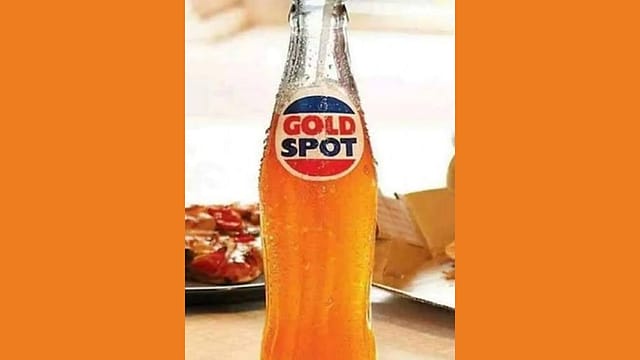
There is something deliciously ironic about Coca-Cola bringing back Gold Spot. In 2000, the company decided that India did not need two orange drinks and pulled the plug on the homegrown favourite to make room for Fanta. Twenty-six years later, it appears to have changed its mind. Gold Spot is coming back, but this time Coca-Cola wants to have both orange drinks on its shelf.
The question is whether it has found a reason for both to exist.
The orange fizz that once promised consumers 'The Zing Thing' is expected to return in a low-sugar or no-sugar avatar, according to media reports. The relaunch is expected next week. The reported strategy is to give Gold Spot a different proposition from Fanta, rather than have the two brands compete directly.

The Wealth Issue 2026
06 Nov 2026 - Vol 05 | Issue 45
Portraits of Dreamers and Doers under 35
Introduced by Parle's Ramesh Chauhan in 1977, Gold Spot was among the homegrown brands that filled the space left by Coca-Cola after its exit from India. Alongside Thums Up and Limca, it became part of the country's soft-drink vocabulary. Its bright orange colour, distinctive taste and youthful advertising made it a recognisable presence.
When Coca-Cola returned to India in 1993, it acquired Gold Spot, Thums Up, Limca and Maaza from Parle for $40 million. But the multinational had its own portfolio priorities. Gold Spot was discontinued in 2000 to make way for Fanta, Coca-Cola's international orange beverage brand. From a portfolio-management perspective, the decision seemed logical. Why maintain two brands chasing broadly similar consumers?
Now, the company appears to believe there is room for both. But that raises another question: has the market changed sufficiently, or has Coca-Cola simply discovered a new use for an old brand?
Two orange drinks, one company
The timing is interesting because Fanta is hardly struggling for relevance. In May 2025, as per Coca-Cola India, Fanta claimed more than 50 per cent of India's orange-flavoured carbonated soft-drink category. The company also claimed the brand had been recording double-digit growth for five consecutive years.
Gold Spot, therefore, is not returning to rescue a weak orange portfolio. It is entering a category in which Coca-Cola already has a strong incumbent.
There is a commercial logic to keeping the two separate. Fanta can continue to target consumers looking for a conventional orange-flavoured indulgence, while Gold Spot could appeal to those looking for a lower-sugar alternative. That would give Coca-Cola a way to widen its presence in the category without necessarily asking consumers to choose between two identical products.
But the distinction will have to be more than a formulation change. Will Gold Spot taste sufficiently different? Will its packaging and advertising communicate a different identity? And will consumers understand why they should pick it over Fanta?
The company has not publicly explained the product strategy, and the reported formulation and positioning should be treated as provisional until the launch.
There is also a competitive reason to reconsider legacy brands. Reliance Consumer Products has demonstrated that an old Indian soft-drink name can still have considerable commercial value. Its revival of Campa Cola has been backed by aggressive pricing, distribution and marketing. Reliance said Campa generated more than ₹4,700 crore in gross sales in FY26, becoming India's fourth-largest carbonated soft-drink brand, with double-digit market share in key markets.
The lesson for Coca-Cola is not necessarily that Gold Spot can replicate Campa's success. The two brands have different histories and competitive positions. But Campa has shown that nostalgia, when combined with distribution and affordability, can become a serious business proposition.
Gold Spot could be Coca-Cola's answer to this changing competitive landscape. The irony is that the company is now using precisely the sort of legacy-brand equity it once considered expendable.
Orange is not the new black
There is another reason Gold Spot's return deserves attention. India's beverage market is becoming more fragmented, with consumers exploring different flavours, formats and sugar levels.
The traditional cola battle was largely fought between dark-coloured drinks such as Coca-Cola, Pepsi and Thums Up. Orange, lemon-lime and other flavours occupied their own spaces. But the shelf is now considerably more crowded. Energy drinks, clear beverages, regional flavours, sparkling drinks and functional beverages are all competing for consumption occasions.
The black-cola category is also being reshaped by the zero-sugar push, with Pepsi Black, Coca-Cola Zero Sugar and other variants giving consumers alternatives to conventional colas. The colour of the drink still matters to brand identity, but formulation and lifestyle positioning increasingly influence the choice.
Orange, meanwhile, is not a marginal opportunity. Euromonitor data for 2025 shows orange carbonates grew 5.3 per cent by volume in 2024–25, marginally ahead of the 5.2 per cent growth recorded by carbonates overall. Over 2020–25, orange carbonates registered a volume CAGR of 4.4 per cent. Their value grew 7.6 per cent in 2024–25.
These numbers suggest a stable, growing category rather than one in need of a nostalgic rescue. Fanta already has a significant share of it. The opportunity for Gold Spot, therefore, is not simply to sell more orange soda. It is to find a consumer proposition that Fanta does not already own.
And this is where sugar becomes important.
The Diet Coke generation
India's relationship with sugar is changing, even if the transition is far from complete. According to an Economic Times report in February 2026, zero- and low-sugar beverages accounted for an average 30 per cent of sales in 2025, compared with around 5 per cent in 2020. Diet Coke sales alone doubled year-on-year.
The shift has also become a cultural phenomenon. In 2026, Diet Coke's shortage in several Indian cities turned into an unlikely social-media event. Young consumers shared memes, hunted for cans and even attended Diet Coke-themed parties. The silver can had become more than a drink; it was a lifestyle accessory and an internet identity marker.
For Coca-Cola, this is a useful signal. A generation that once might have been drawn to a sugary orange soda is now also discovering the appeal of zero-calorie alternatives.
But there is a difference between Diet Coke and Gold Spot. Diet Coke has a distinct taste profile, a global identity and a long-established association with calorie-conscious consumption. Its popularity among urban Gen Z consumers does not automatically translate into demand for a low-sugar version of a discontinued Indian orange drink.
Gold Spot has to answer a more difficult question: can a brand remembered for its sweetness and distinctive fizz persuade consumers to embrace a version that may taste different?
There is also a distinction between trying a product and adopting it. Nostalgia can persuade someone to pick up a bottle once. It cannot guarantee a place in the weekly shopping basket.
For younger consumers who never experienced the original Gold Spot, the challenge is even greater. They have no childhood memory to return to. The brand will have to compete on taste, price, packaging and relevance, just like any new entrant.
A brand revival or a portfolio rethink?
Coca-Cola has one obvious advantage. Unlike a start-up trying to introduce a new beverage, it does not have to build distribution from scratch. Its bottling partnerships, retail network and marketing resources can put Gold Spot in front of consumers much faster.
But distribution is only one part of the equation. The company will have to decide how much to invest in the brand, how to price it and whether to position it as a nostalgic revival or a genuinely new product for a younger audience.
As per brand experts, it must also avoid confusing its own portfolio. If Fanta remains the mainstream orange drink and Gold Spot becomes the low-sugar alternative, the distinction needs to be clear. Otherwise, Coca-Cola risks spending money to shift consumers between two of its own products rather than expanding the category.
The return also raises a larger question about the business of nostalgia. Campa has shown that an old name can be commercially valuable. Coca-Cola is now betting that Gold Spot's memory can be converted into a new consumption opportunity. But nostalgia is not a substitute for product-market fit.
In 2000, Coca-Cola decided there was no room for Gold Spot alongside Fanta. In 2026, it appears to believe the two can coexist, provided they offer different things. That is a significant change in thinking, but the market will decide whether it is a clever portfolio strategy or an unnecessarily complicated orange-drink shelf.
Gold Spot once sold a particular kind of fizz to a particular generation. Its second innings will have to sell a different proposition to a generation that has Diet Coke in its fridge, Campa on its shelf and more beverage choices than ever.
The zing may be back. The question is whether there is still a spot for it.