Kind, Mankind and One-of-Its-Kind: When ChatGPT Teaches Raghu Ram to Be Kind
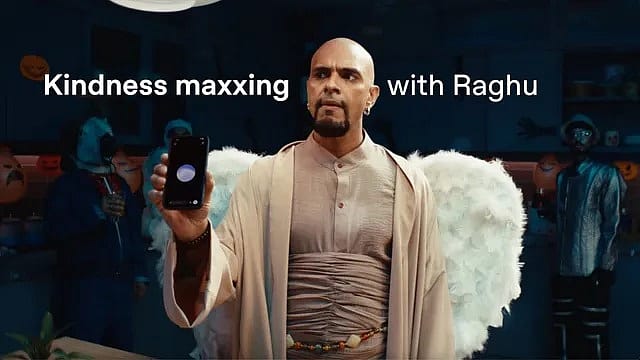
The first person to congratulate Raghu Ram on becoming kinder is Raghu Ram.
He has a lectern, an audience and what appears to be a peace award. He tells the room he’s changed. Anyone can cut down on shouting. It takes a certain confidence to announce it into a microphone.
That’s how OpenAI opens Raghu: The World’s Kindest Man With ChatGPT, its India film for World Kindness Day. The casting is excellent. OpenAI hired a man whose commercial value lies in his lack of a filter, then made the filter the product. If you remember Roadies, the sight of Raghu waiting for advice on how to speak to somebody is already a demonstration. You can see why they didn’t cast a man whose manners were in reasonable working order.

The Wealth Issue 2026
06 Nov 2026 - Vol 05 | Issue 45
Portraits of Dreamers and Doers under 35
There’s an odd bit of business tucked into that joke. Most people learn to be considerate from other people, some of whom have the nerve to tell them when they’ve failed. In this film, Raghu gets his lesson from a machine. By the end, the machine is also on hand to tell him how well he’s doing.
The chatbot changes who takes the blame
In one exchange about marriage, a blunt verdict on somebody else’s suitability becomes an admission that the speaker may not be mature enough to commit. The line draws applause.
Look at what happened between those two sentences. The first finds fault with the person being turned down. The second suggests the speaker has looked within and discovered a shortcoming of his own. In the time it takes to rewrite a sentence, ChatGPT has changed who takes the blame. It has also made taking the blame look rather good. The speaker gets to leave with the air of a man who’s done some difficult work on himself. The other person still has to go home.
There’s a perfectly decent reason to spare someone a verdict on their suitability for marriage. The speaker could say he doesn’t see a future together and leave it there. The film gives him a more generous part: a man who has apparently arrived at a difficult truth about himself. Perhaps he has. The audience is already clapping, so we never have to find out.
I’d have liked to hear the other person ask, “What makes you say you’re not ready?” A person who’s actually thought about it might have an answer. A man who’s just borrowed one might need a moment with his phone.
Apple had a pudding. Google had a child
Apple got there first with a much smaller moral problem. In its 2024 Change Your Tone spot, a man is furious that a colleague keeps stealing his pudding. He types an angry email and gets Apple Intelligence to turn it into something he could send at work. The machine takes the rage out of the message. The pudding is still stolen. You can appreciate both the grievance and the wisdom of leaving a few adjectives out of the evidence.
Google gave Gemini a more delicate assignment at the Paris Olympics. In Dear Sydney, a father asks the chatbot to help write his daughter’s fan letter to American hurdler Sydney McLaughlin-Levrone. He wants it to come out just right. That’s an understandable impulse if you’re writing to the landlord. A child writing to her hero can generally be forgiven for sounding like a child. After the backlash, Google said it would phase the spot out of its Olympics rotation.
Google’s own Dream Job ad for the 2025 Super Bowl shows how useful that sort of help can be. A father uses Gemini Live to rehearse for an interview and talks through what raising his daughter taught him. The experience he brings into the interview is his. The machine gives him somewhere to practise telling it. Any parent who has tried to explain a gap in a CV may recognise the value of getting a dry run.
The three ads give the machine different jobs. Apple helps a man complain about a real theft without starting an office war. Google’s father already has a story about raising his daughter and needs practice telling it. Raghu gets an explanation for why he’s turning someone down. That explanation would be a useful thing to check with Raghu.
Who’s the customer for kindness?
OpenAI is selling a habit more intimate than drafting emails. It wants ChatGPT to be the place you go before a difficult conversation, the way you might once have gone to a friend and asked, “Can I say this?”
There’s a good product in that. Anyone who has typed an email after ten at night knows the value of having something between them and the send button. A friend might spot that the third paragraph exists solely to punish someone for the first two. A chatbot can help you take it out before your colleague spends breakfast wondering what “as previously discussed” means this time.
A friend might also ask what you did before the other person got angry. They might know the other person. It’s terribly inconvenient, having an editor who can call a witness.
That’s where the ad finds its real customer. It’s the person who has to deliver the bad news and would quite like to leave the room feeling good about how they did it. The recipient never opened the app. They still have to live with the answer. Sometimes the gentler version will be a relief. Sometimes they’ll hear a gracious explanation and spend a week trying to work out whether it was the real one.
It would have been a riskier ad if OpenAI had given that person the microphone at the awards ceremony. They might have said Raghu was kinder. They might have said he was simply harder to argue with.
At the end, ChatGPT tells Raghu it’s the first time he’s thanked it without shouting. Fair enough. If you want to know whether Raghu has become kinder to chatbots, the ad has found an excellent witness.