Fabelle’s ₹2,395 Chocolate Box Wants You to Listen Before You Bite
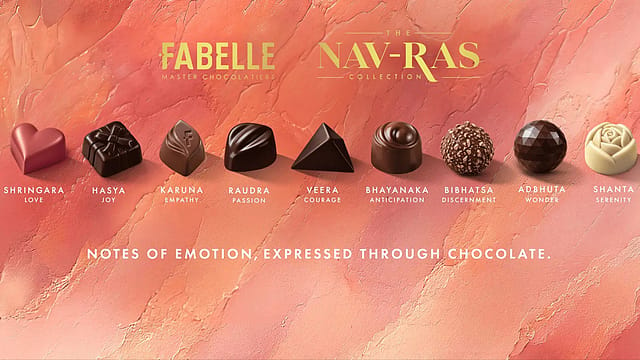
Before eating the chocolate, you may wish to locate your headphones.
This is Fabelle’s suggestion. On the website for its Nav-Ras collection, the instructions are plain: ‘LISTEN. TASTE. EXPERIENCE.’ Below them comes the recommendation about headphones. A chocolate box has acquired a listening programme.
At a reported ₹2,395 for nine pieces, you would hope everybody involved is in tune.
ITC’s luxury chocolate brand has paired nine handcrafted pralines with musical interpretations of the Navarasas, created in collaboration with ITC Sangeet Research Academy. The launch uses a QR code in the box to connect each chocolate with its accompanying composition.
The proposition is easy to lampoon and worth taking seriously. In premium gifting, the recipient gets something to eat. The giver gets an opportunity to look like someone who chose carefully.

Zeroing In on ECI
09 Oct 2026 - Vol 05 | Issue 41
Constitutional legitimacy versus political opportunism
Fabelle is supplying both appetites.
THE GIFT HAS TWO CUSTOMERS
Imagine arriving with a familiar box of chocolates. Its recognisable name can do the introductions for you. Now imagine arriving with nine pralines, each carrying an emotion and a piece of music. The introductions take longer, but you have brought your own conversation.
That is the competitive opening Nav-Ras is trying to create. It gives a buyer an explanation for choosing this particular box, beyond price, packaging or the reassurance of a known name.
The explanation matters because a gift is judged twice: when it is presented and when it is consumed. The first judgement can reward thoughtfulness, novelty and occasion. The second is considerably more interested in what the chocolate tastes like.
Branding and marketing experts reckon that a premium gift also says something about the person choosing it. A distinctive story can help the buyer communicate care and discernment. "The product then has to reward the recipient’s expectations,” says Ashita Aggarwal, professor of marketing at SP Jain Institute of Management & Research.
Consider the small anxiety a gift purchase can contain. You want it to feel special without appearing extravagant for no reason; personal without requiring intimate knowledge of the recipient. A coherent collection offers a ready explanation for the effort. This one adds the possibility of an experience shared after the wrapping comes off.
The buyer can say, in effect: I found you something. That is a more useful sales argument than merely announcing that the box is expensive.
INDIAN CULTURE GETS A SEAT AT THE TASTING
Fabelle has attempted to carry the idea into the chocolates themselves. Shringara combines ruby chocolate and rose in a heart-shaped form. Raudra draws on the imagery of the third eye and pairs dark chocolate with ancho chilli and candied mango. Veera uses 70 per cent dark chocolate and macadamia.
The shapes and ingredients give the narrative something physical to attach to. A theme printed on a sleeve can be discarded with the packaging. A theme expressed through the product has a better chance of being noticed while it is eaten.
The headphones have a distinguished dining precedent.
At Heston Blumenthal’s The Fat Duck in Britain, “Sound of the Sea”, reported as a new dish in 2007, paired seafood with an iPod playing waves through earbuds. The restaurant describes the sound as an invitation to recall a seaside memory. Fabelle brings a related sensory idea to a gift box, using Indian classical music and the Navarasas to frame the tasting. The change of setting matters commercially: a restaurant can guide the sequence and hold a diner’s attention; a box sent home must persuade its recipient to stage the experience. The customer has become the maître d’.
The music partnership adds a further resource. ITC has brought its own Sangeet Research Academy into the collaboration. The institutional connection gives the exercise a reason to exist beyond a convenient festive mood board.
For an Indian chocolate brand, that opens an appealing way to talk about luxury. The country’s cultural repertoire can supply the organising idea for the experience, rather than merely provide a motif on the lid.
A buyer choosing among premium chocolates, artisanal sweets and other gifts can be offered a different reason to favour Fabelle. The contest concerns what feels distinctive and appropriate for the occasion.
Rivals could answer with their own collaborations, craftsmanship or personalisation. A musical partnership is not an exclusive claim on culture. Fabelle’s task is to make this particular combination convincing enough that a similar story elsewhere feels less satisfying.
DOES EVERY CHOCOLATE NEED AN EXPLANATION?
The format also asks something of the customer.
Find the code. Open the experience. Choose the music. Listen while tasting. For an interested recipient, those steps may make the gift more absorbing. For somebody passing a box around after dinner, they may be steps too many.
The brand’s website offers selections labelled Love, Joy, Empathy, Passion, Courage, Anticipation, Discernment, Wonder and Serenity. It lays out an experience that rewards deliberate attention. The commercial question is how often the occasion will supply it.
A gift must be allowed to survive the way people actually use it. Someone may listen to every composition. Someone else may admire the concept and eat the chocolates without opening the page. Both can be satisfied customers, provided the product carries enough value of its own.
This is where an ambitious sensory proposition meets a fairly ordinary household truth: nobody can guarantee that the person receiving your carefully chosen present will read the instructions.
An experience should deepen enjoyment without becoming a condition for it. If the customer skips the music, the chocolate still has to feel worth choosing. "The ritual can strengthen the memory; it cannot carry the entire value,” says Aggarwal.
That is also a useful distinction for judging the campaign. Scanning a code would show interaction. Enjoying the gift would show something else. Buying another box would answer a third question. One should not be mistaken for proof of the others.
THE ENCORE COSTS EXTRA
Fabelle’s hardest competitor may be the gift a customer already knows will work.
Familiar choices save time and reduce the fear of getting an occasion wrong. To interrupt that habit, a new collection needs to make its difference easy to understand. ‘Nine emotions, nine chocolates, accompanying music’ is a reasonably compact proposition. The complexity arrives after the box has been opened.
That gives Nav-Ras a plausible route to trial: intrigue the giver, then let the recipient decide how deeply to explore. It also puts pressure on presentation. The story needs enough clarity to travel from the website to the shopper and then, often in a sentence, to the person receiving the gift.
The more enduring challenge comes with the next occasion. Novelty depreciates. A person who has already given the musical box may want a different surprise. Someone who particularly enjoyed the pralines may simply want more of a favourite flavour.
Neither response would make the launch a failure. They would tell Fabelle whether it has created a memorable festive collection, a repeatable way of presenting chocolate or an idea worth developing into something else. The launch alone cannot settle that.
For now, the brand has made a clever attempt to move the premium gifting conversation beyond how much the buyer spent. It offers a choice that can be explained through craft, emotion and an Indian cultural connection. The giver gets to appear thoughtful; the recipient gets to judge whether the thought was well spent.
Nine chocolates have been given a soundtrack. The tenth emotion, buyer’s remorse, will depend on the bite.