Soch Kum, Khel Maximum: BGMI’s Next Move Is to Make Playing a No-Brainer?
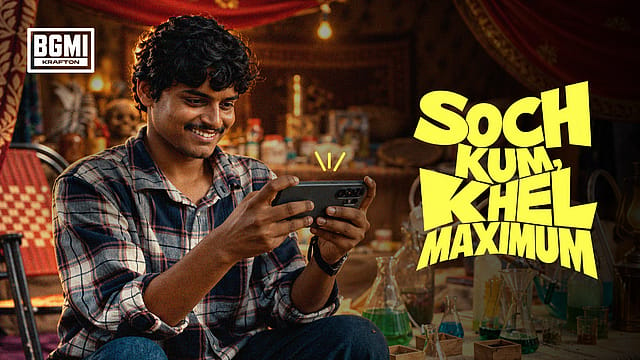
Life decisions come with consequences. Playing BGMI comes with a lobby.
That, in essence, is the pitch behind BATTLEGROUNDS MOBILE INDIA’s (BGMI) latest campaign, Soch Kum, Khel Maximum. Created by 22feet, part of Omnicom Advertising India, the campaign takes aim at the habit of overthinking and turns it into a reason to play. Across four humorous films, it contrasts everyday situations that deserve a second thought with one decision that supposedly does not: opening BGMI and getting into a match.
The joke is simple. The brand strategy is more interesting.
BGMI is not a small game trying to introduce itself to India. KRAFTON India lists 260 million accumulated downloads for the franchise, which has built a substantial gaming community and an esports ecosystem around its battle royale format. At that scale, the challenge is not merely to make the game recognisable. It is to keep it inviting, including for people who may enjoy gaming but do not see themselves as particularly skilled players.

Zeroing In on ECI
09 Oct 2026 - Vol 05 | Issue 41
Constitutional legitimacy versus political opportunism
The campaign's proposition is that playing should not feel like an examination for which everyone else has already studied. You do not need a gaming résumé, a squad on standby or a calendar cleared for the evening. You can simply tap the icon and play.
In a category where competition is part of the appeal, that is a useful distinction. The spectacle of expert players can make a game aspirational, but it can also leave casual users wondering whether they are equipped to join. Soch Kum, Khel Maximum attempts to close that gap by making participation, rather than proficiency, the starting point.
“BGMI is India’s most recognizable gaming franchise and this year we’ve worked hard to bring modes and maps which are extremely easy to pick up and play without thinking about the time it needs to master them,” said Srinjoy Das, Director, BGMI Product Management and Marketing at KRAFTON India.
“It’s casual, its instant, and doesn’t always need your squad or a schedule to play. ‘Soch Kum, Khel Maximum’ is all about that, just tap and jump into the lobby. Anytime!”
The distinction between playing and mastering is central to the campaign. The brand is not asking consumers to abandon ambition; it is telling them that ambition need not be the entry fee. Getting better can come later. Having fun is reason enough to start.
That approach also makes commercial sense in a market where scale alone is not the whole story. Lumikai's State of Interactive Media Report 2025, released in March 2026, estimated India's gaming market at more than $1.5 billion, with 555 million gamers and a 25 per cent payer conversion rate. The figures underline the opportunity in an enormous audience, while highlighting the importance of engagement and monetisation.
For a franchise such as BGMI, making the game feel easier to approach can help sustain that relationship. A campaign cannot, by itself, prove that more people will download the game, return to it or spend money inside it. But it can address a psychological hurdle that product updates alone may not resolve: the feeling that one needs to be good at a game before one is entitled to enjoy it.
Shyam Nair, Executive Creative Director at 22feet, puts that thinking plainly.
“You shouldn’t need a gaming resume to join your friends for a game of BGMI. You play to have fun. Getting good can happen along the way,” he said.
The creative idea takes that hesitation and redirects it towards the questionable decisions people make in everyday life, which could genuinely benefit from some deliberation. As Nair put it, “Life has enough of those. Playing BGMI isn’t one of them.”
It is a neat reversal. Instead of another motivational campaign telling people to work harder, practise more or push their limits, BGMI is effectively telling them to lower the stakes. The humour works because it gives the audience permission to stop treating leisure as another performance metric.
There is a larger brand consideration here, too. BGMI's competitive identity remains a major part of its appeal, but the brand does not have to speak only to the most competitive players. By presenting casual play as legitimate, it can make room for different levels of commitment without asking its core audience to give up what they enjoy about the game.
The idea is not entirely new for the brand. In 2024, BGMI's Anyone Se Everyone Tak campaign, used the contrast between life's difficult tasks and the accessibility of gaming to make a similar point about welcoming players across skill levels. The latest campaign revisits that territory, this time packaging the insight in a shorter, more conversational instruction: think less, play more.
The four films will lead into a larger digital campaign that taps real-time conversations, viral moments and the internet's favourite questionable decisions. As per the brand, it will also amplify the films across its Instagram platforms, where the premise offers room for audience participation and social conversation.
The real test will be whether the punchline translates into play. Attention is useful, but a campaign designed to lower barriers must ultimately persuade people to cross them.
For BGMI, the wager is that the next match does not always begin with a strategy. Sometimes, it begins when someone stops wondering whether they are good enough and presses play.
After all, life may require a plan. Your next BGMI session does not.