Handle With Flair: OmPorro’s Italian Design, Indian Bet
The sofa gets photographed. The chandelier gets compliments. The door handle gets fingerprints. A rather modest reward for the object that lets everybody in.
OmPorro would like to improve the arrangement. The Italian architectural and furniture hardware brand is making an Indian bet on handles, knobs, pulls and the smaller metal details that rarely enjoy the conversational privileges of a statement chair. It wants buyers to notice the finish, recognise the design and appreciate the craftsmanship before they get on with opening the door.
In a home where almost everything can acquire a designer label, the handle has decided it deserves one too.
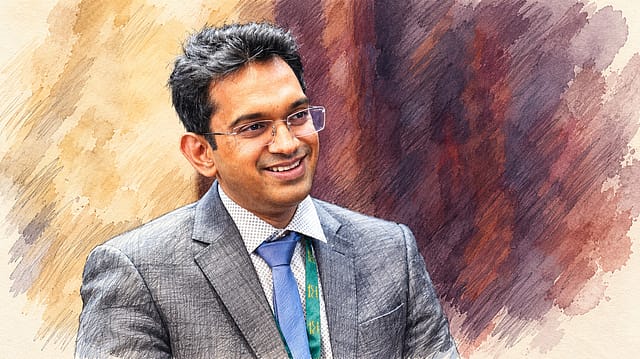
Akshay Bhargava, director, OmPorro, sees an opportunity in that growing attention to detail. “The most significant change is how hardware is now perceived,” he says. Bhargava underlines that it is no longer viewed purely through its functional purpose; material, form, finish and craftsmanship are recognised as contributors to the character of an interior.

Zeroing In on ECI
09 Oct 2026 - Vol 05 | Issue 41
Constitutional legitimacy versus political opportunism
You can picture the proposition. A handle can sit quietly against a door or announce itself through its shape. A cabinet knob can disappear into the woodwork or punctuate it. Its finish can pick up the warmth of another surface; its proportions can complement the furniture. Then comes the part a photograph cannot quite communicate: how it feels in the hand.
For a brand, however, a handsome object presents a familiar problem. Somebody can love the product and forget who made it.
OmPorro has to make the name stick. And behind its effort sits a business twist more interesting than another European arrival: an Indian hardware house has acquired the Italian heritage it now wants to introduce to a wider Indian audience.
THE INDIAN HAND ON THE ITALIAN HANDLE
In January 2026, House of Jolly announced the acquisition of OmPorro and Enrico Cassina, adding the two Italian architectural hardware brands to its portfolio.
Jolly brings its own considerable supply of history. Founded in 1944 by Jeetendra Nath Bhargava, the Indian business developed a portfolio spanning hinges, handles, locking systems and other hardware.
An Indian business born before Independence buying into Italian design heritage gives the pairing a pleasing symmetry. It also gives Jolly an opportunity to participate in a more ambitious conversation about what hardware can command.
A hinge earns its place by doing its job reliably. A decorative handle has another assignment: persuade somebody that its appearance and feel deserve a premium.
That is where OmPorro’s Italian ancestry becomes useful. Its origins date to 1946, when Alfredo Porro transformed his workshop specialising in keys into a structured business in Cucciago, Como. Officine Meccaniche Porro, or OMP PORRO, developed into a maker of metal accessories for furniture and architectural applications.
The journey from a key-making workshop to a design business is a reminder that an ordinary object can support an extraordinary amount of attention.
Bhargava’s Indian proposition draws on that accumulated knowledge: materials, detailing, finishes and Italian design expertise. The portfolio described in his replies stretches across door and furniture hardware, cabinet keys, decorative elements, staircase accessories and curtain accessories.
There is plenty of history to open the conversation. The object has to keep it going.
A GOOD FIRST IMPRESSION, BY HAND
Hardware has an intimacy that many objects in a room never acquire. You can admire a lamp from across the room. A handle demands contact.
The fingers curl around it. The wrist turns. Its edges, proportions and resistance become apparent through a small encounter repeated every day. A photograph sells the shape; the hand delivers a more demanding verdict.
“A premium handle has to make its value felt in a few seconds,” says Ashita Aggarwal, professor of marketing at SP Jain Institute of Management & Research. The customer touches it, notices the weight, feels the finish and sees how it sits against the door. Heritage gives the brand a story to tell; the product gives the customer a reason to believe it.
Meanwhile, Bhargava describes hardware as a point of interaction between people and architecture. He invokes designer Alessio Rigamonti’s description of it as “architecture that you can touch”. That gives the category a useful language. A handle is a small part of the building that meets the body. Its design has to satisfy the eye and accommodate the hand.
The Italian group has pursued that ambition through different identities. OMP PORRO acquired Enrico Cassina in 2005; the latter traces its history to 1850 and draws on decorative traditions ranging from Baroque to contemporary styles. The Alfredo Porro label was created in 2016 as a tribute to the founder, covering accessories for furniture, curtains and stairs.
Contemporary design has its place too. Enrico Cassina’s Inedita door-handle collection, designed by Rigamonti, has featured at Milan’s Fuorisalone. A handle, evidently, can have an author, a collection and a launch of its own.
The challenge in India is to make that authorship matter when the customer is choosing between products that appear to perform much the same task. Design credentials need to become a difference somebody can recognise, experience and value. Somebody also has to get the product onto the shortlist.
THE ARCHITECT HAS THE KEY
Bhargava contends that architects, interior designers and project stakeholders determine how hardware contributes to a space, which makes India relevant as a B2B market, not only a consumer one.
This is the most revealing thread running through his replies. OmPorro is pursuing a category in which the person paying may depend on somebody else to recommend the brand.
A homeowner approves the mood, the materials and the budget. The architect or interior designer translates those preferences into a selection of things that must work together. Hardware enters the conversation through the doors, cabinetry, finishes and practical requirements of the project.
Being admired in a catalogue helps. Being specified helps considerably more.
“In this category, the homeowner may sign the cheque, but the architect often writes the shortlist,” says Aggarwal. Winning that recommendation requires design credibility and dependable delivery. "Every product an architect specifies carries a little of their own reputation," she adds.
That last point matters. An attractive sample must become a consistently finished order. The required quantities need to arrive when the project needs them. Installation and subsequent use must justify the recommendation. The architect gets to enjoy the compliments. The architect also gets the call when something goes wrong.
Bhargava calls these professionals “central” to demand. A relationship with one practice can create opportunities across several projects, giving the brand a route to customers who might never independently search for it. But the relationship raises expectations. Each recommendation has to survive execution.
OmPorro is, therefore, selling the homeowner an object to live with and the professional an option they can confidently put forward. The Italian backstory may secure the meeting. Delivery will help secure the next one.
FLAIR HAS COMPETITION
OmPorro has arrived in a category where other brands already understand the commercial possibilities of a well-designed handle.
Italian maker Olivari has been producing handles since 1911 and has a long history of working with architects and designers. Its range is available in India through specialist retailer Benzoville. Häfele, whose Indian subsidiary dates to 2003, has developed an established local presence and announced its ninth and largest Indian design centre in Gurugram this year.
The contest is for design authority, product experience and the confidence of professionals who influence purchases.
Bhargava sees an opening around “design, quality and accessibility”. His argument is that a range drawing on Italian craftsmanship and design can find a place between existing offerings. The acquisition nevertheless gives the effort a useful combination. Jolly brings an existing Indian hardware business. The Italian names bring design identities and histories that would take decades to build from scratch.
“Acquiring heritage gives a business a valuable head start,” says Aggarwal. The harder task is turning that history into a clear reason to choose the brand today. "OmPorro needs a distinct identity within the portfolio, so that customers remember its name along with the beautiful handle,” she adds.
That is an especially relevant challenge for a house of brands. An extensive portfolio can give the buyer more choice while making individual identities harder to follow. OmPorro needs to communicate what belongs to it and what makes that offer recognisable.
Even heritage benefits from a clear introduction.
ITALIAN DESIGN, INDIAN DELIVERY
The supplied brand profile describes a range manufactured in India under the close supervision of Italian craftsmen. The Italian Alfredo Porro and Enrico Cassina websites continue to emphasise their “100% Made in Italy” production. Communicating the distinction between the Indian-made range and Italian-made collections will be part of explaining the offer.
For OmPorro, the opportunity is to show how design and manufacturing knowledge translate into the finished Indian product. Its appeal must be evident in the materials, proportions, detailing and consistency of the finish.
“Indian manufacturing can strengthen the proposition through availability, service and price,” says Aggarwal. The brand must explain clearly where the design comes from, where the product is made and how quality is maintained. "Customers should be able to understand exactly what they are paying a premium for," she underlines.
Bhargava promises greater accessibility without compromising quality. That promise becomes persuasive when buyers can experience the product and understand the price attached to it. Hardware offers a relentless test. It gets touched, pulled and turned long after the new-home photographs have been taken. A finish that impresses on delivery must continue to please in use. The small object has a long working day.
A NAME WORTH REMEMBERING
Bhargava’s bet is compelling. An Indian hardware business has acquired Italian design heritage and is seeking a larger role for objects that often receive a smaller share of attention.
OmPorro wants the handle to contribute to the identity of the room. It also wants its own identity to survive the purchase.
A homeowner may remember the architect who chose the handle, the finish that matched the cabinetry or the reassuring weight of it in the hand. The brand needs those impressions to lead back to its name.
The sofa can keep its photographs. The chandelier can keep its compliments. The handle would like to be asked for by name.