When Did Being an Influencer Become Embarrassing?
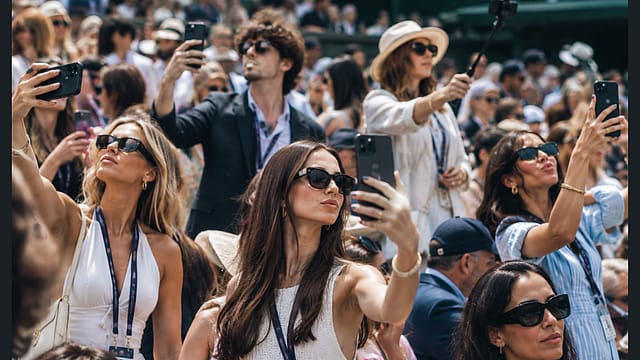
For a long time, being an influencer was aspirational. It represented a new route to status. You did not need to be born into wealth, signed by a film studio or selected by an institution to become visible. A smartphone, an internet connection and the ability to hold people's attention could, in theory, be enough.
Social media democratised fame. It allowed ordinary people to become recognisable faces, build businesses around their personalities and gain access to spaces once reserved for celebrities, journalists and the traditionally powerful.
But fame, like every form of social capital, changes when increasing numbers of people begin competing for it.

Zeroing In on ECI
09 Oct 2026 - Vol 05 | Issue 41
Constitutional legitimacy versus political opportunism
The influencer is now facing a peculiar reputational reversal. The person once seen as glamorous and aspirational is increasingly described as intrusive, attention-seeking and, in some cases, embarrassing. The very behaviour that helped build the influencer economy—constant visibility, self-promotion and the ability to turn everyday life into content—is beginning to produce a backlash against it.
The debate surrounding Wimbledon offers a glimpse into this changing cultural mood. After concerns over disruptive content creation at the US Open, Wimbledon has signalled a more cautious approach towards formally accommodating influencers and content creators. But the question is larger than tennis. Why has society become uncomfortable with people who appear to turn every experience into content? Is the backlash really about bad behaviour—or something deeper: a society struggling to decide who deserves attention and how much attention is too much?
The War for Attention and the Collapse of Scarcity
The influencer economy is, at its core, part of the attention economy. The internet may have made information abundant, but human attention remains limited. Every creator, celebrity, brand and platform is competing for the same scarce resource: the ability to make people look.
Attention has become a form of power. Followers, views, likes and shares can be converted into advertising revenue, brand partnerships and social access. The more visible a person becomes, the more commercially valuable that visibility can be.
The problem is that there is no obvious endpoint. A person with one million followers has to maintain them. A viral video creates pressure to produce another one. An invitation to a prestigious event becomes an opportunity to demonstrate access, while that demonstration becomes content capable of generating further access.
The cycle feeds itself. To stop posting is to risk becoming less relevant. To attend an event without documenting it can, within the logic of social media, begin to look like a missed opportunity.
That is why the phrase “attention at any cost” has become increasingly relevant.
“I do believe we live in an era of attention at any cost, and influencers are using literally every opportunity to get that attention,” says brand strategist Harish Bijoor.
The issue, according to Bijoor, is not attention itself. Sports, entertainment and brands all depend on it. The problem arises when the pursuit of attention begins to overwhelm the purpose of the occasion.
“Cricket played in whites wants attention—but appropriate attention. The same goes for Wimbledon,” he says.
That distinction is important. The IPL is designed around spectacle. It embraces celebrity, music, advertising and entertainment. Wimbledon operates differently. Its identity is built upon tradition, restraint and ritual. The white clothing, the quiet during points and its carefully maintained codes of behaviour are part of the institution's identity.
When an influencer enters such a space and behaves according to the logic of social media—filming constantly, performing for the camera or becoming a spectacle within the spectacle—the two systems can collide. One rewards visibility and constant engagement. The other derives much of its value from restraint and from keeping the focus on the sport itself.
The conflict, therefore, is not simply between Wimbledon and influencers. It is between two competing ideas of what public experiences are for. Is an event primarily something to be experienced, or something to be documented, distributed and monetised?
Not Everything Wants to Become Content
There is another reason people react negatively when influencers turn every experience into content: modern life increasingly feels overexposed.
The complaint is not merely that influencers have cameras. Everyone has cameras now. Most people photograph meals, record concerts and document holidays. The difference lies in the perception that the experience itself is increasingly being organised around the camera.
There is a difference between recording a moment and converting it into a performance. A person taking a photograph at a tennis match does not necessarily change the event. But when filming becomes disruptive—or when the content creator begins attracting more attention than the event—the hierarchy changes.
A restaurant becomes a backdrop. A holiday becomes a production set. An invitation becomes proof of social status. A sporting event becomes material for a reel.
There is nothing inherently immoral about this. Human beings have always displayed their lives, sought admiration and used possessions and experiences to signal status. Social media has simply made those impulses faster, more public and, crucially, measurable.
But there may be a growing desire for some experiences to escape this economy. People want to attend a concert without watching hundreds of phones in the air. They want to watch a sporting event without the spectator beside them performing for an audience somewhere else.
Perhaps people increasingly want spaces where participation is not immediately converted into production—where an experience's primary value lies in being lived rather than converted into content.
This is also where authenticity becomes important. Influencers originally gained credibility because they appeared more accessible than traditional celebrities. They filmed from their homes, spoke directly to followers and offered audiences a sense of intimacy.
But influencing is now a sophisticated industry. Authenticity itself can be planned, edited and monetised. The casual video may have been filmed several times. The spontaneous reaction may have been carefully framed for an audience.
Academic research has consistently found that perceived authenticity plays an important role in how audiences evaluate influencers. A 2021 study published in the Journal of Research in Interactive Marketing identified sincerity, truthful endorsements, visibility, expertise and uniqueness among the factors shaping perceptions of influencer authenticity.
A 2025 study on the commercialisation of influencer content similarly found that stronger commercial orientation could weaken parasocial relationships with followers.
The audience, in other words, is becoming increasingly aware of the machinery behind authenticity. What once appeared glamorous can begin to appear transactional. What once appeared spontaneous can begin to look rehearsed. And what once looked like confidence can, in some contexts, resemble an exhausting need to remain visible.
Bijoor believes this divide will become more pronounced.
“If our heritage properties, such as Wimbledon, are to retain their seriousness, then there are occasions where influencers can be very, very embarrassing,” he says. “I do believe a ban on influencers is going to become the norm in the future wherever seriousness of the sport and seriousness of intent are going to be attempted.”
Whether that prediction comes true remains to be seen. But it raises an important question: should every space be equally available to the attention economy, or are some institutions beginning to reclaim the right to decide when and how people can perform for an audience?
Is This an Influencer Backlash—or a Fight Over Status?
Yet the growing hostility towards influencers deserves scrutiny. It would be convenient to assume that the backlash is simply the public demanding better behaviour. But that explanation may be incomplete.
Influencers have disrupted the traditional hierarchy of status. For decades, access to prestigious spaces was controlled by institutions. Editors decided who appeared in newspapers. Studios helped create movie stars. Fashion houses determined who sat in the front row.
Social media weakened many of those gatekeepers. An individual with a large following can now become commercially valuable without the approval of an established institution. A creator can receive invitations because of audience size rather than family name, professional credentials or conventional artistic achievement.
This democratisation of fame has created enormous opportunities. But it may also have created resentment.
There is an uncomfortable question beneath much of the criticism: are people always angry because influencers behave badly, or are they sometimes uncomfortable because influencers have acquired forms of status that were once much more difficult to obtain?
After all, wealthy people have always sought exclusive access. Celebrities have always attended prestigious events. Socialites have always used parties, fashion and proximity to famous people to demonstrate status.
The influencer is hardly the first person to seek recognition.
The difference is that the influencer does it more visibly.
The influencer's business model often requires access to be visible. The invitation is content. The venue is content. The outfit is content. The access is content. In many cases, the status itself becomes content.
That difference matters. The old world often treated access as something to be possessed. The influencer economy increasingly treats access as something to be displayed.
There is undoubtedly bad behaviour in the industry. There are creators who disrupt events or behave as if every public space exists primarily as material for their social media accounts.
But there can also be a tendency to treat influencers as inherently less deserving of status.
An actor is famous because they act. An athlete is famous because they compete. A musician is famous because they perform. But the influencer, critics often ask, is famous for being famous.
That criticism, however, is not entirely new. Similar accusations have been directed at socialites, reality television stars and other figures whose fame did not fit traditional ideas of achievement.
The difference today is scale. Social media has allowed millions of people to compete for recognition simultaneously. Numbers are public. Popularity is measurable. Status can be displayed in real time.
Institutions, therefore, become important in deciding where that competition can and cannot take place. Wimbledon may be attempting precisely that. It is not necessarily declaring war on influencers. It is asserting that the rules and character of the institution are more important than any individual's desire for visibility.
Bijoor sees a broader cultural divide emerging. “There are two parts of society emerging,” he says. “On one hand are influencers who revel in occasions where they can get a lot of eyeballs, along with the attendant glamour. And on the other hand are those who want to be away from the public eye and glamour.”
“Sad but true,” he adds. “There is the real on one hand and the virtual on the other. The twain shall not meet.”
That divide may not be quite so absolute. The real and the virtual are now deeply intertwined, and it is unlikely that society will abandon influencer culture. Influencers remain commercially powerful, and brands and sporting organisations continue to depend on creators to reach audiences.
But something does appear to be changing.
The glamour associated with permanent visibility may be weakening. In a world where everyone can broadcast themselves, privacy can begin to acquire a new kind of value. In a culture where every experience can become content, choosing not to turn something into content can feel almost radical.
Perhaps that is the irony at the heart of the influencer backlash. For years, visibility was treated as proof of status. The more people who watched you, the more important you appeared.
But as millions compete for attention, being visible everywhere may no longer automatically signal importance.
The new status symbol may not be being seen everywhere. It may be having the power to decide when not to be seen at all.