The Woman Behind Nykaa’s Name Is Now Betting on Helmets
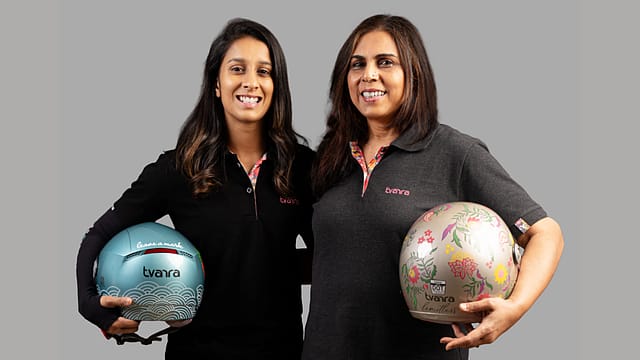
Alpana Parida is the kind of person who has always been in the room when important things happened, rarely as the person being written about. She was there when Nykaa was just an idea on an iPad. Falguni Nayar, a classmate, would bring it home to discuss. "I was on the board for 12 years and even gave the company its name," she says, in a conversation with OPEN Digital.
She watched CaratLane find its identity in its early days, having been involved in the branding when founder Mithun Sacheti was still figuring things out. Before that, she was building and repositioning brands at DY Works, working on Pepsi's India strategy, the BRICS Bank account, and Playboy's attempted India re-entry. And before that, she was Head of Marketing and Merchandising at Tanishq, rebuilding a career she had put on hold for nearly a decade.
Rise of the Pivotal Power
18 Sep 2026 - Vol 05 | Issue 38
The BRICS declaration is a strategic victory for Modi
That pause is part of the story. After graduating from IIM Ahmedabad in 1985 and working for a few years, Parida followed her husband to the United States when he was posted there in the late 1990s, where he moved into a role at PepsiCo. "People would look at me and they didn't know my degree, my background, my college, nothing," she says. "So it was very difficult for me to find something. I didn't really have a career. I was the corporate wife." She kept doing small assignments. It was only when the family returned to India in 2007 that she started building back in earnest.
By the time she had watched two companies she helped shape become household names, the question of what she wanted to build for herself had become unavoidable. She is in her sixties now. Most people, at this point, are thinking about winding down. Parida invoked Genghis Khan. "Genghis Khan set out to conquer the world in his fifties," she says, with a matter-of-factness that makes the analogy work. "So I thought it was time for me to go and conquer the world."
The First Bet
The venture she launched was not Tvarra. It was Tiivra, a composite-fibre motorcycle helmet for serious bikers. The technical case was sound. Parida had discovered that all helmet testing in India was done at under 32 kmph, while the bikers she was targeting were riding at 150 to 200 kmph. The only helmets that offered meaningful protection at those speeds were made from composite fibre, using carbon and glass, because impact spreads across multiple fibres rather than concentrating at a single point. "That's why in Formula One, drivers survive," she says. "They're wearing such helmets."
The product worked. Biker influencer and cricketer MS Dhoni wore Tiivra helmets organically, without being paid, Parida said. There was demand. But there was a manufacturing paradox at the heart of the business, where scaling made it more expensive instead of less. The curing process and heated moulds meant unit economics worsened with volume. After five years of trying, Tiivra could produce no more than 500 to 600 units. Parida shut it down.
She is precise about what that felt like. "Every day felt like a death. You're attached to the idea, and even though we had built a great product, we had failed as a business. Still, you show up every day, keep working, slowly wind things down, and move forward."
The Insight That Changes the Math
It was while winding down Tiivra that Parida saw something she had been seeing for years without fully registering it. A man on a scooter wearing a helmet. The woman behind him had no helmet. A child sitting between them, legs dangling, had no helmet either. "I saw this again and again," she says. "And suddenly it struck me that the market is not 30 lakh women riders. It is 30 crore women pillion riders. And crores of children."
The data gave the observation its teeth. According to WHO and AIIMS figures Parida cites, in scooter accidents, 19 percent of fatalities are riders, but 44 percent are pillion riders. The physics are straightforward. The rider sees the impact coming and can brace, while the pillion rider cannot anticipate it and falls sideways. Children are even more vulnerable because their centre of gravity is higher and they can topple with sudden braking.
The market insight reframed everything. India has the largest number of two-wheelers in the world. About 20 million are sold annually, with roughly two-thirds motorcycles and the rest scooters, and an estimated 35 percent of scooter riders are women. That is before counting pillion riders. Even if 1 percent of 30 crore women pillion riders adopted helmets, the numbers were large enough for a real business.
There was just one problem. No one had bothered to build a helmet for them.
The Gap Nobody Filled
The Indian helmet market, when Parida looked at it closely, had brands but no brand thinking. Distribution ran through dealers. There was no consumer pull, no brand conversation, and no real design intent. Women who bought helmets were largely getting men's models scaled down, implemented with second-grade materials, and priced between ₹800 and ₹1,200. "We realised that there were no specific helmets for women," Parida says. "They were basically men's models shrunk down to a smaller size. They were clean, plain, with no design at all."
The structural problem was more serious than aesthetics. Helmets made on men's moulds wobble on women's heads, and a wobbling helmet reduces protection in exactly the moments it is needed most. Fit is not comfort. Fit is safety. Most so-called women's helmets were smaller men's helmets, which was a cosmetic adjustment masquerading as a solution.
Tvarra was built to dismantle that from the ground up. Parida used real Indian women's head-size data to build new moulds, with two sizes, S/M at 560 mm and M/L at 570 mm, arrived at through actual measurement rather than guesswork. The brand's central thesis, stated plainly, is that safety is structural, comfort is ergonomic, and hygiene is material science. The helmets weigh 750 grams, use a polycarbonate-ABS shell, 45-density EPS foam, an anti-microbial sweat-wicking liner, and carry both ISI and DOT certification. The ventilation channels are designed into the shell architecture rather than added as afterthoughts.
The design language, with collections named Dreamcatcher, Blossom, Lotus, Daisy, Lilt, and Flora, finished in metallic stardust gloss, is deliberate positioning. Tvarra is placing helmets in the fashion and accessory category instead of the safety and utility category. "This is a helmet that's almost like a fashion statement," Parida says. "We hope it encourages more women to wear helmets proudly and not just out of compulsion."
The resistance to helmets among women is real and layered. It includes poor law enforcement, heat, and an Indian sense of invincibility. For women specifically, it also includes concerns about hair, makeup, and the absence of anything worth wearing. Parida is going after the last variable, betting that design is the lever that moves voluntary adoption.
The Business
Tvarra launched online first through Amazon, then its own website, and then other e-commerce platforms, and is now available across more than 600 cities. Offline retail pilots have begun, with two stores in Bangalore. The plan is to expand that footprint significantly through 2026. The brand has raised approximately ₹12 crore so far and is preparing for a ₹30 to ₹40 crore round. International certifications for 14 countries are in place, and European certification is in progress for further expansion. The company reported revenue from operations of ₹2.56 crore in FY25, up 81% from ₹1.42 crore in FY24,as per regulatory filings accessed by Tofler. While its net loss widened marginally by 2% to ₹8.19 crore.
The product roadmap is wider than helmets. Kids' helmets targeting ages 5 to 16 are imminent. There are also plans for arm sleeves, waterproof bags, caps redesigned because standard caps do not fit women's heads correctly, and bag charms. The adjacency logic is about building a lifestyle brand anchored in safety rather than a safety product that makes cosmetic gestures.
The brand has also identified that women riders are not a monolithic category. Students prioritise weight and affordability. Professionals need durability and day-long comfort. Gig workers require ventilation and stability. The segmentation will eventually shape the product range.
Pricing sits between ₹1,950 and ₹2,950, deliberately above the commodity end of the market but accessible enough to not be niche. The bet is that as safety awareness grows and women's mobility expands, the consumer base moves toward a considered purchase rather than the cheapest available option.
The Partner
In January 2026, Tvarra announced that cricketer Jemimah Rodrigues had come on board, not just as a brand ambassador but as an equity investor partner. The distinction matters to Parida. An ambassador is a contract with an expiry date, while an investor has skin in the outcome.
The choice is also strategic. Rodrigues is young, credible, aspirational, and visibly active, which is the opposite of the passive pillion rider the brand is trying to reach. The community initiative Parida is building, called Dreamcatchers, where women write down their intentions and carry them while riding, reflects the same idea of connecting the helmet to something larger than road safety.
Building at 60
Parida dipped into her retirement fund to build Tvarra. Her husband's response was simple. "Go for it."
She mentions this not as a heartwarming aside but as a structural fact. That kind of domestic support is rare, and she knows it made the difference between starting and not starting.
She is also clear-eyed about the late-stage entrepreneurship thesis she embodies.
What she is building is not a helmet company. It is a brand for a woman whose first scooter meant independence, whether it was going to work, going to college, or running a household on her own terms.
"A scooter, for a woman, often represents independence, the first sense of freedom," she says. "We want to be part of that journey."
The category is wide open. The safety data is damning. The design gap was real. And Alpana Parida, who named Nykaa, who shaped CaratLane, and who built brands for other people's companies for three decades, has finally decided that the next one is hers.
"This is not a pastime," she says. "It's something I seriously want to build into a large brand."