The Unfiltered Story of India's Most Stubborn Protein Brand
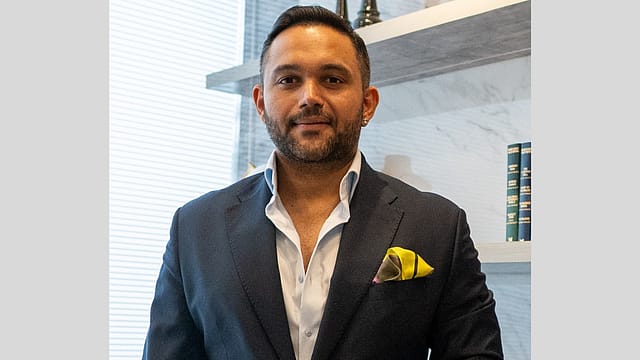
Suhel Vats is not the kind of man who hides from a bad number.
So when you ask him about the years his company nearly halved in size, he doesn't reach for excuses. He just says it straight: "The lowest point was coming down from 300 crore turnover to 120 crores."
Three hundred crore. Then one hundred twenty crore. In roughly two years.
For most founders, that kind of fall would be the end of the story. For Vats, it's the middle of it.
He is 38 years old. He started BigMuscles Nutrition out of Faridabad, Haryana, in 2009, with five products and no investors — and he has never taken a single rupee of outside funding in sixteen years. What he built, he built himself. What he lost, he lost himself. And what he is now trying to get back, he is — again — doing entirely on his own.
The Modi Years
02 Oct 2026 - Vol 05 | Issue 40
A Nation Rebuilt
That stubbornness, that refusal to bring anyone else into the equation, is both his greatest strength and the thing that nearly finished him.
Where It All Started — A Father, A Protein Powder, and a Hunch
Before Vats, there was his father.
His dad was a medical sales representative — the kind of man who spent his career going door to door, doctor to doctor, selling pharmaceutical products across a region. In 2007, his company — Novartis, one of the biggest pharma names in the world — tried to sell protein powder in India. It didn't work. Indians weren't ready for it. The product was quietly discontinued.
But Vats senior had learned something: how to make it.
A few years later, his son came home.
Suhel had just finished a year and a half at TCS, the IT giant, working as a software engineer — first in Bhubaneswar, then Mumbai. He was young, he had some savings, and he had one thing most people starting a business don't have: a father who knew how to manufacture protein powder.
"I always wanted to work for someone first," he says, "so I could get that corporate culture in me. I learned from there and I still try to implement those learnings."
Then he came back to Faridabad and got to work.
Starting From Zero in a Market That Didn't Exist
The India of 2009 did not know what protein powder was.
This is not an exaggeration. People who bought it didn't tell their families. They kept the tubs hidden. "They thought it was medicine," Vats says. "People used to hide it." Asking an Indian consumer to trust a homegrown protein brand — not an American one, not a European one, but one made in Faridabad by a 23-year-old engineer — was, to put it gently, a hard sell.
Vats launched with five products: two whey proteins and three weight gainers. He appointed 25 distributors across India. He invested heavily in packaging — shrink-wrap, which was unusual enough at the time to make people stop and look. And then he just worked.
Initial investment: 60 lakh rupees.
He kept working.
By 2017 — eight years in — he had reached 24 to 36 crore rupees a year. It had taken nearly a decade to get there. The market was still small. E-commerce barely existed. Everything moved through distributors, through relationships, through phone calls and handshakes.
He had built something real. He had also, without knowing it, already made the mistake that would cost him years.
The Mistake He Saw Too Late
Around 2015, Amazon and Flipkart began to change how Indians shopped.
Vats watched it happen. And he did nothing.
"I could have started online in 2015 and would have been in a much better position," he says now. "But we were totally depending on our distributors and they were doing a good job for us."
His distributors were doing a good job. But the world was moving, and he was standing still.
He caught up eventually — in 2017, BigMuscles finally went online. And when it did, it moved fast. The brand launched a product called Crude Whey — simple, no-frills, exactly what the new online consumer wanted — and sold 10,000 packets in a single day. "That was a record-breaking sale at that time," he says.
In 2018, Bollywood star Ranveer Singh became the brand's face. Influencer marketing took off. Then Covid arrived, gyms shut, and suddenly all of India was at home, anxious, and very interested in staying healthy. Big Muscles' sales quadrupled. "We touched around 300 crore rupees in 2021 and 2022. That was my peak."
He had arrived.
And then he took his eye off the road.
The Factory That Nearly Broke Him
It started with a perfectly reasonable decision.
Vats decided to upgrade his manufacturing plant — from semi-automatic to fully automated. Better machines, better output, better quality control. It was the right call for a company at his scale.
But upgrading an entire factory is not like upgrading a phone. It disrupts everything — the workers, the processes, the rhythms that have kept production running for years. "Shifting from semi-automatic to automation is like your whole team getting disturbed," he says.
During the chaos of the transition, something went wrong with the flavouring in two of his products — BCAAs and EAAs, both high-volume sellers. A bad batch got out. Consumers noticed. Reviews turned. Sales collapsed on those products almost immediately.
"We had to change the whole product," he says. "And it's not easy to regain that momentum once you lose it."
But here is the thing Vats is most honest about — the factory problem was only half the story.
While he was buried in machinery and production schedules, the market outside was changing fast. The protein supplement space, which had maybe 200 brands when he was at his peak, was exploding toward 2,000. A new kind of Indian consumer had emerged — one who watched YouTube videos about fake protein, who read ingredient labels, who cross-checked lab test results before buying. The old way of marketing — a famous face on a tub, a handful of influencers — was no longer enough on its own.
Vats didn't see any of this happening. He was too deep inside his own plant.
"I was too busy with the plant shift, so I lost track," he says. "It took me one to one and a half years to realise the whole marketing scenario, understand how we had to change, and then we cracked it and came back again."
One to one and a half years. At the scale he was operating, that is an enormous amount of ground to lose.
The Comeback
Today, Vats says BigMuscles is back at around 240 crore rupees in annual revenue — and pushing toward 300 crore this year.
A lot has changed in how he runs the company.
He has also changed how he thinks about ingredients. His new product range — the Benchmark Series — uses as few as four or five ingredients per product. No artificial flavours, no artificial sweeteners, nothing a consumer would need a chemistry degree to understand. His older bestsellers have been reformulated the same way. "Consumers have started reading labels," he says. "You have to be transparent. If you are not transparent, consumers will not buy."
And he has a new brand ambassador. In 2023, cricketer Hardik Pandya replaced Ranveer Singh as the face of BigMuscles. A cricketer, for a protein brand, makes a more direct kind of sense — performance, fitness, discipline. Vats spends 25 to 30 percent of his revenue on marketing. That is a serious bet for a company that has no investors to fall back on if it doesn't pay off.
What Makes Him Different — And Why It Matters
Here is a number worth sitting with: the biggest protein brand in India, MuscleBlaze, spends over 260 crore rupees a year on advertising alone. That's more than BigMuscles' entire annual revenue in its worst recent year. It will be interesting to see whether BigMuscles can pull off a comeback.
Vats cannot compete with that directly. He has never tried to.
What he has instead is a manufacturing advantage that he has spent sixteen years building quietly. He buys all of his raw materials — everything imported — in one single purchase, for the entire year. Last year: 300 tons of whey protein, bought in one go. This year: 400 tons. "Other brands procure quarterly. We don't. For that you need a lot of funds." Because he buys so much at once, he controls his costs in a way his competitors can't. That lets him sell his products 200 to 300 rupees cheaper than most brands — not as a struggling company cutting corners, but as a manufacturer who has removed every unnecessary cost from the chain.
It is, in its own way, a form of discipline. The same discipline that has kept him from ever taking outside money.
"We are probably the only brand in the top three in India that is not funded by anyone," he says. "And we are really proud of that."
The Tiger
Suhel Vats has a way of talking about his business that feels less like corporate vision and more like lived experience — like someone who has genuinely been through something and come out the other side with a clearer sense of what it all means.
"I've seen the times when we were number one," he says quietly. "I've seen the times we came down. I've worked hard through sleepless nights and we've come back."
He wants BigMuscles to be the number one brand in India. Not just in gyms — in kitchens, in everyday life, as protein becomes something ordinary people think about every day rather than something gym-goers hide in their cupboards. He wants 1,000 crore. He wants his children to grow up watching their father's name on the shelves.
But ask him to sum it all up — the sixteen years, the peak, the fall, the slow climb back — and he doesn't reach for strategy language or founder wisdom.
He just smiles and says this:
"You are sitting on a tiger. The tiger will eat you, or you are going to ride it. It is as simple as that."