Phitku's Exit Shows India Finally Has Enough Acquirers to Worry About
The modern Indian consumer brand barely has time to grow up.
Before it can acquire a mythology, it acquires an investor. Before it develops a legacy, it develops a cap table. Before it becomes a company, it becomes a deal.
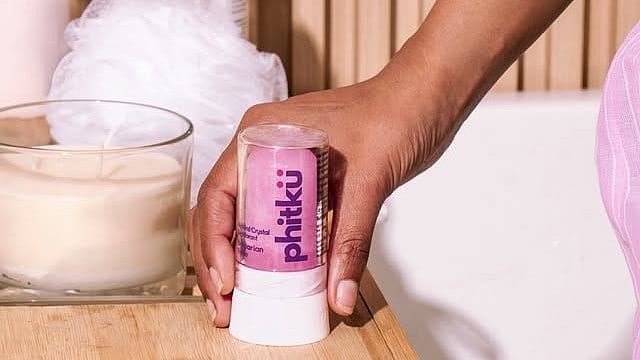
Phitku's sale to Ananta Capital is the latest reminder of how compressed time has become in India's D2C economy. The alum-based deodorant brand launched in January 2025. By January 2026, it was on Shark Tank India. A few months later, it had a majority investor. In roughly seventeen months, it travelled from origin story to acquisition story. Once upon a time, consumer brands spent years building recognition before attracting strategic buyers. Today, some seem to arrive in the market already moving towards an exit.
There is nothing inherently wrong with that. In fact, it may be the clearest sign yet of how much the Indian startup ecosystem has matured. Capital is deeper. Distribution is faster. Consumer attention can be captured at unprecedented speed. Founders no longer have to spend a decade proving a category exists before investors begin circling. The journey from idea to institution has become shorter. The journey from idea to transaction has become shorter still.

Greening the Future
23 Jul 2026 - Vol 05 | Issue 30
Securing a sustainable India
That is what makes the Phitku story interesting. Not the deodorant. Not even the valuation. The timeline. (We tried to access the company's regulatory filings, but they were not available on the MCA portal.)
The details almost feel purpose-built for the current moment. A familiar household ingredient. A celebrity co-founder with a personal story. A wellness angle. A Shark Tank appearance. Social media traction. Institutional capital. None of these elements are unusual in isolation. Together, they have become the grammar of contemporary consumer branding.
The ingredient itself is almost beside the point. Phitkari has existed in Indian homes for generations. Long before venture capital discovered wellness, alum was being used in barbershops and bathrooms across the country. Phitku's achievement was not discovering something new. It was discovering that something old could be narrated differently. That, increasingly, is the defining skill of D2C entrepreneurship: not invention, but reinterpretation.
Neha Marda's role in that story is significant. The Balika Vadhu actor's personal experience became the brand's founding narrative, giving consumers something that marketing budgets alone cannot manufacture: relatability. In modern consumer markets, stories travel faster than products. They create trust, attention and familiarity long before customers begin comparing ingredients. The best D2C brands understand this instinctively. They are as much media properties as they are consumer businesses.
Yet even that observation only explains half the story. The other half sits on the buyer's side.
The most revealing character in the Phitku acquisition may not be Phitku at all. It is Ananta Capital. Over the past few years, Ananta has quietly assembled a growing collection of consumer-facing brands spanning beauty, wellness, nutrition, home products and fashion. Viewed through that lens, the acquisition looks less like a bet on deodorant and more like another chapter in a larger consolidation story unfolding across India's consumer economy.
Large investors have realised something founders learned years ago: attention is expensive. Building trust is expensive. Creating a brand consumers recognise is expensive. Acquiring a business that has already done those things can often be cheaper and faster than starting from scratch. The startup ecosystem generates narratives; capital increasingly aggregates them.
This is why the familiar language around entrepreneurship sometimes feels slightly out of date. The culture still celebrates founders as empire-builders, patiently constructing enduring institutions. But many of the most successful consumer startups today operate in a world where acquisition is not an unforeseen outcome. It is one of the possible destinations from the very beginning. The ambition is still real. The timelines are simply different.
Phitku is hardly alone. Across beauty, wellness, nutrition and personal care, a generation of digitally native brands is emerging with remarkable speed. They identify an anxiety, package a solution, build a community, attract attention and scale. Increasingly, they also attract buyers. The distance between those stages keeps shrinking.
Perhaps that is what maturity looks like. Every startup ecosystem eventually develops not just founders and investors, but acquirers. India now has all three. The result is a market where brands can move from launch to liquidity in the time it once took to secure national distribution.
The irony is that India's D2C revolution was originally celebrated as a challenge to established consumer giants. Increasingly, it looks like a pipeline feeding them—or feeding the investors assembling the next generation of them.
The Phitku deal tells us little about the future of alum. It tells us a great deal about the future of Indian consumer entrepreneurship. Brands are no longer being given decades to become institutions. They are being built, scaled and absorbed at a pace that would have seemed unimaginable not very long ago.
The modern consumer startup, it turns out, may not be born to last forever. It may simply be born to be bought.