Nykaa Built the Mall. Now It Wants to Own More Shelves. Sound Familiar?
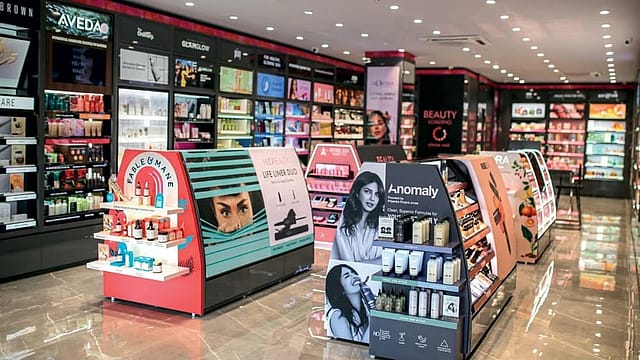
Nykaa has spent more than a decade building India’s most influential beauty mall.
It invited brands into the building, introduced them to Indian customers, watched what flew off the shelves and learnt what shoppers kept returning. It saw the searches that ended in purchases, the concerns that produced no satisfactory answer and the price points at which desire turned into an order.
Now the owner of the mall wants to own much more of what the mall sells.
Nykaa plans to double the annualised gross merchandise value of its House of Brands business from ₹3,500 crore to ₹7,000 crore over the next four years, Fortune India reported. Its portfolio already includes Nykaa Cosmetics and Naturals, Kay Beauty, Dot & Key, Nykd by Nykaa and KICA. Acquisitions and brands developed within the company are expected to power the expansion.

Zeroing In on ECI
09 Oct 2026 - Vol 05 | Issue 41
Constitutional legitimacy versus political opportunism
There is nothing inherently sinister about that ambition. Retailers have sold their own labels for generations. Supermarkets do it. Department stores do it. Walmart does it. A good private label can offer customers greater choice, fill a neglected price point and give a retailer the margins required to improve its business.
Nykaa also possesses something more valuable than a logo it can place on a bottle. It understands the Indian beauty customer.
Adwaita Nayar, cofounder of Nykaa and CEO of Nykaa Fashion, reportedly underlined that Indian consumers have concerns, including pigmentation and sunscreen requirements, that global brands may not adequately address. More than a decade of retailing has taught Nykaa where those gaps exist.
That is precisely where the opportunity becomes a question.
Thousands of brands helped Nykaa acquire that education. If the retailer uses its knowledge to create products competing with them, how do those brands know that the search result, recommendation, promotion, discount and digital shelf remain fair?
The Shopkeeper Knows What Everybody Sold
A physical shopkeeper knows which products move quickly. A digital platform knows vastly more.
It can see what customers type before they buy, the products they compare, the shades they abandon, the prices they resist, the reviews they leave, the reasons they return an order and the categories in which demand exists without a convincing supply. It can measure this behaviour across millions of consumers and adjust its decisions almost instantly.
That intelligence can improve the marketplace for everyone. It can also enable the marketplace to identify a successful product, create an alternative and place the answer directly in the customer’s path.
The problem is not the existence of a Nykaa brand beside an outside brand. The problem begins if the landlord possesses information unavailable to the tenant and can also decide which shop receives the escalator.
Nykaa says it recognises the distinction between its roles. Nayar reportedly underlined that its house-brands strategy is separate from its retail business. She is building a distinct team with what she described as a “totally different DNA”.
That separation is commercially sensible. It does not, by itself, answer the governance question.
Separate teams can prevent a product manager from casually accessing another brand’s information. They do not tell an outside seller what aggregated marketplace data the house-brands team may use, whether owned labels receive identical treatment in search, how homepage space is allocated or whether promotional rules apply equally to every brand.
The phrase “Chinese wall” sounds reassuring. A wall becomes credible when somebody can describe its height, show its doors and disclose who carries the keys.
Amazon Has Already Shown How the Story Can End
Nykaa has not been publicly accused of the practices that turned Amazon’s private-label operation into a global antitrust warning. But Amazon demonstrates why the question must be asked before allegations arrive.
In 2021, Reuters examined thousands of pages of internal Amazon documents and reported that the company’s private-brands team in India had used non-public marketplace information to identify and replicate successful products. The documents described studying detailed sales and return data, working with manufacturers of products selected as benchmarks and using techniques called “search seeding” and “search sparkles” to promote Amazon’s labels.
One internal strategy document said new Amazon products should appear among the first two or three search results. Another described using information from Amazon.in to develop products and then using the same platform to market them.
Amazon rejected the claims as factually incorrect and unsubstantiated. It said search results were based on relevance regardless of brand ownership and that it strictly prohibited the use of non-public, seller-specific data for the benefit of any seller, including private brands.
The regulatory concern did not disappear.
In 2022, the European Commission made Amazon’s commitments legally binding after investigating its use of non-public seller data and the treatment of sellers in the Buy Box and Prime programmes. Amazon committed not to use non-public data generated by independent sellers for its competing retail business and agreed to changes designed to ensure non-discriminatory treatment.
The commitment was an answer to a structural problem. A platform can honour every brand agreement and still possess an advantage no ordinary competitor can buy: it observes the market from above while participating in it below.
Flipkart and the Invisible Shelf
The Indian record makes the question harder to dismiss.
In 2024, Competition Commission of India investigators found that Amazon and Walmart-owned Flipkart had violated competition law by favouring selected sellers, according to confidential investigation reports reviewed by Reuters. The reports found that preferred sellers appeared higher in search results and received advantages that left ordinary sellers struggling for visibility.
Amazon and Flipkart had previously denied wrongdoing and maintained that their practices complied with Indian law. The investigation reports were not the CCI’s final adjudication, and the companies were entitled to file objections before any decision on penalties.
That distinction matters. So does the language reportedly used by the investigators: ordinary sellers had become “mere database entries”. The finding was about preferred sellers and other alleged marketplace practices, not proof that every private label on either platform had been unfairly promoted. But it reveals the enormous economic power hidden inside ranking.
In a physical mall, the customer can usually see the building. On a digital marketplace, the shelf is an algorithm. A brand may never know whether it lost because the competing product was better, cheaper or more popular, or because the platform quietly moved the escalator.
The CCI identified this danger in its 2020 market study on e-commerce. It highlighted platform neutrality, unfair platform-to-business terms, exclusivity, price-parity restrictions and deep discounting as competition concerns. It also recommended that marketplaces explain their principal search-ranking parameters in clear language and disclose how payments can influence visibility.
Those principles become even more important when the platform owns the product being ranked.
Walmart Is Not Quite the Same Story
Walmart is frequently included in conversations about private labels, but the distinction between a retailer and a marketplace must not be blurred.
A supermarket buying inventory, carrying the commercial risk and selling its own Great Value product beside another company’s product is openly acting as a retailer. The customer understands that Walmart owns the store and chooses the assortment.
A marketplace makes a more complicated promise. It presents itself as infrastructure connecting many sellers with many buyers. Those sellers may pay commissions, buy advertisements, use the platform’s fulfilment services and become dependent upon its traffic. The platform can then observe their performance while competing with them or favouring sellers tied more closely to its ecosystem.
Walmart becomes relevant to the Indian argument through Flipkart. The conflict is no longer simply that a shopkeeper sells a store brand. It is that a digital gatekeeper may control access, intelligence, ranking, advertising and transactions simultaneously.
The argument should not reduce Nykaa’s brands to copies manufactured from somebody else’s labour. Its portfolio contains businesses with identities, product development, marketing investments and consumer followings of their own.
Dot & Key and Kay Beauty have become meaningful brands rather than anonymous substitutes carrying a retailer’s name. House of Nykaa’s sales value grew 49 per cent in FY26, according to the company’s disclosures cited by Reuters. Nykaa’s overall GMV reached ₹19,963 crore, while fourth-quarter revenue rose 28.4 per cent to ₹2,648 crore. Its quarterly profit nearly quadrupled to ₹78.38 crore, and the EBITDA margin reached a record 8.4 per cent.
Owned brands are, therefore, not a corporate hobby. They are becoming part of Nykaa’s growth and profitability engine. They can also strengthen the mall. Exclusive products give consumers another reason to visit Nykaa. Better margins can fund warehouses, stores, technology and customer service. Products designed for Indian requirements can expand categories that global companies have underserved. An owned label that succeeds on its quality deserves to win.
The commercial defence is strong. The need for safeguards becomes stronger with it.
Nykaa wants to build a formidable consumer-brands company while remaining a formidable beauty retailer. It is entitled to pursue both ambitions. Outside brands are equally entitled to know the rules governing the territory where those ambitions meet.
Let the Mall Publish Its Rules
Nykaa could turn the potential conflict into a competitive advantage by going further than saying its teams are separate.
It could publish a marketplace-neutrality charter explaining whether house brands and third-party brands are ranked under identical organic-search parameters. It could disclose what categories of seller and customer data its owned-brand teams may access. It could identify paid placements clearly, describe how homepage and recommendation slots are allocated and subject these safeguards to independent review.
None of this requires Nykaa to reveal its algorithm or surrender legitimate commercial intelligence. It requires the company to make one promise verifiable: a rival brand will not lose merely because its competitor also owns the mall.
That promise could become an asset. Beauty depends unusually heavily on trust. Nykaa built its position partly by convincing customers that products were authentic and brands that the platform could take them across India. Transparent neutrality would protect both relationships as its owned portfolio expands.
India does not need to wait for another trove of internal documents or another multi-year antitrust investigation before asking how digital shelves work. Amazon supplied the cautionary tale. Flipkart supplied the local warning. Nykaa now has the opportunity to supply a better answer.
Independent brands entered online marketplaces because the platforms owned the customer. They may eventually discover that while they were paying rent for the shelf, they were also teaching the landlord what to manufacture, whom to challenge and where to place it.
Nykaa built the mall. As it claims more shelves, the brands that helped fill the building deserve to know whether the escalator still belongs to everyone.