No Drama Diwali: Why GO DESi Is Showing 12 Hours of Mithai Being Made
Walk into any neighbourhood mithai shop and watch what happens.
A fresh tray comes out. Heads turn. Someone leans over the counter and asks what has just been made. The purchase has already begun, and nobody has touched the weighing scale.
That’s the pleasure of watching something being made. It’s also reassurance. The shop has a face, the work has a rhythm, and you get something to look at while you decide.
GO DESi wants to take that moment out of the shop and put it on a billboard.
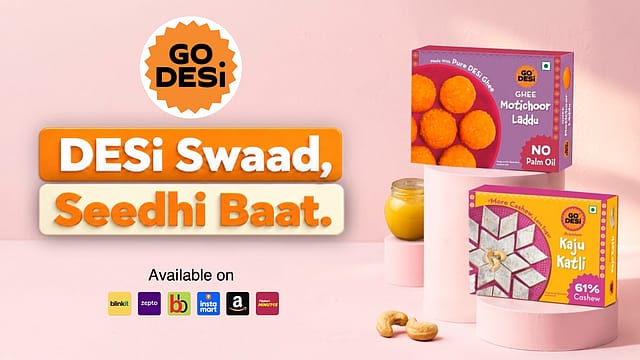
On 19 October, digital billboards in Delhi and Bengaluru will show a live, 12-hour feed from the Bengaluru-based brand’s sweets factory floor. No actors. No script. No twist. Just mithai being made, in real time.

Zeroing In on ECI
09 Oct 2026 - Vol 05 | Issue 41
Constitutional legitimacy versus political opportunism
It is the opening move of the brand’s “No Drama Diwali” campaign, a response to a festive season crowded with over-the-top ads and serial-style emotion.
“Diwali has become very loud. Everyone is shouting for attention, so we thought we’d do the least dramatic thing possible: point a camera at our factory and let people watch,” says founder and CEO Vinay Kothari. “If the mithai is made well, there is nothing to hide and nothing to dramatise.”
In Delhi, the screen sits at the East of Kailash market T-point. In Bengaluru, it runs along Brigade Road, Mayo Hall, Residency Road, Koramangala and Hosur Road. The stream is also online, so anyone outside the two cities can watch along.
It’s an old selling instinct with new technology bolted on. That’s what makes it desi to the core.
Marketing and branding experts reckon that packaged food travels far from where it’s made. The part where you watch it being made usually stays behind. GO DESi is trying to bring that part along. At a familiar mithai shop, reassurance comes from several small things: seeing a fresh batch, recognising the people and knowing what you bought last time.
"A packaged brand has to create that familiarity differently,” says Ashita Aggarwal, professor of marketing at SP Jain Institute of Management & Research. "Showing the making can give consumers something tangible around which to build trust."
The camera gives GO DESi a way to start the acquaintance.
THE WORLD HAS BEEN WATCHING THE KITCHEN
A doughnut gliding through a curtain of glaze can do a surprising amount of selling.
Krispy Kreme built an invitation around that moment. Its Hot Light signals that fresh doughnuts are coming off the line, which gives people a reason to walk in and a reason to want one now. Domino’s put preparation on display with its “Pizza Theater” store design, so customers could watch their food being made.
Both understand the pull of visible work. A finished photograph can’t offer what a product in motion can: anticipation. You watch, and you start imagining the bite.
GO DESi takes that view and puts it where an advertisement normally sits. You don’t have to walk in. The factory comes to the street.
That difference matters. At a doughnut shop or a pizza outlet, the viewer is already close to buying. A billboard has to stop somebody on their way elsewhere. So GO DESi frames the feed with its campaign panel, so passers-by know whose factory they are watching, and has to make the work interesting enough to earn the glance.
Calling the show boring is how it makes the introduction. The halwai would probably enjoy the joke. People have been watching him work for years.
A BOX WITH YOUR NAME ON IT
Buying mithai for somebody else carries a small burden. The box leaves your hands. Your choice travels with it. Will they like it? Will it feel fresh? Will the gift look thoughtful?
A familiar halwai gets the benefit of those questions. Someone in the family knows the shop. Someone has bought there for years. There’s an established answer to “where should we get the sweets?”
A younger packaged brand has to enter that conversation. GO DESi’s range runs from kaju katli to laddus and burfis, alongside OG Imli Popz, the confectionery it built its name on. It is now expanding into regional snacks. It wants a place among purchases shaped by habit, taste and personal recommendation.
So the factory feed does more than play with a screen. It introduces the place behind the purchase. The brand says it is focusing on the quality, hygiene and pure ingredients that go into making the sweets. Here’s where the mithai comes from. Here’s the work behind the box.
Aggarwal contends that a festive gift carries the buyer’s judgment with it. People want confidence in what they are giving. For a challenger brand, making the process visible can reduce some of the uncertainty around an unfamiliar name. "The experience after purchase then has to justify that confidence,” she adds.
A memorable billboard may earn a glance. A reassuring one might make the shortlist.
BORING IS DOING SOME HARD WORK
“The most boring reality show ever.”
It’s a line with real ambition. Reality television promises conflict, revelations and somebody behaving badly. GO DESi borrows the format’s name and offers a factory shift.
The mismatch is the joke. It also gives people something to repeat. A sweets company livestreaming its factory is an activity. A sweets company making the most boring reality show ever has a story attached.
And there’s a bet underneath it: that the supposedly boring subject will turn out to be watchable.
It might. Food preparation has rhythm, repetition and the satisfaction of something taking shape. You can join halfway and still get it. There’s no earlier episode to catch up on.
That suits a billboard, where most people will catch a fragment of the 12-hour feed. They’re at a junction, or walking along a shopping street. The message has to land fast: this is live, this is mithai being made, this is GO DESi.
The branded frame has a serious job. It has to leave the viewer with a name to remember when it’s time to buy. Otherwise, the campaign risks making mithai look delicious while leaving the choice of mithai shop untouched.
AFTER THE CAMERA SWITCHES OFF
Twelve hours can make a factory visible. Becoming somebody’s preferred sweets brand takes much longer.
GO DESi is up against a powerful sentence: we always buy our sweets from there. A familiar halwai has years of purchases behind that line. A younger brand needs its first box to earn the next. The live feed gives shoppers a reason to look. The mithai has to give them a reason to come back. Freshness, taste, price and the moment the box arrives will decide how much of this campaign survives the festival.
And that’s where this cheerful piece of anti-drama gets interesting.
GO DESi is using a billboard to recreate a pleasure customers have long enjoyed at a sweet shop: watching the next batch arrive.
The screen is big. The invitation is familiar. Aaiye. Mithai ban rahi hai.