Levi’s Original Sin: If Alia Bhatt Can Be Everyone, Can the Brand Sell Everything?
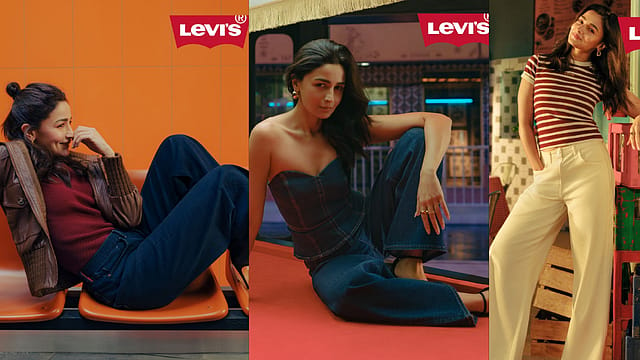
For Levi’s, individuality is not a new marketing idea. The brand itself describes Levi’s as a celebration of “rugged individuality and self-expression”, while its Indian campaigns have repeatedly returned to the language of authenticity.
But its latest campaign gives that familiar idea a new shape.
Behind Every Original: Chapter Two, Many Ways, One Original, starring Alia Bhatt, is not asking consumers to discover one defining version of themselves. It argues almost the opposite: that originality can exist in the different versions we inhabit. Different moods, different influences, different clothes and different roles can all belong to the same person.
That is a subtle change, but an important one. Levi’s is moving from the idea of having a signature to the idea of having several sides.
The Modi Years
02 Oct 2026 - Vol 05 | Issue 40
A Nation Rebuilt
And Alia Bhatt may be the celebrity who makes that shift make sense.
The end of the signature look
The campaign uses a mixtape as its central metaphor. Bhatt moves through a subway corridor, a busy street corner and a neighbourhood pub as different sounds, memories, moods and expressions of personal style come together.
The metaphor is telling. A mixtape has no single identity. It is defined by the combination of things that might, on their own, belong to entirely different worlds.
That is also how Levi’s is presenting the modern consumer.
“Originality has never been about fitting into one version of yourself, and Behind Every Original has always celebrated the mindset that shapes individuality,” says Hiren Gor, Managing Director, South Asia, Middle East and Africa, Levi Strauss & Co. “With Many Ways, One Original, we wanted to celebrate the many influences and expressions that come together to shape who we are.”
The product proposition follows the same logic. Different fits, silhouettes and pieces can be styled in different ways, allowing one wardrobe to move across different moods and occasions.
The campaign therefore does something more strategic than simply attach a famous face to a pair of jeans. It broadens the role of the product. Levi’s is not only talking about which jeans you wear, but about how the same wardrobe can accommodate different versions of you.
The brand's proposition, in other words, is evolving from be yourself to something closer to you can be many versions of yourself.
That matters for a heritage denim company because its greatest strength can also become its limitation. Levi’s is synonymous with jeans. But being synonymous with one category can make it difficult to persuade consumers that the brand belongs elsewhere in their wardrobe.
Its India business suggests there is now enough momentum to attempt that expansion.
A growing business wants a bigger wardrobe
Levi Strauss (India) Private Limited reported total revenue of ₹2,223.4 crore in FY25, up 20.59% from ₹1,843.7 crore in FY24, according to financial data compiled by Tofler. Revenue from operations stood at ₹2,217 crore, compared with ₹1,836.4 crore a year earlier.
The bottom line grew even faster. Net profit rose 26.91% to ₹202.3 crore in FY25 from ₹159.4 crore in FY24. Operating profit increased to ₹272.7 crore from ₹213.1 crore, taking the operating margin to 12.3% from 11.6%. The company reported no borrowings and its net worth more than doubled to ₹396.3 crore from ₹193.8 crore.
The numbers are significant because Levi’s is not trying to reinvent itself from a position of weakness in India. It is doing so while the business is growing.
Sales have risen sharply over the past five years, from ₹671.3 crore in FY21 to ₹2,217 crore in FY25. Operating profit, which stood at a loss of ₹30.8 crore in FY21, reached ₹272.7 crore in FY25. Net profit increased from ₹35.5 crore to ₹202.3 crore over the same period.
The next challenge is therefore not simply to grow Levi’s. It is to grow what Levi’s means.
That is already happening beyond the campaign film. The company's India business is expanding into non-denim categories, including tops and non-denim bottoms, while its premium Red Loop business has become a meaningful part of the portfolio. Levi’s India has also said women's business is growing faster and non-denim is outpacing denim.
That makes Many Ways, One Original look less like an isolated advertising idea and more like a useful piece of the business strategy.
If Levi’s wants consumers to buy more than jeans, it needs to persuade them that buying more Levi’s does not mean wearing the same Levi’s look every day.
Many versions of the consumer can therefore support many versions of the wardrobe.
Why Alia, and why now?
This is where the casting becomes particularly interesting.
Alia Bhatt may not immediately evoke the old cultural image of the rebellious denim wearer. Her appeal is less about being a counter-cultural outsider and more about range.
She is an actor, mother, wife, entrepreneur and increasingly prominent global fashion figure. She has appeared at Cannes and the Met Gala, while also building her own consumer brand, Ed-a-Mamma.
For Ashita Aggarwal, Professor of Marketing at SPJIMR, that multiplicity is precisely what makes Bhatt suitable for the campaign.
“Alia has emerged as a woman who has managed to do it all: a successful actor, a dedicated mother and a supportive wife. That complements the ‘Many Ways, One Original’ campaign, which highlights the ability to adapt and carry yourself across different roles and facets of life,” she says.
Her fashion credentials add another layer, Aggarwal argues. “As a fashionista, her multiple roles and her presence at Cannes give credibility to this idea. Her work as the founder of Ed-a-Mamma and her Met Gala appearance further reinforce it.”
The important point is that Levi’s does not appear to be asking Bhatt to manufacture an identity for the campaign. It is taking something that already exists in her public image and making it part of the brand narrative.
“The idea of having many versions of one person is not new for Alia. It is simply a confirmation of what people have already been seeing in her,” Aggarwal says.
“That is the difference between a celebrity wearing a brand concept and a celebrity for whom the concept genuinely fits.”
Bhatt herself uses the same language of multiplicity.
“We’re all made up of so many facets, shaped by our varied experiences, the things we love, the people we meet and the places we discover along the way,” she says. “In a way, it’s a bit like a mixtape, every song adding something different to who we are and who we become.”
From aspiration to identification
There is another reason the Alia choice is worth examining.
Before Bhatt, Deepika Padukone was a prominent face associated with Levi’s in India. The contrast between the two celebrities reveals something about how fashion brands are changing the role of celebrity itself.
“Deepika is considered more of a style icon among women, with a poised, calm, composed and aspirational energy,” Aggarwal says. “She is the woman you look up to rather than necessarily relate to.”
Bhatt brings a different proposition.
“Alia brings a different energy. She is younger and someone that Gen Z can relate to more easily than Deepika, while still being a hugely successful star and a fashionista herself.”
The distinction is not simply about age. It is about aspiration versus identification.
Deepika can represent the woman consumers look up to. Alia can represent the woman who can occupy several identities at once.
For Levi’s, that is potentially more useful today.
A luxury brand can ask consumers to aspire to an ideal. Levi’s, with its long association with everyday denim, has a different opportunity. It can ask consumers to participate, interpret and personalise.
“I think that is what the brand is trying to do: move beyond the classics and connect with Gen Z and the new generation, which puts style first,” Aggarwal says.
The business of being many
There is an irony here.
Levi’s built its reputation around one of fashion's most recognisable products. Now, as its India business grows, it has to convince consumers that the brand can mean more than that product.
The latest campaign offers a neat solution. Instead of abandoning the heritage, Levi’s is expanding the philosophy behind it.
The jeans remain the starting point. But the consumer is no longer expected to have one Levi’s identity.
That fits the company's broader push into a head-to-toe lifestyle proposition. Globally, Levi Strauss & Co. has described its strategy as becoming a “DTC-first, head-to-toe denim lifestyle brand”, while its FY25 global revenue rose 4.1% to $6.28 billion.
India is increasingly part of that story.
The question for Levi’s is no longer whether it can sell another pair of jeans. Its FY25 numbers suggest it can. The bigger question is whether it can persuade a consumer who already has endless choices to build more of her wardrobe around Levi’s.
That is where Alia Bhatt becomes more than a campaign face.
She represents the logic Levi’s is trying to sell: one person, many versions; one brand, many possibilities.
For a company built on the idea of the original, its newest idea may be that there is no such thing as a single original anymore.