Animal Intelligence: Cleartrip’s Birds, ixigo’s Sheep & the Humans Brands Want to Persuade
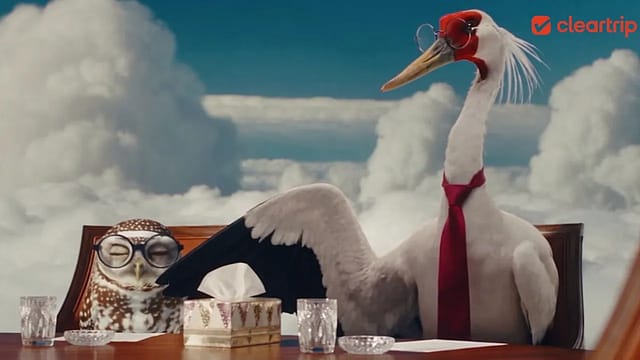
The birds have called a meeting. Humans keep flying away.
In Cleartrip’s AI-generated Big Billion Days film, a conference room of birds discusses people heading off on holiday. A peacock complains about “mor deals”; a crow notices how frequently humans are taking flight. The premise extends the brand’s Pura India Hoga Phurr proposition.
Elsewhere in travel advertising, humans have acquired sheep’s heads.
ixigo’s film for its AI travel assistant TARA puts a flock of tourists on an overcrowded beach. One traveller consults TARA, finds a quieter destination and becomes human again.
Two travel brands. Two animal worlds. Two rather different instructions.

Zeroing In on ECI
09 Oct 2026 - Vol 05 | Issue 41
Constitutional legitimacy versus political opportunism
Cleartrip makes the rush to travel sound irresistible. ixigo asks whether joining the rush was the problem. One wants the customer to take flight; the other wants the customer to stop following the flock.
That is why the animal casting matters. Feathers and wool can turn an ordinary sales argument into something people enjoy watching. They can also carry sharply different ideas about the same human behaviour.
Somewhere else in advertising’s animal kingdom, a camel is being particular about bottled water. An owl is questioning the wisdom of your television choices. A donkey has been entrusted with making you more sensible.
The creatures are doing rather well. The customers may wish to review their position.
WHO IS THE ANIMAL IN THIS CONVERSATION?
Start with the difference between ixigo and Bisleri.
In ixigo’s new campaign, the animal stands for the consumer’s behaviour. The sheep compresses an accusation into an image: you are following everybody else while imagining that you are making an individual choice.
Bisleri’s camels, introduced in 2018, occupy another position. They are discerning characters in a category where the brand wants consumers to ask for it specifically. A creature associated with the desert becomes an entertaining authority on water.
The animal is doing a job. That is the distinction between a useful creative device and a creature invited merely to improve the thumbnail.
Marketing and branding experts reckon that an animal works when it gives the brand a recognisable role. The camel brings an association with thirst; the sheep brings an association with following the crowd. "The audience understands the premise before the sales argument begins,” says Ashita Aggarwal, professor of marketing at SP Jain Institute of Management & Research.
THE OWL HAS CROSSED A CULTURAL BORDER
The owl trail produces two particularly interesting examples.
Tata Play’s Samajhdar Bano campaign, announced in October 2025, uses AI-generated owl and donkey characters in a pitch about making smarter television choices. Ogilvy turns animals associated with conflicting ideas about intelligence into advisers addressing the audience.
The donkey is especially useful to the joke. When a creature routinely used as an insult starts offering sensible advice, the viewer understands the reversal without needing an explanation. Advertising has temporarily promoted the supposed fool.
Duolingo takes the cultural ambiguity further. Its Punjabi campaign with Talented, discussed by the brand this September, plays with Ullu Da Pattha while promoting English learning. Duo, the familiar green owl, provides a route from an expression associated with foolishness to the idea of becoming a learner.
The feathers travel easily. The joke needs local knowledge.
SOMETIMES THE ANIMAL IS THE INSTITUTION
There is another species of advertising animal: the character that becomes more permanent than the celebrity hired to share its frame.
Aflac’s duck has been working for the insurer since 2000. In a new September 2026 campaign, Ben Affleck joins the brand’s world alongside the duck and coaches Nick Saban, Deion Sanders and Dawn Staley.
ixigo’s sheep serve a different purpose. Their immediate value is metaphor. The flock makes a point about behaviour; it need not become an affectionate, permanent spokesperson.
THE PUG DID NOT NEED TO EXPLAIN ANYTHING
Animals can also make a promise legible without questioning the customer’s intelligence.
Hutch’s pug campaign in 2003 turned a dog following a child into a picture of dependable network presence. The companionship did the persuasive work. Viewers did not have to follow a lecture about infrastructure to understand the reassurance.
That is a useful counterpoint to the wise owl and the foolish flock. The animal can embody how a brand wants its service to feel.
In Britain, Cadbury’s 2007 gorilla went further away from literal demonstration. A performer in a gorilla suit played drums to Phil Collins. The pleasure of the scene was the offering.
A CHICKEN WALKS INTO A CAR WAR
Few cases make that point as neatly as the Mercedes-Benz and Jaguar exchange in 2013.
Mercedes used chickens’ remarkably steady heads, held level while their bodies were moved, to create a visual analogy for ride stability. It was an unexpected route into a technical automotive proposition.
Jaguar answered with a parody. Its big cat supplied a rather final response to the chicken demonstration, turning the exchange towards the rival brand’s feline identity and reflexes.
The animals were doing competitive positioning. One made composure interesting. The other introduced appetite and aggression.
It also shows why species selection matters. The cat is not interchangeable with an amusing dog. The joke belongs to Jaguar because the animal belongs to its name and identity.
THE CUSTOMER MUST STILL BE IN ON THE JOKE
There is a boundary to all this creative freedom.
An animal can soften an insult. It cannot guarantee that the audience will enjoy being insulted. ixigo’s flock works best if viewers recognise a shared predicament, including their own occasional participation. It becomes less appealing if the brand appears to regard ordinary tourists with contempt.
The viewer needs to be in on the joke. With ixigo, recognising a habit we have all fallen into can be funny. "Feeling that a company looks down on ordinary holidaymakers is a very different experience,” says Aggarwal.
There is a second test after the laughter. Can the viewer connect the pleasure to the advertiser? A wonderful animal scene that could end with almost any logo may win attention while leaving the brand with little ownership of it.
THE BIRDS CAN TALK. WHAT SHOULD THEY SAY?
Cleartrip adds a timely production question to this menagerie. Its birds, like Tata Play’s owl and donkey characters, come from an explicitly AI-generated film.
The tool can help realise an improbable cast. The creative argument still needs a reason for that cast to exist.
Cleartrip’s reversal gives creatures associated with flight a meeting about humans taking off. The peacock’s “mor” joke adds local wordplay. The campaign’s attraction rests on how these choices connect the birds with the travel offer, rather than on the novelty of making them speak.
There is a useful tension with ixigo here. Cleartrip’s comic world celebrates widespread holiday departures; ixigo’s flock questions the quality of a holiday chosen by imitation. Animal intelligence becomes a way to argue about human choice.
Neither entertaining film establishes commercial effectiveness by itself. A memorable creature still has to leave viewers remembering the advertiser and understanding its proposition.
That test survives every improvement in production technology. Generating a roomful of birds and giving the meeting a purpose remain separate tasks.
Back on ixigo’s beach, the flock makes a human problem visible. Around Cleartrip’s conference table, the birds turn holiday departures into a comic talking point. Bisleri’s camels make brand preference entertaining. Duolingo finds a local argument in its global owl.
The enduring attraction is the distance animals give us from our own self-importance. We can recognise ourselves without being shown ourselves too literally.
A brand judging human behaviour has to choose its words carefully. Give the observation feathers, and the customer may ask to see the film again.