Will Donald Trump’s Iran Blockade Choke the World’s Oil Lifeline at the Strait of Hormuz?
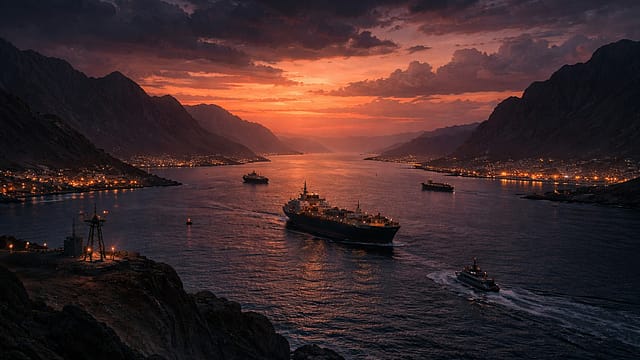
A US-enforced blockade of Iranian ports, which President Donald Trump said began Monday following failed talks over advancing the ceasefire and reopening the Strait of Hormuz, is raising fresh concerns over global oil prices and regional stability, experts have said.
The move comes after negotiations between Washington and Tehran collapsed, with Iran earlier halting nearly all tanker traffic through the key waterway. Only select ships deemed friendly were allowed passage, while substantial fees were imposed, according to reports.
Experts note that the blockade could further escalate tensions while also raising complex questions about international law.
The measure is expected to require significant deployment of US Navy resources, including ships and personnel, alongside clear legal guidance from the Trump administration and naval authorities.

Zeroing In on ECI
09 Oct 2026 - Vol 05 | Issue 41
Constitutional legitimacy versus political opportunism
From a military standpoint, analysts highlight the scale of the challenge, given the sheer volume of maritime traffic through the Strait of Hormuz, a route that typically carries nearly 20 per cent of the world’s traded oil.
How could the US blockade on Iran disrupt global supply chains and fuel inflation?
Supply chain experts have also warned of broader economic repercussions, stating that restrictions could disrupt the flow of oil, fertiliser, food and other essential goods, potentially worsening price pressures for consumers already grappling with inflation.
Despite the escalating situation, US officials are considering convening another in-person meeting with Iranian representatives before the ceasefire expires, although no final decision has been taken, CNN reported.
Oil markets reflected mixed sentiment, with crude prices declining amid hopes of easing tensions.
Brent crude fell 2.7 per cent to $96.66 per barrel, while US West Texas Intermediate dropped 3 per cent to $96.13, bringing prices to around $96 a barrel as traders balanced prospects of diplomatic progress against supply risks.
Iran’s Foreign Minister Abbas Araghchi, in a phone call with his Russian counterpart Sergey Lavrov, warned that "provocative" actions by the United States could have "dangerous consequences" for global peace and security, according to CNN.
How is Russia responding to the US-Iran blockade?
During the conversation, Araghchi reviewed regional developments following the announcement of a ceasefire and subsequent Iran-US talks held in Islamabad on April 11 and 12.
He "warned of the dangerous consequences of provocative US actions in the Persian Gulf and the Strait of Hormuz for regional and global peace and security," Iran’s foreign ministry said, according to CNN.
In a separate statement, Russia’s foreign ministry said Lavrov welcomed the two-week Iran ceasefire and stressed that Moscow believes the agreements extend to Lebanon as well.
He added that Russia remains ready to "help find solutions that would overcome the consequences of the unprovoked American-Israeli aggression against Iran," the ministry said, according to CNN.
According to an official post by Russia’s foreign ministry on X, Lavrov also underscored the need to prevent a return to armed confrontation and reaffirmed Moscow’s readiness to assist in resolving the crisis.
(With inputs from ANI)