Marco Rubio Sees ‘Slight Progress’ in Iran Talks, Flags NATO Rift
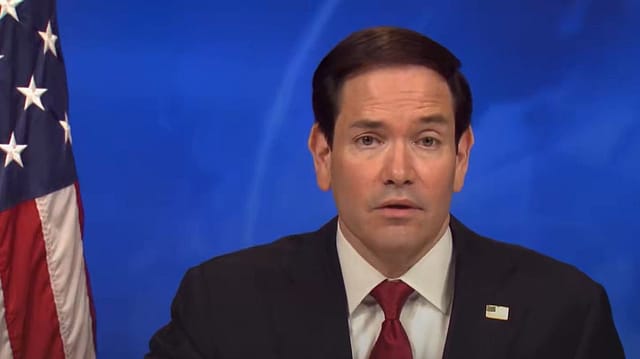
US Secretary of State Marco Rubio said that discussions aimed at halting the conflict with Iran have shown "some slight progress," while simultaneously echoing Washington's dissatisfaction with its NATO allies.
Speaking to journalists during a meeting of NATO foreign ministers in Sweden, the top American diplomat noted that there has been "some slight progress" in negotiations.
He also reiterated US President Donald Trump's "disappointment" regarding the current stance of the trans-Atlantic alliance.
Elaborating on the diplomatic efforts during a press interaction in Helsingborg, the Secretary of State maintained a cautious tone regarding the breakthrough.

Zeroing In on ECI
09 Oct 2026 - Vol 05 | Issue 41
Constitutional legitimacy versus political opportunism
"There's been some slight progress. I don't want to exaggerate it," Rubio said at a press conference in Helsingborg. "There's been a little bit of movement, and that's good."
What Are Marco Rubio’s Core Demands in the US-Iran Talks?
On Washington's core strategic demands, Rubio emphasised that the American stance remains firm on halting Tehran's nuclear ambitions and ensuring unhindered maritime access.
Rubio also said that the Islamic Republic was "trying to convince Oman to join them" in setting up a system to charge money from ships traversing the blockaded waterway.
Condemning the proposed maritime transit fees, the US Secretary of State underlined that there is "not a country in the world that should accept that" scheme.
Turning his focus to inter-alliance dynamics, Rubio indicated that the friction caused by the varying levels of backing from Western allies regarding the US' Middle East campaign remains a pressing matter. He observed that Trump's dismay with America's allies over a lack of support in the Iran war would need to be "addressed".
Addressing concerns regarding American military adjustments across the European continent, he clarified that these operational choices were independent of diplomatic tensions. He added that troop shifts by Washington in Europe were not aimed at punishing allies for a lack of support over Iran.
"The United States continues to have global commitments that it needs to meet in terms of our force deployment, and that constantly requires us to re-examine where we put troops. This is not a punitive thing; it's just something that's ongoing," Rubio said.
Providing essential context to these diplomatic manoeuvres, a temporary ceasefire on April 8 halted the war launched weeks earlier by the United States and Israel, but negotiation efforts, including face-to-face talks hosted in Islamabad, have so far failed to yield a lasting agreement.
(With inputs from ANI)